 Flyaford
Flyaford
Flyaford
Explore our top-tier range of low and medium-voltage standoff, busbar, and switchgear insulators, engineered for exceptional dielectric performance and mechanical strength.
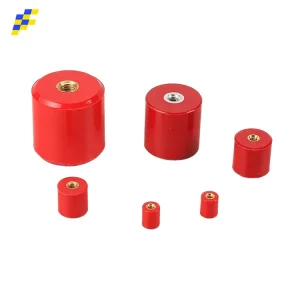
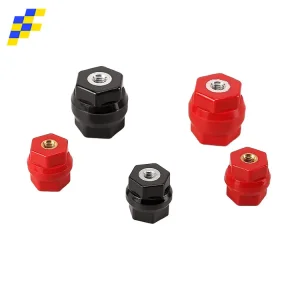
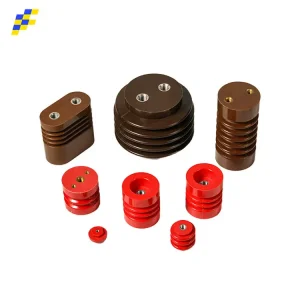
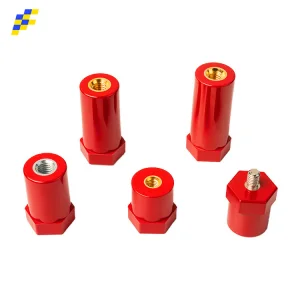
In modern electrical engineering, the global transformation toward smart grids, high-density renewable integration, and continuous industrial automation has redefined the structural and electrical expectations placed upon electrical insulation components. Medium Voltage (MV) power distribution systems—typically operating across ranges from 1kV up to 36kV—form the vital backbone connecting transmission sub-stations to municipal, commercial, and industrial loads. Within this grid infrastructure, standoff insulators, busbar supports, and switchgear insulation components are no longer treated as passive mechanical spacers; they are critical safety-enforcing assets required to resist extreme electrical field stress, severe thermal cycling, seismic vibrations, and harsh environmental contaminants.
Historically, electrical distribution networks relied predominantly on traditional porcelain ceramics and aliphatic epoxy resins. While ceramic insulators offer high compressive strength, their inherent brittleness, heavy physical mass, sensitivity to thermal shocks, and elevated risk of catastrophic explosive fragmentation during internal arc flashover events present significant operational liabilities. Conversely, older epoxy formulations often suffer from surface tracking, moisture absorption, and thermal degradation under continuous partial discharge conditions.
The contemporary industry paradigm has overwhelmingly shifted toward advanced thermosetting composite materials, specifically Bulk Molding Compound (BMC), Dough Molding Compound (DMC), and high-tier Epoxy Molding Compound (EMC). Polymer matrix composites reinforced with chopped structural glass fibers and filled with flame-retardant inorganic minerals (such as Aluminum Trihydrate, ATH) deliver unprecedented electrical creepage protection, self-extinguishing flame retardancy (UL94 V-0), high impact resistance, and long-term dimensional stability.
Global procurement directors, EPC contractors, and original equipment manufacturers (OEMs) of electrical switchgear, VFD cabinets, and battery energy storage systems (BESS) face strict regulatory, technical, and economic parameters when selecting medium-voltage insulator suppliers:
Comparative analysis of thermosetting composite technologies driving medium voltage insulation safety.
Thermosetting polyester resin reinforced with short glass fibers and inorganic mineral fillers. Offers exceptional dimensional tolerance, zero tracking index failure (CTI ≥ 600V), and high mechanical bending strength. Ideal for indoor standoff insulators and busbar supports.
Epoxy Molding Compound formulated for high dielectric strength under severe high-voltage gradient fields. Provides structural rigidity under heavy electromagnetic fault currents and withstands continuous thermal degradation up to 180°C.
Engineered to satisfy UL94 V-0 flame retardancy standard. Self-extinguishing properties prevent propagation of electrical arc fires. Emits low-smoke, zero-halogen byproducts during emergency high-temperature fault events.
To assist power engineers and electrical procurement officers, the table below highlights the performance parameters of Flyaford BMC/DMC composite formulations compared against traditional insulation materials:
| Property / Parameter | Flyaford BMC/DMC Insulators | Traditional Porcelain | Standard Epoxy Resin |
|---|---|---|---|
| Comparative Tracking Index (CTI) | ≥ 600 V (Grade 0) | ≥ 600 V | 400 - 500 V |
| Dielectric Strength (kV/mm) | 18 - 24 kV/mm | 15 - 20 kV/mm | 16 - 22 kV/mm |
| Tensile & Flexural Strength | High (Flexural ≥ 120 MPa) | Low / Brittle | Moderate |
| Impact Shock Resistance | Superior (Unshatterable) | Poor (Fragile) | Moderate |
| Flame Retardancy Rating | UL94 V-0 Standard | Non-flammable | UL94 V-1 / V-2 |
Discover how Zhejiang Flyaford Electron Co., Ltd. integrates automated thermosetting compression molding, rigorous quality control, and R&D leadership.
Situated in the Jinyi New District of Jinhua City, Zhejiang Province, Zhejiang Flyaford Electron Co., Ltd. (established in 2007) operates a state-of-the-art 35,000 square meter modern manufacturing facility. Equipped with over 60 advanced automated molding presses and 20+ precision testing instruments, our workforce of over 120 skilled technicians produces more than 200,000 insulation components daily.
Through comprehensive digital upgrades and automated process monitoring, Flyaford achieves a product defect rate strictly below 100 PPM (Parts Per Million). From automated raw material mixing, insert positioning, high-tonnage thermosetting compression molding to final flash trimming and full-spectrum dielectric testing, every step is tracked via integrated digital systems ensuring total batch traceability.
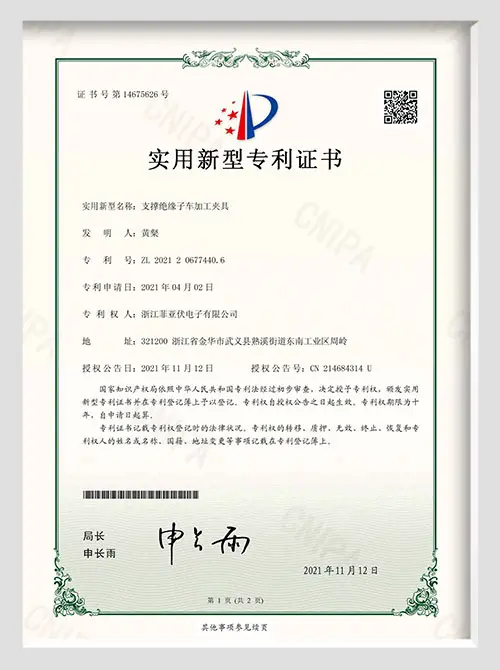
Flyaford is recognized as a "National High-Tech Enterprise", "Zhejiang Provincial Specialized, Refined, Distinctive, and Innovative SME", and hosts the official "Jinhua Flyaford High-Performance Insulator Science and Technology R&D Center". Holding 26 utility and invention patents alongside 2 software copyrights, we maintain long-standing R&D academic collaborations with prestigious institutions, including Tsinghua University, serving as their designated insulator development partner.
Our in-house inspection testing laboratory validates every batch against extreme real-world electrical and physical stresses using state-of-the-art testing equipment:
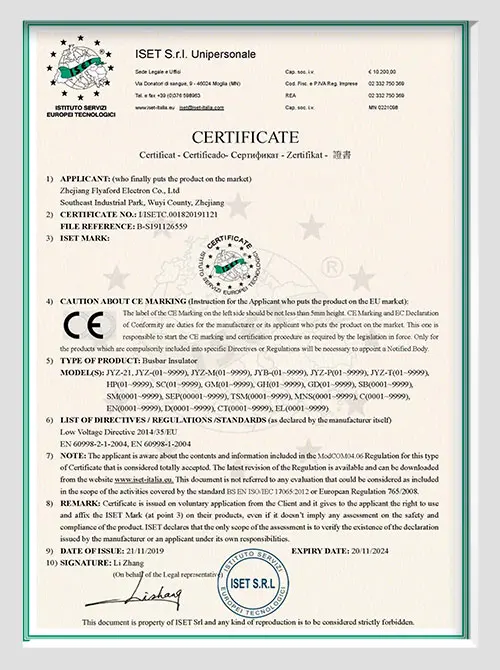
We hold international certifications for IATF 16949 (Automotive Quality Management), ISO 9001 (Quality Management), ISO 14001 (Environmental Management), UL Certification, and CE EU Safety Certification. Our raw materials fully comply with RoHS 2.0 and REACH standards.



Tailored composite insulation designs deployed across critical global power infrastructure, industrial automation, and renewable energy ecosystems.
Essential structural support for copper/aluminum busbars inside air-insulated switchgear (AIS), gas-insulated switchgear (GIS), and ring main units (RMU). Offers extreme short-circuit withstand torque and minimal creepage leakage.
Providing thermal stability and high-voltage isolation between large battery racks, power conversion systems (PCS), and grid interconnects. Prevents thermal runaway risk in high-density containerized storage.
Engineered for high frequency harmonics and pulse-width modulation (PWM) voltage stress found in heavy-duty variable frequency drive (VFD) enclosures across steel mills, mining, and water treatment facilities.
Weatherproof, UV-resistant composite standoff insulators designed for nacelle electrical systems, wind turbine tower switchgear, and central solar inverter stations exposed to harsh saline or desert conditions.
High-precision, lightweight BMC/DMC insulation fittings tailored for EV powertrain power distribution units (PDU), high-speed rail traction power substations, and electrified transit power grids.
Providing compact footprint, fire-safe isolation solutions for urban prefabricated sub-stations, smart grid distribution cabinets, and commercial building backup power switchboards.
From custom CAD/FEA design to mold building, insert metal machining, and end-to-end testing.
Flyaford provides over 20 years of technical expertise in custom OEM and ODM insulator development. Our engineering design department utilizes Finite Element Analysis (FEA) to optimize mechanical stress distribution and electrical field gradients before mold cutting begins.
Choosing Flyaford delivers a total lifecycle service partnership designed to streamline global procurement and mitigate technical risks:
Expert answers regarding CE certification, material parameters, custom engineering, and global logistics.
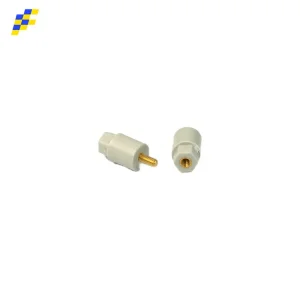
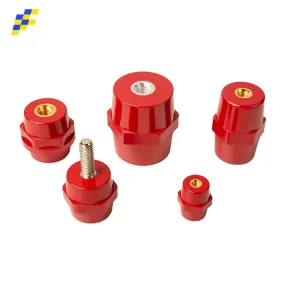
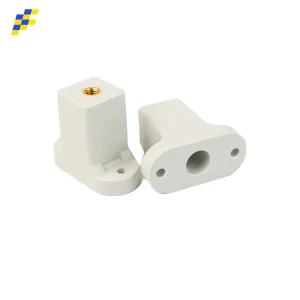
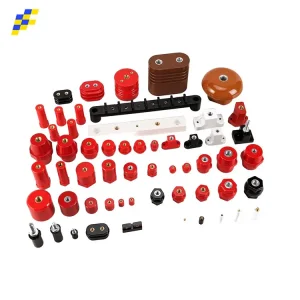
Complete selection of high-voltage EL series, SB standoff series, and D-Type busbar insulators engineered for international exporters and system integrators.