 Flyaford
Flyaford
Flyaford
Explore our CE-Certified BMC/DMC/SEP Series Standoff Insulators engineered for medium to low-voltage power networks, switchgears, and energy storage systems.
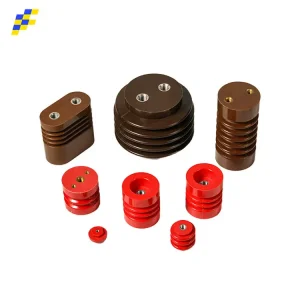
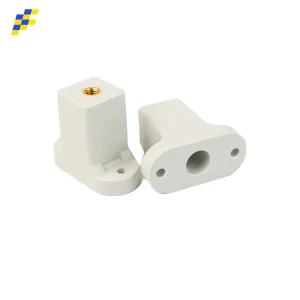
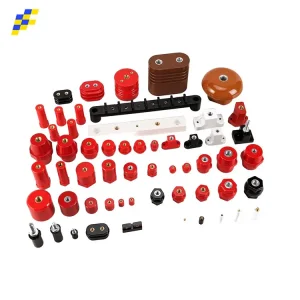
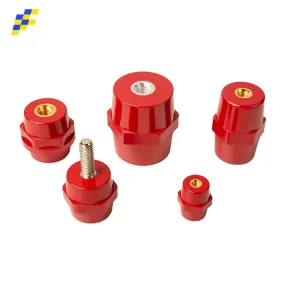
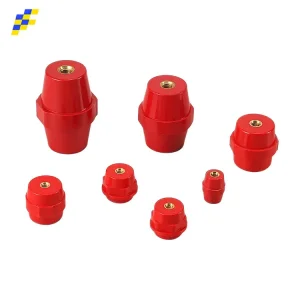

The global electrical infrastructure landscape is undergoing a monumental transition driven by high-voltage grid modernization, renewable energy integration, and rapid industrial electrification. Traditional ceramic and glass insulators, long considered the standard, are reaching their operational limits under severe mechanical strain, thermal cycling, and harsh environmental exposure. ZHEJIANG FLYAFORD ELECTRON CO., LTD. stands at the forefront of this industrial transformation, offering advanced CE-certified composite insulators synthesized from engineered Bulk Molding Compounds (BMC), Sheet Molding Compounds (SMC), Epoxy Molding Compounds (EMC), and Phenolic Resins (PF).
Composite insulators provide significant operational advantages, including superior dielectric strength, light weight, resistance to mechanical shock, and zero creep deformation under sustained mechanical loads. As electrical infrastructure expands into demanding environments—such as offshore wind farms, high-vibration electric vehicles (EV), and high-density 5G telecommunication base stations—composite standoff insulators deliver the reliability required for zero-downtime performance.
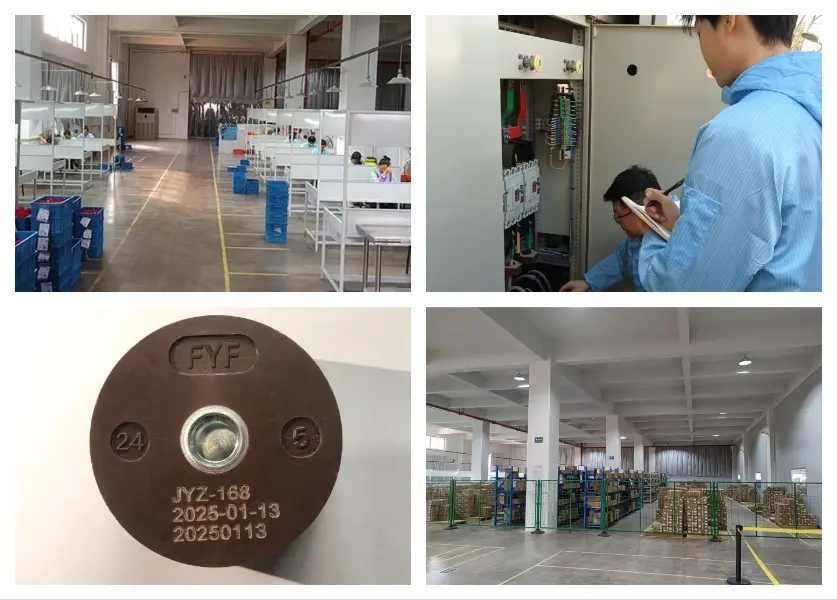
Established in 2007 in Jinyi New District, Jinhua City, Zhejiang Province, Flyaford operates a state-of-the-art intelligent facility recognized as a National High-Tech Enterprise.
Our 35,000 square meter manufacturing floor houses over 60 advanced thermosetting compression molding machines. This automated press infrastructure guarantees consistent material density, precise insert position tolerances, and zero internal voiding across high-volume production runs.
Operated strictly under IATF 16949 and ISO 9001 quality management frameworks, every manufacturing lot undergoes 100% full-inspection for electrical breakdown limits and mechanical dimensional stability, keeping our defect rate below 100 PPM.
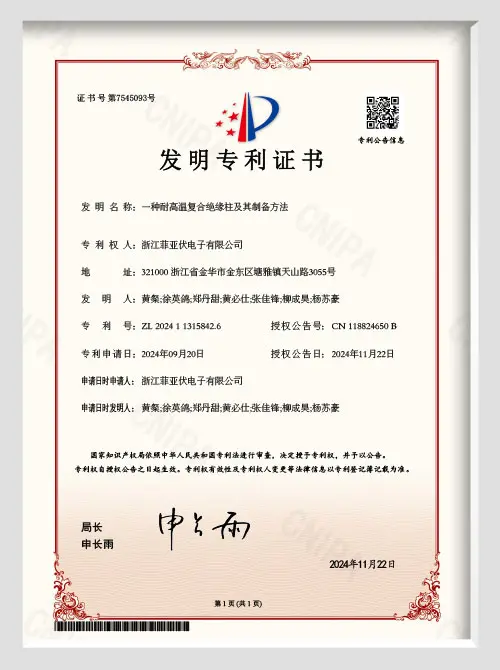
Recognized as the Jinhua Feifav High-Performance Insulator Science and Technology R&D Center, our full-time engineering team works in joint collaboration with top academic institutions—including Tsinghua University—to design high-temperature, low-tracking composite formulations.

Understanding the chemical architecture and mechanical characteristics of high-performance composite insulation materials.
The operational lifespan of a standoff insulator in high-stress electrical cabinets depends heavily on the polymer matrix composition. Flyaford specializes in custom thermosetting composite formulations tailored to specific industrial environments:
| Material Variant | Composition Breakdown | Dielectric Strength | Flame Retardancy | Primary Application Field |
|---|---|---|---|---|
| BMC (Bulk Molding Compound) | Unsaturated polyester resin, chopped glass fibers (10-20%), mineral fillers ($Al(OH)_3$), silane coupling agents | > 18 kV/mm | UL 94 V-0 (Self-extinguishing) | Standard Switchgear, Busbar Supports, Low-Voltage Distribution |
| DMC (Dough Molding Compound) | Dough-like polyester matrix with dense filler loading for extreme arc-resistance | > 16 kV/mm | UL 94 V-0 | Industrial Circuit Breakers, Variable Frequency Drives (VFD) |
| EMC (Epoxy Molding Compound) | Epoxy resin core reinforced with micro-silica and long glass fibers | > 24 kV/mm | UL 94 V-0 / Zero Halogen | Medium Voltage Cabinets (12kV-36kV), Solar Inverters |
| PF (Phenolic Resin) | Phenol-formaldehyde polymer with synthetic fiber reinforcement | > 15 kV/mm | UL 94-5VA High Thermal Class | High-Temperature Industrial Furnaces, Railway Traction Power |
A critical failure mode in standoff insulators is insert pull-out or knurling slip under torsional load. Flyaford solves this issue using high-grade brass, aluminum, or steel inserts designed with deep helical knurling. The metal hardware is insert-molded directly during the thermosetting compression cycle, forming a seamless mechanical lock with zero micro-gaps.
Composite insulators naturally resist water film formation, avoiding conductive leakage paths in high-humidity conditions. Our high-content Aluminum Trihydrate ($Al(OH)_3$) formulation releases bound water molecules during localized electrical arcing, suppressing tracking paths (CTI > 600V) and protecting critical grid infrastructure.
Every insulator model released from our facility meets rigorous EU safety directives, international electrotechnical standards, and automotive-grade requirements.
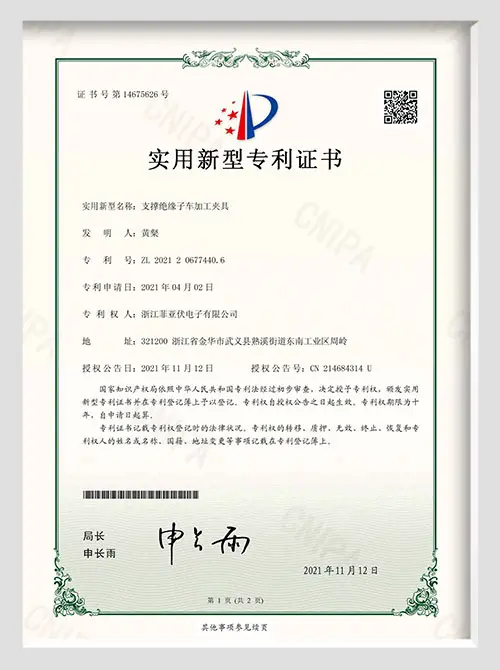
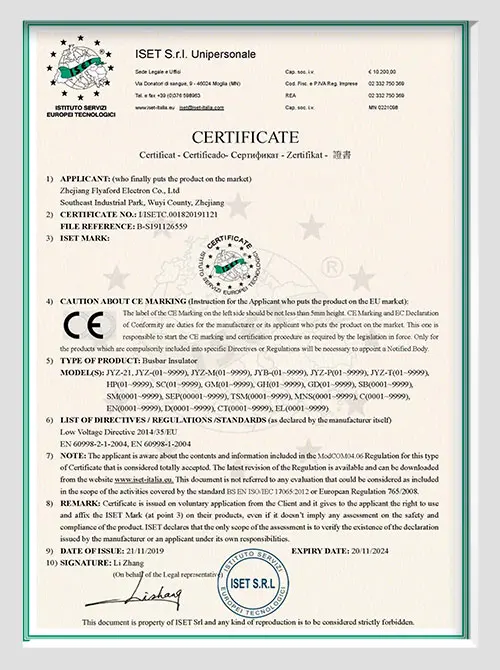
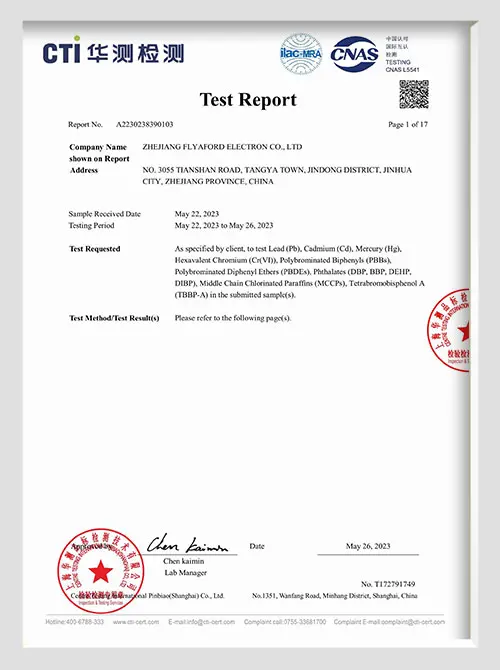
Compliance is the cornerstone of trust in power electronics. Flyaford composite insulators hold total regulatory approval under CE (EU Safety Directive EN 61109 / IEC 60664-1), alongside UL Certification, RoHS 2.0, REACH, and EcoVadis Sustainability Rating.
Our fully equipped, in-house metrology center contains advanced testing apparatus capable of evaluating mechanical and electrical performance limits under aggressive operating conditions:



Engineered to support demanding operations across critical green technology, transportation, and industrial power infrastructure worldwide.

Provides rigid busbar positioning and fault isolation inside gas-insulated (GIS) and air-insulated (AIS) switchgear units operating up to 36 kV.
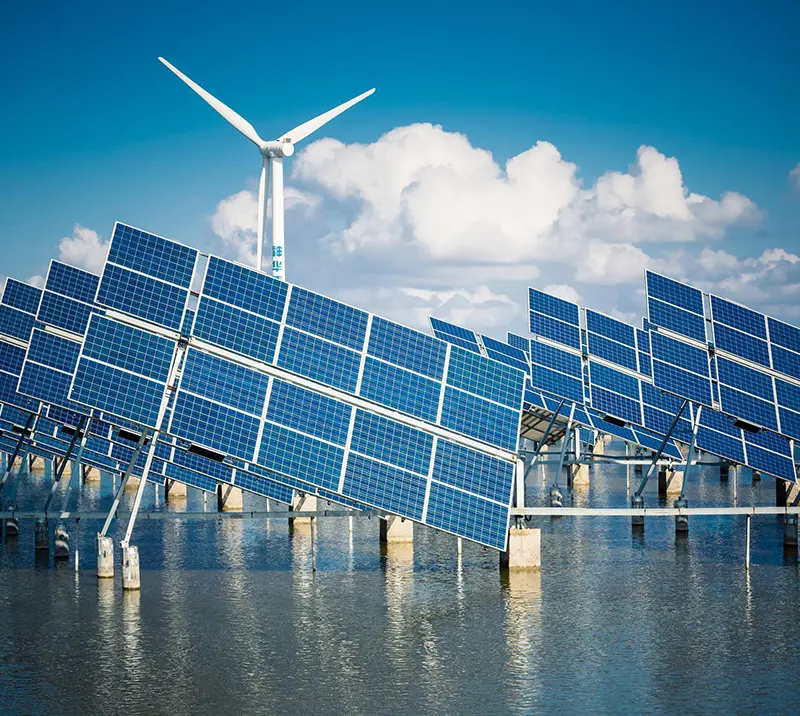
Ensures short-circuit isolation between megawatt-scale lithium-ion battery racks, prevent thermal runaway, and maintains structural integrity under seismic loads.
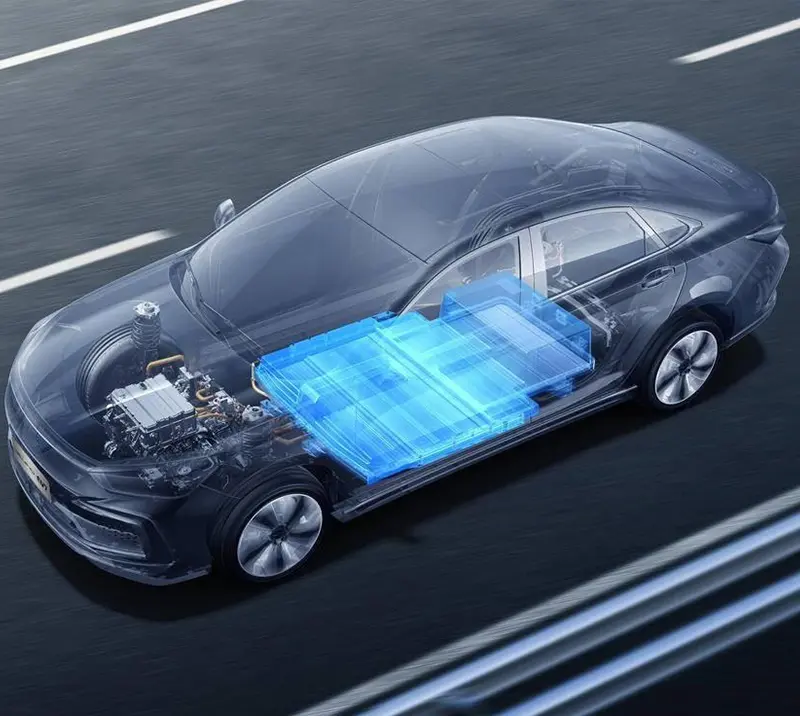
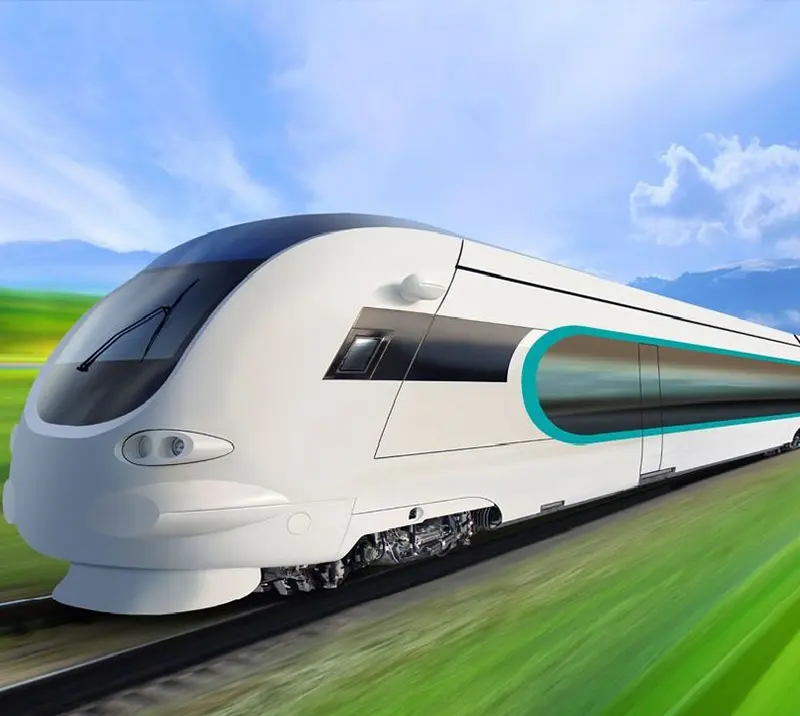
IATF 16949-compliant insulation components built to endure constant road vibration, high harmonic currents, and rapid temperature changes in EV powertrains and high-speed rail.
With over two decades of custom manufacturing experience, Flyaford provides end-to-end design engineering services for global OEMs. Our team transforms engineering drawings into high-volume composite components using a streamlined four-stage production cycle:
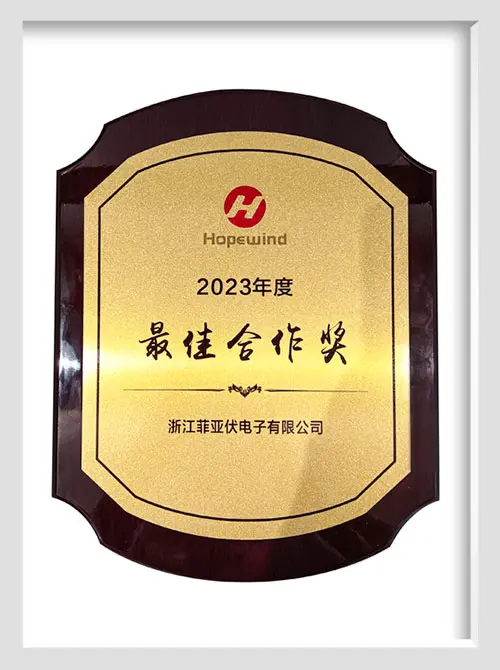
Our long-term engineering partnerships—some extending beyond 10 consecutive years—highlight our dedication to consistent quality, transparent pricing, and on-time global fulfillment.
Pioneering composite insulation innovations to support high-efficiency grid transformation through 2030 and beyond.
Developing micro-capsulated epoxy systems capable of automatically repairing micro-fractures caused by electrical stress, significantly extending service life in remote substation deployments.
Embedding high-precision temperature, partial discharge, and vibration sensors directly into the molding compound to enable real-time condition monitoring for smart grid networks.
Transitioning compression press lines to 100% renewable solar power while utilizing eco-friendly, bio-based resin systems to reduce the carbon footprint of grid hardware.
Engineering answers to critical questions regarding compliance, installation, and composite performance parameters.
Flyaford composite insulators strictly adhere to international safety directives. Our production facilities hold IATF 16949 (automotive quality management), ISO 9001, and ISO 14001 certifications. Product lines maintain full CE compliance under EU standard EN 61109 / IEC 60664-1, alongside UL 94 V-0 flame-retardant verification, RoHS 2.0, REACH chemical safety compliance, and an EcoVadis sustainability rating.
BMC/DMC composite insulators offer several key advantages over traditional porcelain or glass: higher impact resistance without shattering, up to 50% lower weight, superior thermal shock stability (-40°C to +140°C), precise insert thread tolerances, and superior hydrophobic properties that prevent surface tracking in high-humidity environments.
We eliminate internal air voids and micro-fractures through high-tonnage thermosetting compression molding, controlled vacuum degassing cycles, and strict material temperature regulation. Every production lot undergoes non-destructive partial discharge testing (0-120 kV) to ensure partial discharge levels remain below 5 pC at operational voltages.
Torque resistance depends on insert thread diameter (e.g., M6, M8, M10, M12, M16). Using deep helical knurled brass or steel inserts molded directly into the compound matrix, our insulators support high tightening torque values—such as 30+ N.m for M10 threads and up to 120+ N.m for M16 threads—without thread stripping or insert rotation.
Yes. As an IATF 16949-certified supplier, we customize glass fiber lengths, resin matrices, and internal mechanical reinforcement to absorb continuous dynamic vibration, protecting busbars and power modules in electric vehicles, wind power nacelles, and railway traction switchgear.
Standard product orders ship within 7 to 15 business days. For fully custom OEM/ODM designs requiring new mold tooling, prototype samples are typically delivered for customer type testing within 20 to 30 days following CAD drawing sign-off.
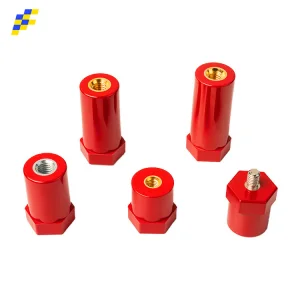
Select from our certified series of busbar standoff insulators, switchgear isolation blocks, and high-performance power network components.
Collaborating with global power grid leaders, electrical equipment manufacturers, and research institutions worldwide.