 Flyaford
Flyaford
Flyaford
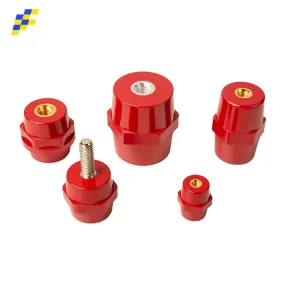
High-performance BMC, EMC, and Silicone Coated Standoff Insulators designed for harsh dielectric environments and high mechanical load protection.
Established in 2007, ZHEJIANG FLYAFORD ELECTRON CO., LTD. has emerged as a premier manufacturer and international exporter of low-to-medium voltage electrical insulators, thermosetting composite components, and room-temperature vulcanized (RTV/LSR) silicone coated insulation solutions. Strategically operating within a state-of-the-art 35,000 square meter facility in Jinhua City, Zhejiang Province, Flyaford combines deep material science expertise with smart automated manufacturing.
As an officially certified National High-Tech Enterprise and designated supplier for academic hubs including Tsinghua University, our engineering department focuses on resolving complex electrical tracking, thermal dissipation, and mechanical shear problems across modern high-stress applications: Electric Vehicle (EV) battery busbars, 5G wireless base stations, utility-scale solar/wind farms, and smart digital switchgear networks.
Analysis of global energy transition vectors, grid modernization challenges, and why silicone coating technology is replacing legacy porcelain and epoxy systems.
Industrial coastal developments and severe air pollution accelerate flashover risks on traditional porcelain switchgear components. Advanced hydrophobic RTV/LSR silicone coatings prevent continuous water film formation, converting conductive moisture into isolated beads to eliminate dry-band arcing.
Next-generation Electric Vehicles (EV) and Battery Energy Storage Systems (BESS) require elevated thermal conductivity alongside high mechanical flexural strength. BMC/EMC standoff insulators modified with silicone encapsulation withstand intense thermal cycling (-40°C to +140°C) without micro-cracking.
Global power utilities and OEM panel builders face escalating maintenance labor costs. Silicone coated electrical insulators provide self-cleaning properties, drastically lowering total cost of ownership (TCO) by reducing the need for manual washing and periodic silicone grease re-application.
Flyaford's scientific formulation integrates High-Grade BMC (Bulk Molding Compound), EMC (Epoxy Molding Compound), and Phenolic Resins with precision-engineered metal inserts.
| Material Characteristic | Standard BMC/Epoxy Insulator | Flyaford Silicone Coated Insulator | Engineering Benefit |
|---|---|---|---|
| Hydrophobic Transfer Property | Low / Static | Dynamic Hydrophobic Recovery (HC1-HC2) | Migrates hydrophobicity through pollution layers, preventing flashover. |
| Comparative Tracking Index (CTI) | CTI 175 - 400V | CTI > 600V (Class 0 Immunity) | Eliminates carbon tracking under severe surface moisture & dust. |
| Mechanical Torsion Strength | Standard (100-300 N.m) | High-Torque Brass/Steel Inserts (0-500 N.m) | Prevents insert spinning or loosening during heavy busbar installation. |
| Thermal Shock Tolerance | -20°C to +85°C | -40°C to +140°C (Extended Range) | Guarantees structural integrity in harsh sub-zero or desert climate installs. |
| Flame Retardancy | UL 94 V-1 | UL 94 V-0 & Halogen-Free | Self-extinguishing within 10 seconds; produces no toxic halogen fumes. |
To ensure zero-defect reliability across demanding global energy networks, Flyaford operates the municipal-level Jinhua Feifav High-Performance Insulator Science and Technology R&D Center. Every custom ODM solution undergoes stringent laboratory validation prior to mass tooling.
Equipped with high-voltage partial discharge test chambers (0-120KV), withstand voltage testers (0-100KV), and lightning impulse test equipment (0-300KV) ensuring zero partial discharge failure (<5pC).
Precision microcomputer torsion testing machines (0-500N.m) and universal tension test systems (0-200KN) verify exact pull-out forces and torque limits for bonded hardware inserts.
Double 85°C humidity chambers, high-low temperature thermal shock test units (-40°C to 140°C), arc resistance testers, and salt spray corrosion chambers simulate 30-year operational lifespans.
Integrated ROHS test component analyzers, vertical/horizontal flammability chambers, and ball pressure test devices guarantee total raw material batch control under IATF 16949 protocols.
Our custom silicone-coated standoff insulators and busbar supports are deployed in critical electrical setups around the globe.

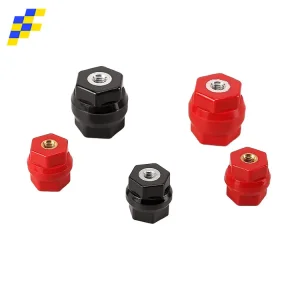
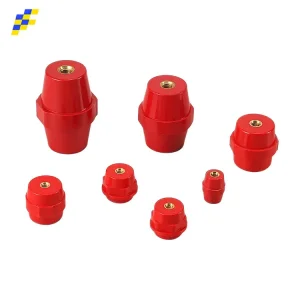
Engineered standoff insulators (SM, D-Type, MNS series) designed to handle intense electrodynamic stress during short-circuit faults inside primary power distribution cabinets and compact substations.
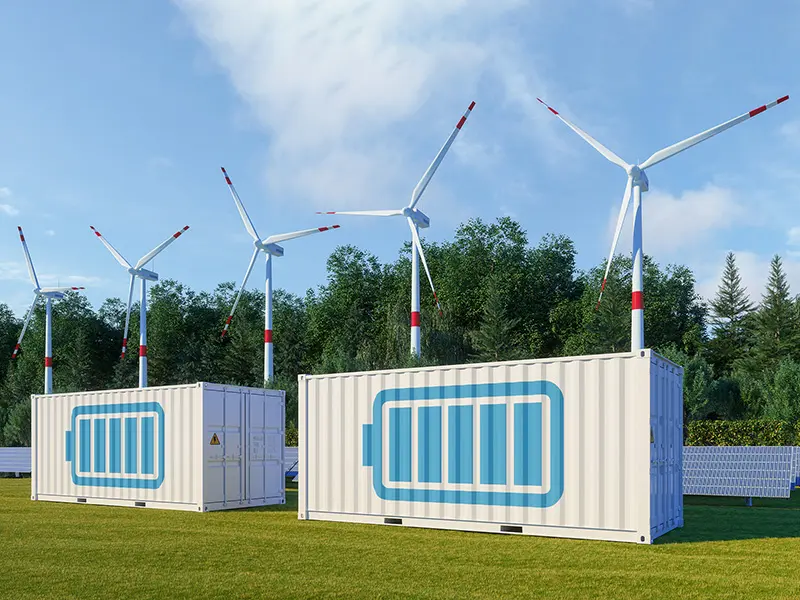
Compact, high-dielectric standoff supports engineered specifically for containerized energy storage racks, protecting DC busbars against high ambient temperature fluctuations and vibration.

Offshore wind turbines and utility solar inverters operate in harsh salt-fog and intense UV conditions. Silicone coated insulators maintain surface resistivity and eliminate maintenance downtime.
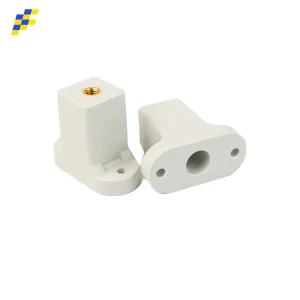
Lightweight thermosetting busbar supports compliant with automotive IATF 16949 standards, engineered for high mechanical impact, thermal resistance, and compact battery management enclosures.

High-frequency harmonic vibrations can degrade low-grade insulation materials. Flyaford insulators maintain structural dampening and thermal stability under continuous dynamic loads.

Ideal for chemical plants and wastewater treatment facilities where airborne corrosive vapors damage metallic and substandard plastic switchgear components.
From initial 3D CAD modeling and finite element stress analysis to high-volume automated molding production.
Custom mechanical torque analysis, creepage distance optimization, hardware insert structural design (copper, brass, zinc-plated steel), and material selection (BMC/EMC/PF).
In-house precision mold making using multi-axis CNC machines. Prototyping and initial sample testing delivered with full raw material inspection certificates.
Execution over 60 hydraulic molding presses operating under digital real-time temperature and pressure monitoring to ensure zero voids and uniform cross-linking.
Automated visual inspection, high-voltage flashover testing, torque testing, and batch traceability tracking ensuring defect levels below 100 PPM prior to dispatch.
Detailed engineering insights to assist procurement directors, system integrators, and electrical design engineers.
A: Silicone coatings provide dynamic hydrophobic recovery. When exposure to heavy industrial pollution or salt spray occurs, low molecular weight silicone chains transfer to the surface pollution layer. This prevents conductive moisture film formation, dramatically reducing leakage currents and eliminating pollution flashovers without frequent manual cleaning.
A: We utilize specialized anti-rotation knurling on brass and steel hardware inserts, combined with high-density Bulk Molding Compound (BMC/EMC). Our microcomputer torsion testing equipment validates insert torque capacity up to 500 N.m, ensuring hardware will not slip or crack during high-force busbar bolt tightening.
A: Yes. Flyaford possesses 20 years of dedicated OEM/ODM experience. Our engineering team custom-designs mold geometry, height, creepage distance, and thread patterns (M6 to M16) to meet specific IEC, UL, or national grid engineering requirements.
A: Products are supplied with comprehensive test reports covering IATF 16949 automotive standards, UL 94 V-0 flame certification, CE EU compliance, and RoHS 2.0 / REACH chemical safety test reports for raw materials.
A: Through a completely digitalized smart factory infrastructure. Real-time sensor monitoring regulates compression mold temperature and cure time. Every unit undergoes automated 100% full electrical withstand and visual appearance inspection before packaging.
A: Standard custom mold manufacturing and prototype sample delivery typically take 15 to 25 days depending on design complexity. Mass production can achieve up to 200,000 pieces per day once tooling is finalized.
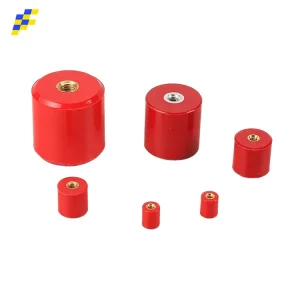
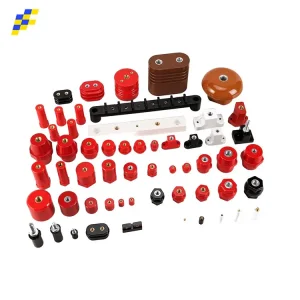
Explore our standardized series catalog including T-Type, SEP, P-Series, and custom BMC busbar standoff insulators.