 Flyaford
Flyaford
Flyaford
Direct factory supply manufactured under strict IATF 16949 & ISO 9001 quality frameworks for low-to-medium voltage power distribution.
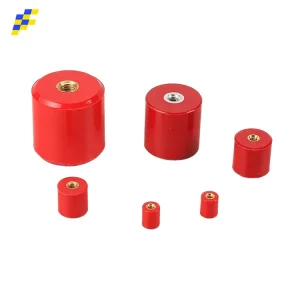
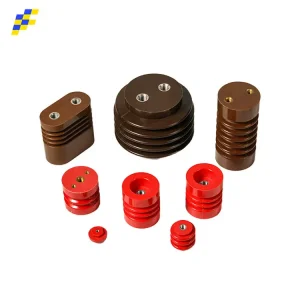
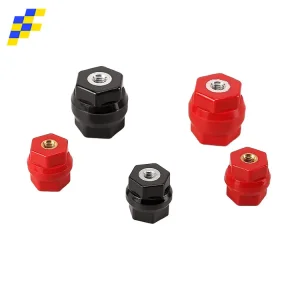
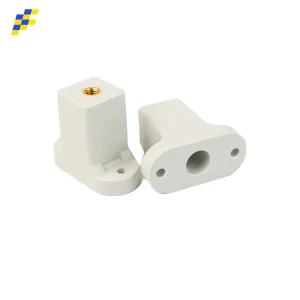

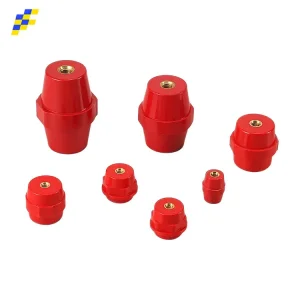
The global transition toward green energy, decentralized power grids, electric mobility, and automated industrial plants has triggered an unprecedented surge in demand for high-reliability low tension (LT) standoff insulators and busbar supports. Low tension insulators—typically operating within voltage thresholds up to 1kV (and extending into medium-voltage boundary applications up to 12kV)—serve as critical structural and electrical isolation nodes. They preserve circuit integrity, support heavy mechanical loads from copper/aluminum busbars, and withstand sudden electrodynamic short-circuit stresses in modern distribution assemblies.
As international OEMs, Engineering, Procurement, and Construction (EPC) contractors, and switchgear fabricators seek qualified wholesale low tension insulators factory partners, procurement metrics have evolved beyond simple cost-per-unit evaluation. Procurement decisions now prioritize zero-defect production guarantees, material formulation longevity (specifically thermosetting Bulk Molding Compounds [BMC] and Sheet Molding Compounds [SMC]), compliance with international standards (UL94 V-0 flame retardancy, IEC 61439, RoHS 2.0, REACH), and robust OEM/ODM engineering scalability.
Modern battery energy storage systems (BESS), solar PV inverter stations, and wind turbine power nacelles operate under complex environmental stresses. Low tension insulators in these deployments must handle intense thermal cycling, elevated ambient temperatures, high humidity, and harmonic vibrations without tracking, carbonizing, or suffering mechanical fatigue. Global buyers require customized polymer formulations capable of long-term stability.
High-power EV fast-charging stations and smart automated manufacturing lines require ultra-compact switchboards and frequency conversion cabinets. This demands busbar standoff insulators with high cantilever strength, exceptional arc resistance, and precise dimensional tolerances to prevent flashovers and mechanical misalignment during peak current surges.
The electrical and structural performance of low tension insulators depends heavily on polymer chemistry and composite formulation. Traditional porcelain and low-grade plastics have largely been replaced by thermosetting composite materials reinforced with chopped glass fibers and specialized inorganic fillers.
| Material Type | Composition & Structure | Dielectric Strength | Comparative Tracking Index (CTI) | Key Operational Advantages |
|---|---|---|---|---|
| BMC (Bulk Molding Compound) | Unsaturated polyester resin, 15-30% glass fiber, mineral fillers (Alumina Trihydrate), catalyst. | ≥ 18 - 25 kV/mm | CTI 600V (PLC Class 0) | High mechanical impact resistance, exceptional cost-performance ratio, UL94 V-0 self-extinguishing flame rating. |
| DMC (Dough Molding Compound) | Dough-like formulation of polyester resin, glass strands, calcium carbonate, chemical additives. | ≥ 16 - 22 kV/mm | CTI 600V | Excellent mold flow, ideal for complex geometry low voltage standoff insulators with intricate threaded inserts. |
| EMC (Epoxy Molding Compound) | Epoxy resin matrix with specialized hardeners, micro-silica filler, high glass fiber content. | ≥ 25 - 32 kV/mm | CTI > 600V | Superior thermal stability (-50°C to +180°C), minimal moisture absorption, premium dielectric properties for harsh environments. |
| PF (Phenolic Resin / Bakelite) | Phenol-formaldehyde thermosetting polymer with cellulose or wood-flour reinforcement. | ≥ 12 - 18 kV/mm | CTI 175V - 275V | High hardness, economical for non-critical indoor switchboard panel isolation and low-stress mechanical mounts. |
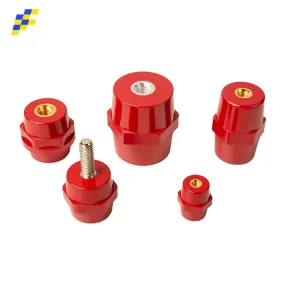
Every low tension insulator relies on brass, steel, or aluminum threaded inserts anchored during compression molding. Engineering precise knurling patterns and anti-rotation grooves on inserts prevents pull-out failures and thread stripping when torque settings reach up to 500 N.m during heavy busbar installation.
Insulators used in indoor switchgear must comply with UL94 V-0 flame standards. In the event of an electrical arc, BMC and DMC formulations containing Alumina Trihydrate (ATH) release water vapor to suppress flame propagation while generating minimal non-toxic smoke, protecting personnel and surrounding electronics.
Optimizing surface ribs and skirt profiles increases the physical creepage path across the insulator body. This design prevents tracking currents and flashovers caused by airborne dust, industrial moisture, and chemical residues in challenging factory settings.
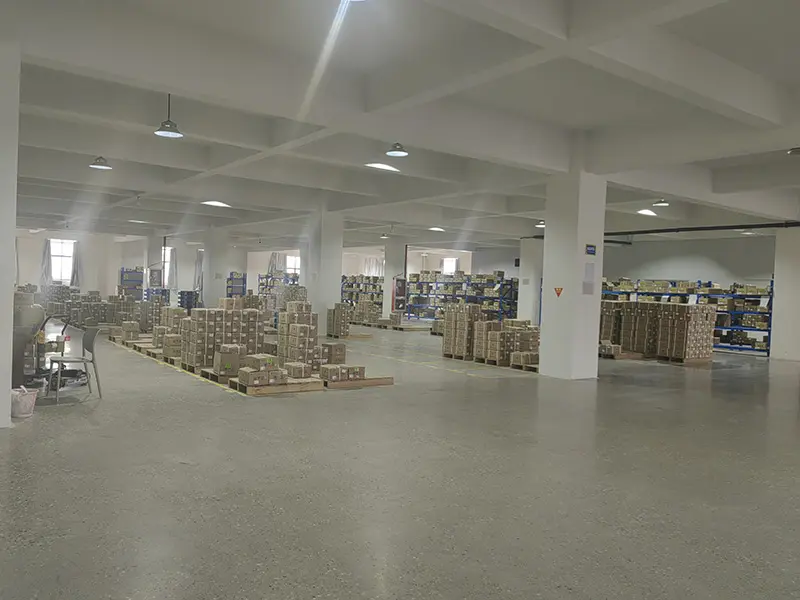
Established in 2007 and situated in the Jinyi New District of Jinhua City, Zhejiang Province, ZHEJIANG FLYAFORD ELECTRON CO., LTD. has grown into an international leader in low-to-medium voltage insulation solutions. Spanning a modern construction area of 35,000 square meters, the company operates over 60 advanced thermosetting compression molding machines and over 20 specialized electrical and mechanical testing units.
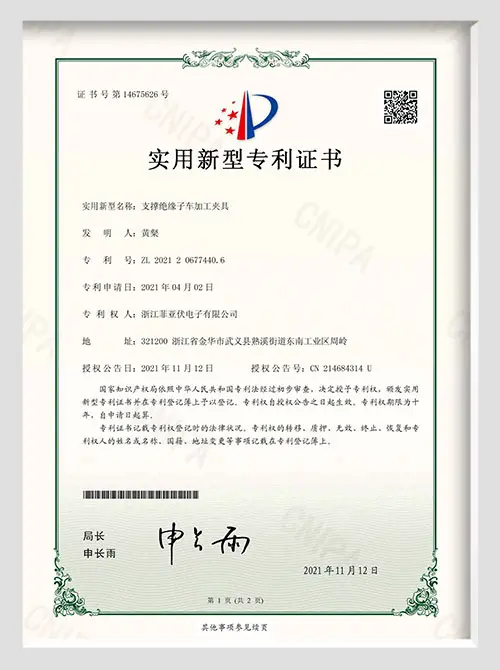
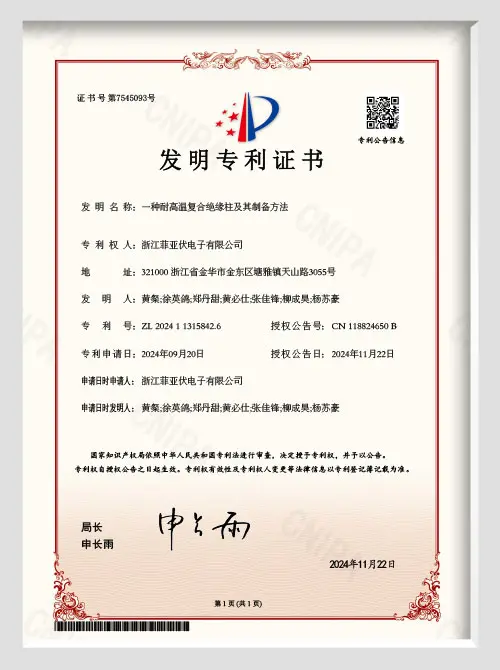
Supported by a workforce of over 120 skilled personnel, Flyaford produces more than 200,000 insulator units daily, maintaining an industry-leading defect rate of below 100 PPM. As a recognized "National High-Tech Enterprise" and "Zhejiang Provincial Specialized, Refined, Distinctive, and Innovative SME", Flyaford operates the provincial-level Jinhua Feifav High-Performance Insulator Science and Technology R&D Center.
The company maintains active research partnerships with prestigious academic institutions, including Tsinghua University, serving as their designated insulator supplier for high-voltage and power electronics experimental platforms.

Equipped with high-precision CNC machining centers, EDM equipment, and mold flow analysis software, Flyaford executes complete end-to-end mold design, hardware insert customization, and rapid prototyping within tight production schedules.
Digitalized molding machines continuously control pressure, curing temperatures, and cycle times. Automated material dosing ensures exact density across all molded composite parts, eliminating internal void defects.
Every production batch is tracked from raw material inspection through to final packaging. Integrated MES systems enable end-to-end product traceability, supporting strict global procurement and quality standards.
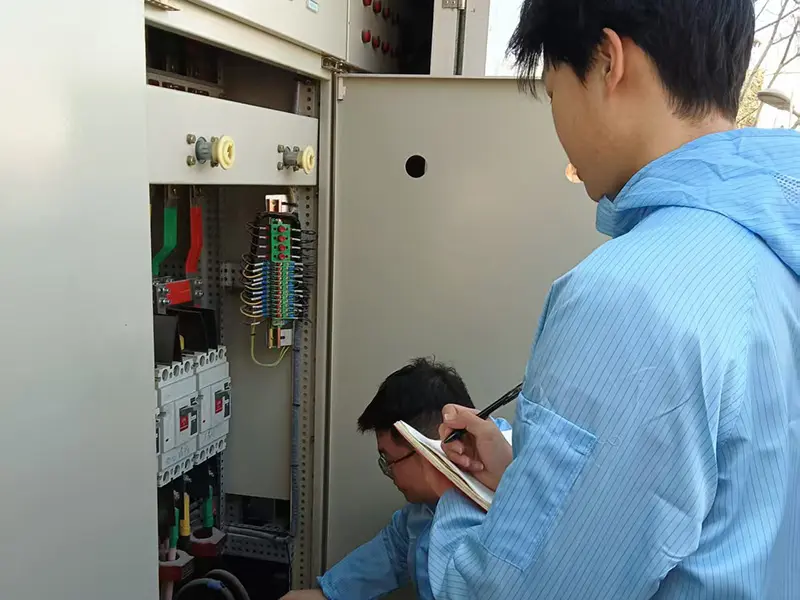
To guarantee complete operational reliability in mission-critical applications, Flyaford operates a state-of-the-art testing laboratory. Every batch of raw material and finished low tension insulator undergoes rigorous evaluation using high-precision testing equipment:



With over 20 years of technical specialization in low and medium voltage insulators, Flyaford delivers turn-key custom engineering services for global switchgear manufacturers and renewable energy contractors. Our streamlined workflow guarantees fast turnaround times, complete technical alignment, and strict adherence to client specifications.
Dedicated technical support evaluating mechanical stress requirements, creepage distance calculations, operating environments, and spatial dimensions.
Custom resin selection (BMC, DMC, EMC, PF) paired with specialized brass, steel, or stainless thread insert options tailored to torque standards.
Rapid 3D modeling and mold creation backed by sample testing and dimensional verification prior to mass production clearance.
Automated compression molding with 100% full electrical spark testing, appearance check, precise batch packaging, and international shipping.
Flyaford low tension standoff insulators and busbar supports operate in demanding industrial power distribution environments across international markets.

Nacelle control cabinets and tower distribution boxes require insulators engineered to withstand continuous mechanical vibration, offshore salt fog corrosion, and wide temperature swings.

Central and string solar inverters demand high DC voltage insulation, low moisture absorption, and extended UV-aging resistance to maintain reliable operation across remote solar farms.
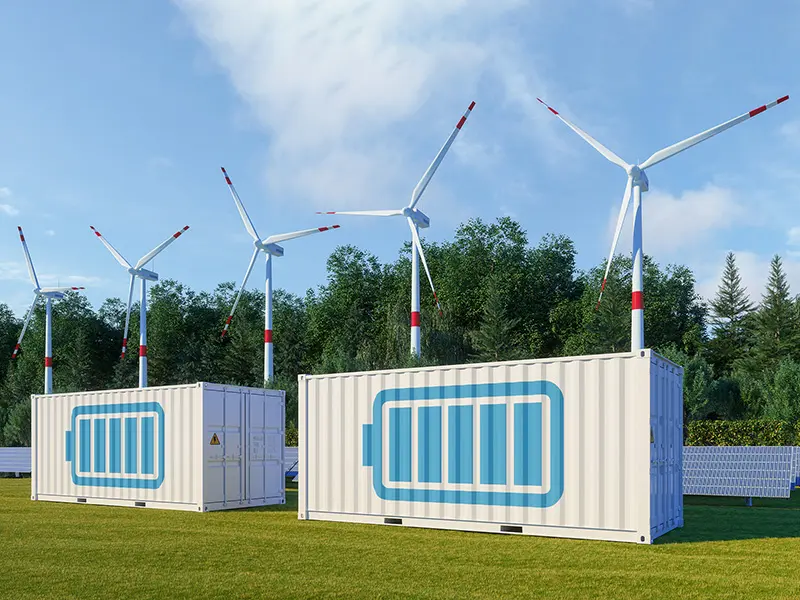
Containerized energy storage units rely on compact BMC/EMC insulators for high-density busbar routing, delivering low thermal degradation and structural safety during short-circuit surges.

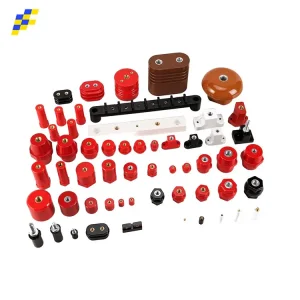
Flyaford SM, P, and EL series insulators provide reliable busbar isolation within main switchboards, distribution boards, and motor control centers (MCC) operating up to 1kV/12kV.

Ideal for motor drive and automation control cabinets, offering robust high-frequency noise immunity, excellent arc resistance, and compact footprints for dense panel mounting.
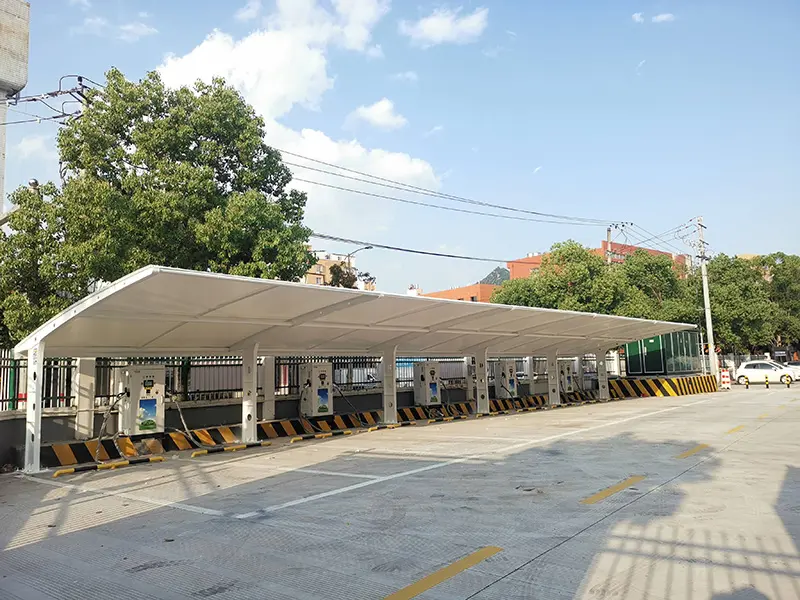
Engineered to meet stringent IATF 16949 automotive standards, supporting power distribution units (PDUs) and high-power DC fast-charging station sub-assemblies.
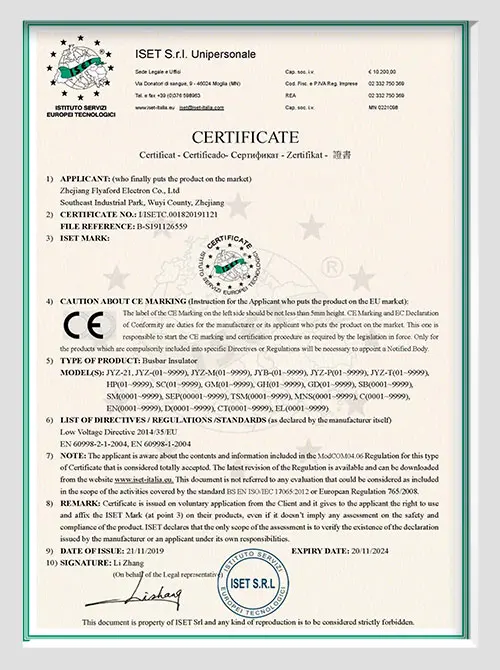
Operating under complete compliance frameworks guarantees seamless integration into international projects across North America, Europe, and Asia-Pacific.
Our operational infrastructure is audited and certified under international quality and environmental management standards:
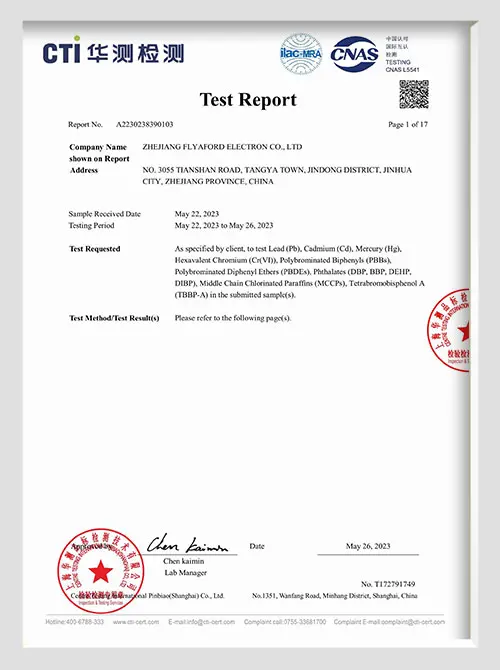
All product lines are routinely inspected to maintain global environmental and safety compliance:



As smart power grids move toward real-time telemetry and eco-friendly manufacturing, Flyaford's R&D team is driving material and structural innovations across three core domains:
Integrating micro-piezoelectric and fiber-optic temperature sensors directly into BMC molded bodies allows continuous tracking of thermal load spikes and partial discharge activity inside smart switchgear arrays.
Pioneering the use of bio-derived polyester matrices and recycled glass fiber reinforcements to decrease the carbon footprint of insulator production while maintaining high mechanical and dielectric strength.
Incorporating nano-silica and graphene oxide additives to achieve superior surface hydrophobic performance and creepage tracking resistance under extreme environmental conditions.
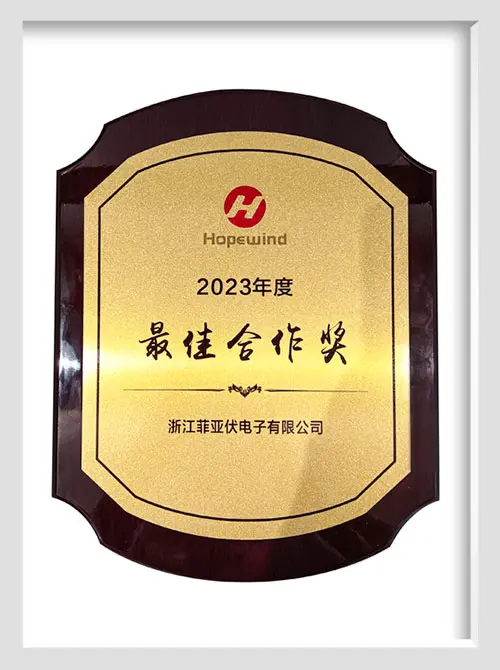
Flyaford maintains long-standing technical and strategic partnerships with leading multinational electrical equipment manufacturers and academic research centers.








Explore our complete inventory of CE-certified standoff, busbar support, and high-voltage safety insulator sub-assemblies.