 Flyaford
Flyaford
Flyaford
Explore precision-molded BMC/DMC standoff insulators designed for extreme dielectric isolation and mechanical endurance.

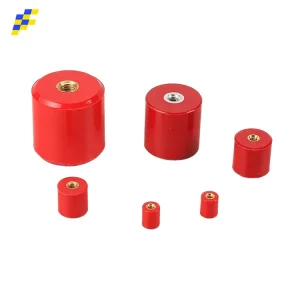
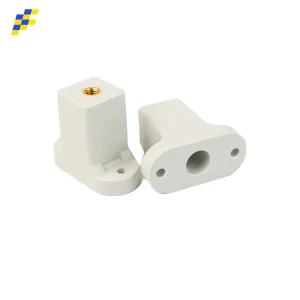
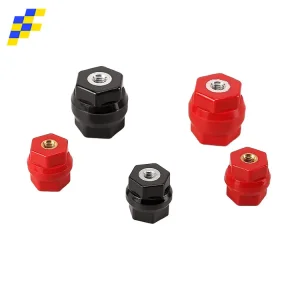
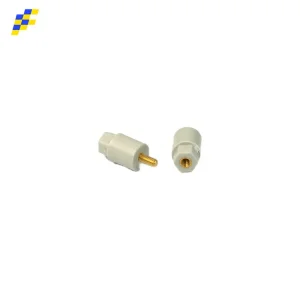
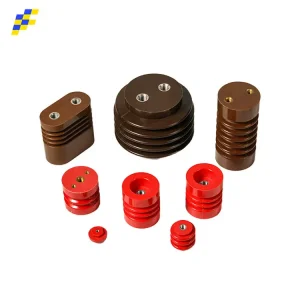
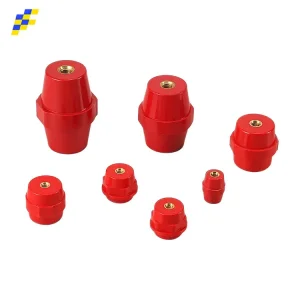
Navigating dielectric breakdown strength, creepage distance Optimization, and cantilever load resilience in modern switchgear environments.
In modern low-to-medium voltage electrical infrastructure, the disconnect switch serves as a critical fail-safe, ensuring physical galvanic isolation during circuit maintenance and emergency fault scenarios. However, the operational safety of any air-break, load-break, or gas-insulated disconnect switch fundamentally relies upon the structural and dielectric integrity of its underlying standoff insulator. Electrical equipment manufacturers and original equipment manufacturers (OEMs) worldwide face increasing pressure to upgrade switchgear reliability under aggressive duty cycles, high-humidity microclimates, and elevated ambient heat environments.
Founded in 2007, Zhejiang Flyaford Electron Co., Ltd. (situated in the Jinyi New District of Jinhua City, Zhejiang Province) has established itself as an authoritative global manufacturer specializing in low-to-medium voltage insulation solutions. Spanning a 35,000-square-meter modern manufacturing complex, Flyaford integrates heavy-duty thermosetting compression molding technology with rigorous IATF 16949 automotive-grade quality standards, providing original equipment manufacturers, panel builders, and energy utility enterprises with unyielding isolation safety.
Understanding the physics behind BMC, DMC, EMC, and Phenolic composite formulations in high-stress disconnect switch applications.
Formulated via chopped glass fibers (15%-30%), unsaturated polyester resins, mineral fillers (Aluminum Trihydrate - ATH), and catalyst systems. Provides exceptional flame retardancy (UL 94-V0 compliance), high flexural strength (up to 120 MPa), and outstanding arc quenching characteristics.
Engineered for high-voltage isolation where low moisture absorption (<0.1%) and elevated thermal stability are non-negotiable. EMC provides exceptional tensile properties and zero micro-cracking during rapid cyclical thermal shock environments.
Demonstrates extreme continuous service temperature resistance (HDT > 200°C) and robust dimensional stability under heavy mechanical torque loads during mechanical contact engagement inside heavy disconnect switches.
| Performance Parameter | BMC / DMC Compound | EMC Epoxy Compound | Phenolic (PF) Compound | Test Standard Method |
|---|---|---|---|---|
| Comparative Tracking Index (CTI) | CTI ≥ 600 V | CTI ≥ 600 V | CTI ≥ 175 - 400 V | IEC 60112 / ASTM D2303 |
| Dielectric Strength (kV/mm) | 18 - 24 kV/mm | 22 - 28 kV/mm | 12 - 16 kV/mm | IEC 60243-1 |
| Flammability Rating | UL 94 V-0 (1.5mm - 3.0mm) | UL 94 V-0 | UL 94 V-0 / HB | UL 94 Standard |
| Torsional Torque Resistance | Up to 500 N.m (Series Specific) | Up to 600 N.m | Up to 350 N.m | ISO 16047 / In-house Microcomputer |
| Thermal Shock Tolerance | -40°C to +140°C | -50°C to +160°C | -30°C to +180°C | 2-Chamber Thermal Cycling |
| Creepage & Clearance Design | Optimized Corrugated Ribs | Smooth / Ribbed Precision Profile | Modular Standoff Height | IEC 60664-1 / IEC 62271 |
Inside Zhejiang Flyaford Electron Co., Ltd. — A Recognized National High-Tech Enterprise & Designated Insulator Supplier for Tsinghua University.
In the global market for electrical insulation hardware, purchasing managers and chief technology officers require supply chain predictability, absolute lot-to-lot consistency, and rapid product customization. Operating out of Jinhua City, Zhejiang Province, Flyaford bridge the gap between heavy industrial physical production and digital smart factory automation.
Houses over 60 automatic compression molding machines capable of processing high-viscosity thermosetting compounds with micro-gram weight accuracy. Daily production capacity exceeds 200,000 completed units, maintaining lead times under tight master schedules.
Utilizes digital process monitoring, automatic temperature profile controls, and fully automated deflashing and insert loading equipment. Total product defect rate remains consistently strictly below 100 PPM across millions of shipped components.
Recognized as "Zhejiang Provincial Specialized, Refined, Distinctive, and Innovative SME", Flyaford holds 26 patents (including 5 primary invention patents and 2 software copyrights), pioneering mold flow optimization and anti-stripping insert design.
Validating long-term dielectric performance and mechanical strength through full-spectrum empirical testing.
To eliminate field failures caused by partial discharge, moisture ingress, or thread stripping during high-torque installation, Flyaford maintains a state-of-the-art laboratory facility equipped with advanced inspection instruments:
Partial Discharge Room (0-120 kV): Ensures zero internal voiding or micro-porosity in thick-walled insulator moldings.
Lightning Impulse Tester (0-300 kV): Simulates transient overvoltage conditions encountered during grid atmospheric surges.
Withstand Voltage Tester (0-100 kV): Verifies commercial power-frequency dielectric isolation reliability.
Microcomputer Torsion Tester (0-500 N.m): Evaluates brass/steel threaded insert pull-out and torsional shear limits.
Universal Tensile/Compression Tester (0-200 kN): Quantifies maximum cantilever bend strength and axial compression crush thresholds under electrodynamic short-circuit forces.
Double 85 Chamber & Thermal Shock (-40°C to +140°C): Subjects insulators to rapid temperature transitions to prove freeze-thaw zero failure capability.
ROHS Spectrometer & Flame Chambers: Verifies environmental compliance (ROHS 2.0 / REACH) and self-extinguishing flame resistance.
Certified Management & International Standards Compliance:
Engineered to perform in critical energy infrastructure, industrial motor control centers, and green-energy conversion systems.
Provides rigid busbar mechanical support and phase isolation within main power distribution panels, low-voltage switchboards, and air disconnect switch assemblies subjected to high fault-current magnetic repulsive forces.
Protects high-power DC disconnect switches and AC isolation breakers in outdoor utility-scale central inverters and wind turbine nacelle cabinets operating under extreme diurnal temperature swings and high humidity.
Delivers high CTI insulation performance inside compact DC disconnect enclosures, preventing thermal runaway arc tracking and protecting high-density lithium battery banks in commercial energy storage installations.
Supports ultra-fast megawatt DC charging power stacks and electric locomotive traction switchgear, ensuring long-term dielectric durability against physical vibration and harmonics.
From initial rapid CAD prototyping and custom mold engineering to automated mass compression molding.
Engineers analyze installation geometry, nominal system voltage, creepage requirements, short-circuit current ratings, and ambient thermal conditions to select optimal raw compound (BMC, DMC, EMC, PF).
In-house mold tooling design utilizing 3D flow simulation to ensure zero internal voids. Specialized knurled metal insert designs prevent anti-rotation and thread stripping during high-torque assembly.
Rapid initial sample molding within designated delivery windows, subjected to mechanical pull-out tests, flashover inspection, and dimensional verification prior to client tooling sign-off.
Automated compression molding backed by 100% full electrical withstand and appearance inspection, ensuring 100% batch traceability and zero-defect dispatch to global switchgear manufacturers.
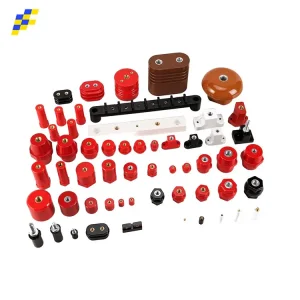
Select from our standard product series or request tailored mechanical standoff dimensions.
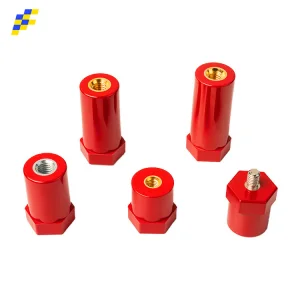
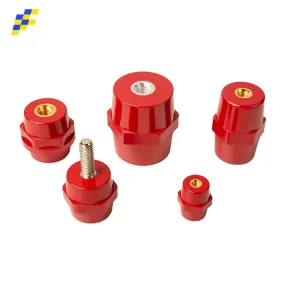
How decarbonization, SF6 alternative gas switchgear, and smart grid automation are reshaping OEM component specifications.
The global medium-voltage disconnect switch market is experiencing a profound transition driven by global decarbonization mandates and grid modernization. As electrical power distribution networks upgrade to handle high penetration of intermittent solar and wind generation, three macro-trends are shaping OEM insulator sourcing strategy:
Global regulatory restrictions on Sulphur Hexafluoride (SF6) gas are driving switchgear OEMs to develop clean-air and vacuum-based disconnect switches. This transition requires standoff insulators to possess higher surface creepage distances and higher CTI ratings to prevent dielectric flashover under pressurized dry air or nitrogen insulation environments.
With increasing grid fault levels in dense urban centers and renewable microgrids, disconnect switches are subjected to immense mechanical repulsive forces during instantaneous short-circuit events. Modern BMC/EMC insulators are engineered with high-aspect glass fibers to deliver superior dynamic bending moments without catastrophic cracking.
Compact modular switchboards demand smaller insulator profiles that do not sacrifice creepage distance. Utilizing optimized corrugated rib profiles and high HDT thermosetting resins allows electrical engineers to reduce cabinet footprints by up to 25% while maintaining strict IEC clearance guidelines.
Essential technical and procurement insights for OEM switchgear manufacturers and electrical engineering buyers.