 Flyaford
Flyaford
Flyaford
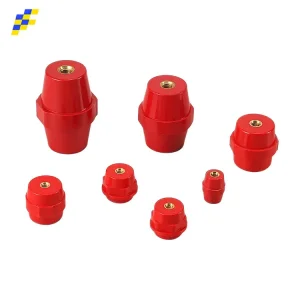
Certified standoff insulators, busbar supports, and structural insulation parts designed to exceed rigorous electrical and mechanical specifications.
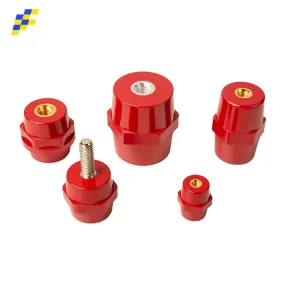
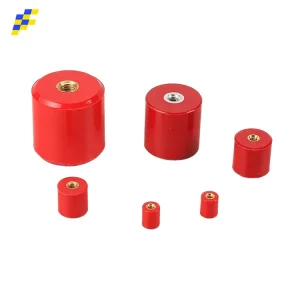
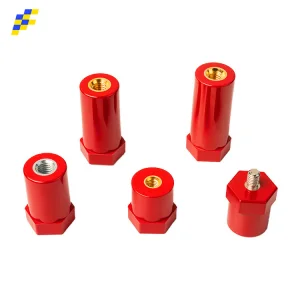
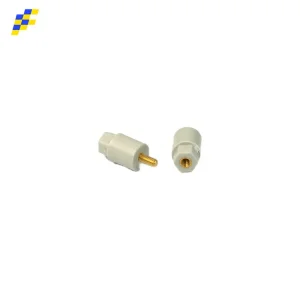
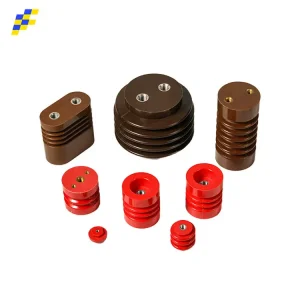
Situated in the prestigious Jinyi New District of Jinhua City, Zhejiang Province, ZHEJIANG FLYAFORD ELECTRON CO., LTD. (established in 2007) stands at the global forefront of research, development, and high-precision manufacturing of low-voltage to medium-voltage distribution insulators and custom composite insulation assemblies.
Operating within a 35,000-square-meter modern industrial complex, Flyaford houses over 60 automated compression molding units and more than 20 advanced testing instruments. Producing in excess of 200,000 precision component pieces daily with an industry-leading defect rate below 100 PPM, we serve global enterprise clients across new energy vehicles (NEVs), 5G telecommunication infrastructure, battery energy storage systems (BESS), smart robotic automation, and high-speed rail electrical grids.
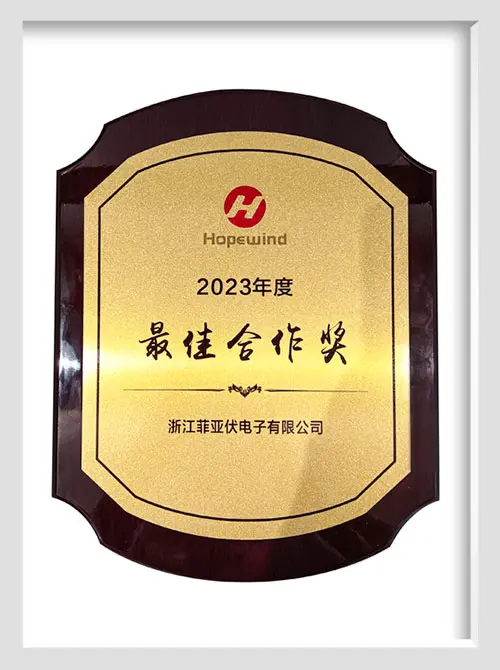
Institutional Collaborations & Key Enterprise Partners


An engineering analysis of material evolution, thermosetting composite breakthroughs, and dielectric stability in next-generation distribution systems.
Historically, electrical distribution infrastructure relied heavily on traditional wet-process porcelain and low-grade epoxy resin insulators. However, the modernization of industrial power distribution—characterized by higher power densities, severe harmonic thermal stresses, and compact switchgear footprints—has pushed legacy materials past their physical boundaries. Porcelain exhibits high vulnerability to mechanical shock and brittle fracture under cantilever loads, while standard epoxies are prone to surface tracking, moisture absorption, and thermal degradation under continuous partial discharge.
Today's technical roadmap centers on advanced Thermosetting Composite Materials: specifically Bulk Molding Compound (BMC), Sheet Molding Compound (DMC/SMC), Unsaturated Polyester Compounds (UP), Epoxy Molding Compounds (EMC), and Phenolic Formaldehyde (PF) resins reinforced with silane-treated structural glass fibers.
To assist power system design engineers in selecting the optimal structural insulation material, Flyaford's R&D laboratory has compiled the following performance comparison matrix detailing the operational metrics of engineering polymers:
| Property Standard | Traditional Porcelain | Standard Epoxy Resin | Flyaford Glass-Reinforced BMC | High-Performance EMC / PF |
|---|---|---|---|---|
| Dielectric Strength (kV/mm) | 10 - 15 | 18 - 22 | > 25 | > 30 |
| Comparative Tracking Index (CTI) | CTI 600 (Glazed) | CTI 300 - 400 | CTI 600 (Class 1) | CTI 600+ |
| Flame Retardancy (UL 94) | Non-flammable | UL 94-V1 / HB | UL 94-V0 (Self-extinguishing) | UL 94-V0 / 5VA |
| Tensile & Flexural Strength | Low (Brittle) | Moderate | High (>120 MPa) | Ultra-High (>160 MPa) |
| Thermal Shock Range (°C) | -20 to +100 | -30 to +105 | -40 to +140 | -50 to +180 |
The low-voltage distribution landscape is rapidly evolving towards digitalized switchgear and high-frequency power electronics. Future insulator technologies focus on three primary trajectories:
Tailored structural insulation engineered to withstand harsh operational stresses across critical global sectors.
High-density DC busbar support insulators designed for high short-circuit withstand forces, preventing thermal runaway arc propagation in containerized battery racks.
Automotive-grade (IATF 16949 certified) low-profile standoff insulators operating in ultra-fast DC charger cabinets and onboard traction inverter sub-assemblies.
Salt-spray resistant, vibration-damped insulators engineered to handle harmonic vibration, atmospheric moisture, and transient thermal cycles in renewable farms.
Comprehensive SM, SEP, MNS, and EL series busbar supports providing rigid structural separation and maximum creepage clearance in low-voltage panelboards.
Compact BMC standoff insulators ensuring EMI/RFI isolation and dependable power conversion stability in outdoor telecom base stations and intelligent robotics.
Heavy-duty composite insulators formulated for extreme mechanical shock resistance and continuous mechanical fatigue along high-speed railway power lines.
Digital automation, rigorous quality control loops, and high-throughput compression molding for absolute supply security.
At Flyaford's 35,000 m² smart manufacturing center, industrial automation and digitalization are deeply integrated across every phase of production. From raw resin batch blending to final automated optical inspection (AOI), our operations embody the peak of modern Industry 4.0 manufacturing.
High-tonnage precision compression molding presses featuring closed-loop PID temperature and pressure monitoring to eliminate structural voiding and internal microporosity.
Full digital process execution under IATF 16949 and ISO 9001 systems. Every production batch is fully traceable from raw thermosetting compounds down to individual brass insert lots.
Equipped with specialized testing machinery ensuring 100% compliance with international mechanical torque, flashover voltage, and environmental withstand requirements.
Flyaford maintains an elite research and verification facility in strategic partnership with leading academic institutions, including Tsinghua University. Our testing center houses:
A clear technical breakdown of key design selection parameters for procurement officers and electrical design engineers.
Selecting the ideal standoff or busbar insulator requires balancing electrical isolation, mechanical loading, environmental resilience, and dimensional packaging constraints. When submitting engineering specifications to Flyaford, our application engineering team evaluates four core critical metrics:
The embedded metallic inserts (typically high-grade brass, zinc-plated steel, or solid copper) must withstand high tightening torques during busbar installation without stripping or debonding from the composite body. Flyaford inserts feature knurled hexagonal anti-rotation profiles to guarantee high pull-out and torsional retention strengths.
Under humid or polluted operating environments, surface tracking risks increase. Designing insulators with corrugated outer ribs (such as our SM and SEP series) increases the effective surface creepage distance without increasing the overall height of the standoff.
During sudden heavy grid faults, electromagnetic forces create rapid mechanical bending moments along busbars. Structural insulators must exhibit high flexural strength (rated up to tens of kN) to prevent structural collapsing and phase-to-phase shorting.
Flyaford offers turnkey OEM/ODM engineering services. From initial 3D CAD step file analysis and mold flow simulation to custom alloy insert machining and rapid prototype sample delivery, we compress tooling lead times down to industry-record speeds.
Complete end-to-end customer support from initial pre-sale engineering consultation through robust global warranty protection.
Dedicated electrical engineers evaluate customer drawing standards, ambient operating conditions, and mechanical load profiles to recommend the most cost-effective insulator selection.
Fast-track physical sample delivery for laboratory testing, mechanical pull testing, and system verification prior to mass production release.
Remote and on-site engineering response within 2 hours. Continuous technical helpdesk available 7*24 hours online for urgent field support.
Clear quality protection guarantees. In the rare event of a component non-conformity, Flyaford provides immediate advance replacement or return credits.
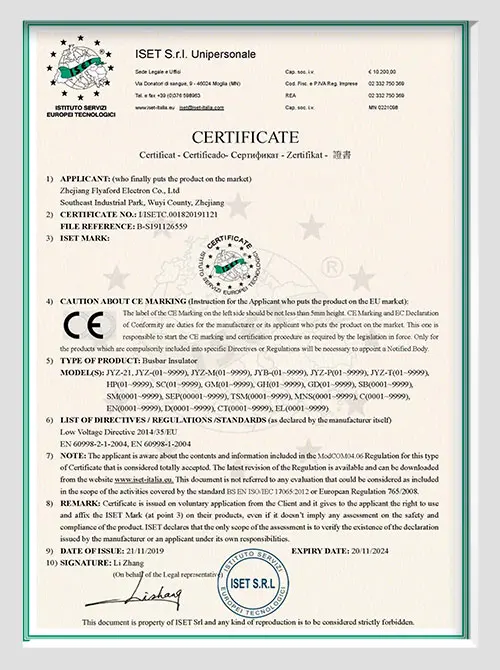
Backed by complete raw material certifications, ROHS 2.0, REACH, UL, CE, and IATF 16949 international automotive quality management compliance.
Regular client reviews and product updates ensuring continuous optimization of compound formulas, insert plating thickness, and packaging logistics.
Expert technical responses to standard inquiries regarding low voltage composite standoff insulators.
Bulk Molding Compound (BMC) and Sheet Molding Compound (DMC) composite insulators offer significantly superior mechanical impact resistance, eliminating the brittle breakage risks associated with porcelain. Compared to standard epoxy resins, BMC compounds reinforced with glass fibers provide higher flame retardancy (UL 94-V0 rating), zero surface moisture absorption, better thermal shock endurance (-40°C to +140°C), and exceptional resistance to surface electrical tracking (CTI > 600V).
Flyaford operates under strict international quality control frameworks. Our manufacturing plant holds IATF 16949 (Automotive Industry Quality System), ISO 9001 (Quality Management), and ISO 14001 (Environmental Management) certifications. Product lines are fully certified to European CE safety standards, hold UL recognition, and comply strictly with ROHS 2.0 and REACH environmental directives.
We utilize high-precision CNC machined brass and alloy inserts designed with deep external knurling and hexagonal locking features. During compression molding under controlled thermal parameters, the thermosetting composite flows tightly around these geometric profiles, locking them into a rigid mechanical bond. Every product batch undergoes strict 100% thread gauge verification and torque pull-out testing up to 500 N.m in our laboratory.
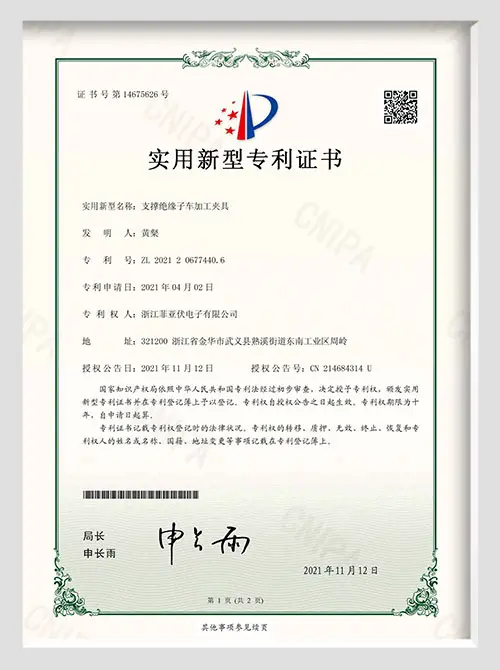
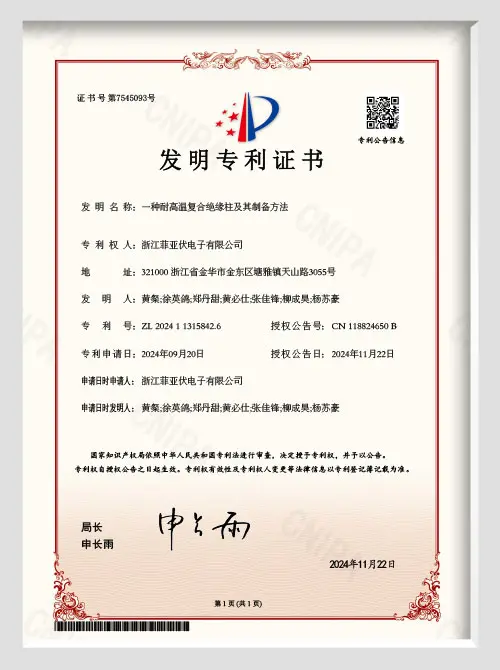
Yes. Customization is one of our primary core strengths. Backed by our in-house tooling and mold design department, 26 utility and invention patents, and designated R&D partnerships (including Tsinghua University), we can design, model, and manufacture custom insulator geometries, specialized insert threads (metric/imperial), and tailored compound colors to meet your specific drawing requirements.
With over 60 high-efficiency compression molding machines operating across our 35,000 m² facility, Flyaford produces over 200,000 insulator pieces per day. Driven by digital automation and rigorous inline AOI/electrical testing, our field defect rate is maintained consistently below 100 PPM (parts per million).
Our specialized BMC composite formulation incorporates inert hydrated mineral fillers and non-hydrolyzing resins that resist moisture accumulation and chemical degradation. Furthermore, our inserts undergo anti-corrosive surface plating (such as heavy nickel or zinc coating), enabling our insulators to pass standard salt spray corrosion testing for reliable use in coastal, offshore wind, and industrial chemical atmospheres.
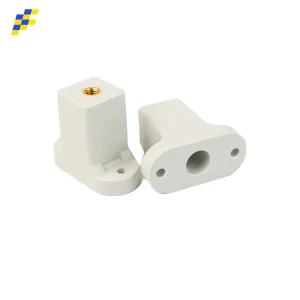
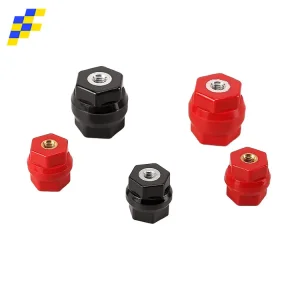
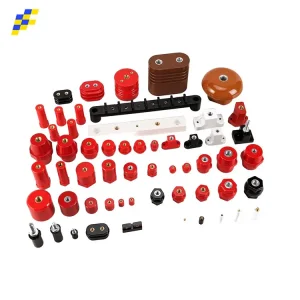
Explore our full range of CE-certified busbar, T-type, D-type, and standoff insulation assemblies.