 Flyaford
Flyaford
Flyaford
Precision-molded composite electrical insulators tested to withstand intense dielectric stress, high mechanical torsion, and extreme environmental variables.
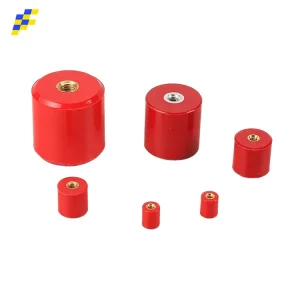
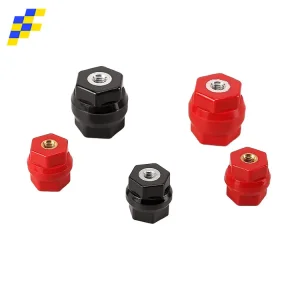
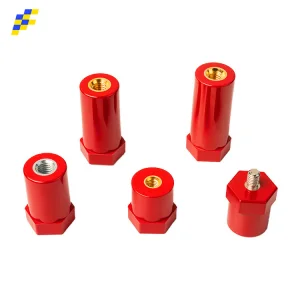
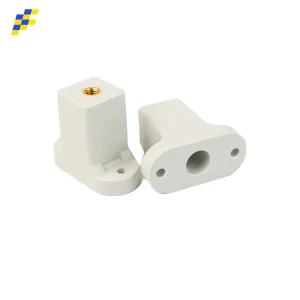

An authoritative deep-dive into dielectric isolation, creepage distance, tensile strength, and polymer chemistry in modern power distribution equipment.
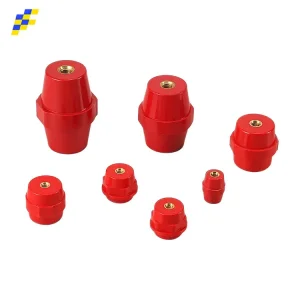
At its fundamental physical core, an electrical insulator is a material whose internal electrical charges do not flow freely; under the influence of an electric field, very little electric current will flow through it. High-quality standoff electrical insulators prevent current leakage, flashover, and arcing between live phase conductors (such as copper or aluminum busbars) and grounded metal structures. Key performance metrics include dielectric strength (kV/mm), comparative tracking index (CTI > 600V), and surface resistance under high thermal stress.
Modern electrical distribution demands materials far superior to legacy ceramics or unreinforced plastics. Thermosetting composite compounds, specifically Bulk Molding Compound (BMC), Epoxy Molding Compound (EMC), and Phenolic Formaldehyde (PF) resins, reinforced with chopped fiberglass and inorganic mineral fillers, provide unmatched dimensional stability, UL94 V-0 flame retardancy, zero halogen toxicity, and mechanical torque withstand capacity during short-circuit electromagnetic shocks.
| Material Parameter | BMC (Bulk Molding Compound) | EMC (Epoxy Molding Compound) | PF (Phenolic Resins) | Standard Thermoplastics (Nylon/ABS) |
|---|---|---|---|---|
| Dielectric Strength (kV/mm) | 18 - 24 kV/mm | 22 - 30 kV/mm | 14 - 18 kV/mm | 12 - 16 kV/mm |
| Comparative Tracking Index (CTI) | CTI ≥ 600 V (PLC 0) | CTI ≥ 600 V (PLC 0) | CTI 175 - 300 V | CTI 250 - 450 V |
| Thermal Endurance (Continuous) | 130°C - 155°C (Class B/F) | 155°C - 180°C (Class F/H) | 150°C - 180°C | 80°C - 110°C |
| Flammability Rating (UL 94) | V-0 (0.8mm Thickness) | V-0 (0.4mm Thickness) | V-0 / V-1 | HB to V-2 (Requires additives) |
| Torsional & Flexural Strength | High (Up to 500 N.m inserts) | Ultra-High (Tensile >200kN) | Moderate / Brittle | Low under thermal aging |
As global electrification accelerates across renewable power generation, microgrids, electric mobility, and hyperscale data centers, electrical insulators serve as critical infrastructure safety anchors.
Containerized Battery Energy Storage Systems (BESS) experience massive DC high-current spikes and thermal fluctuations. Precision BMC T-Type and Standoff insulators protect DC busbars against high fault currents up to 100kA, maintaining structural rigidity and zero arcing across multi-megawatt battery racks.
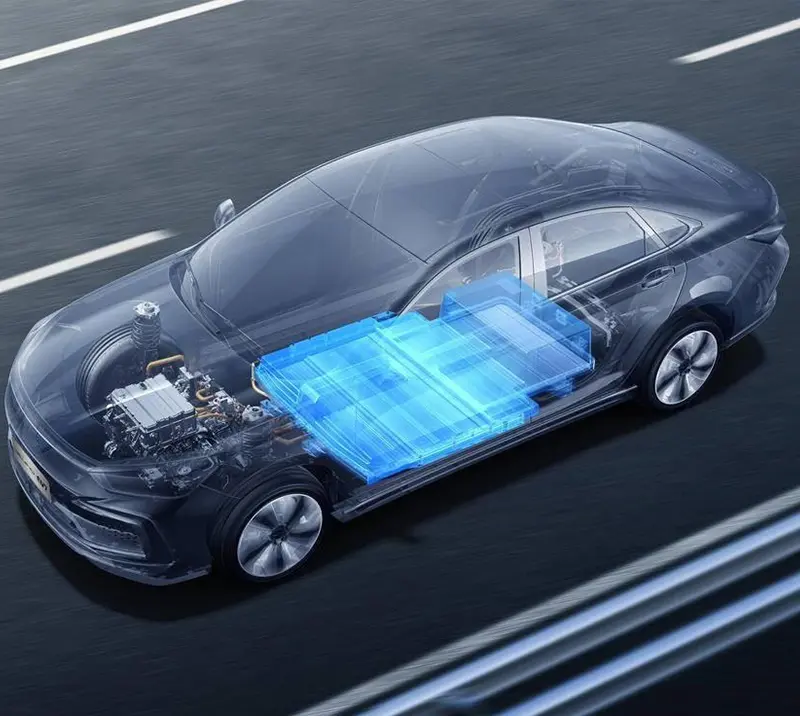
In EV battery pack assemblies and fast-charging megawatt stations, lightweight yet ultra-durable insulation is paramount. Low-profile BMC insulators deliver vibration resistance, thermal shock endurance from -40°C to +140°C, and strict compliance with IATF 16949 automotive standards.
High and low-voltage switchgears, VFD switchboards, and distribution cabinets require SM, MNS, and P-Series standoff insulators. They provide precise air spacing and physical isolation for power distribution in industrial automation, intelligent robotics, and high-speed rail.
Established in 2007 in Jinyi New District, Jinhua City, Zhejiang Province. A National High-Tech Enterprise and Zhejiang Provincial Specialized, Refined, Distinctive, and Innovative SME.
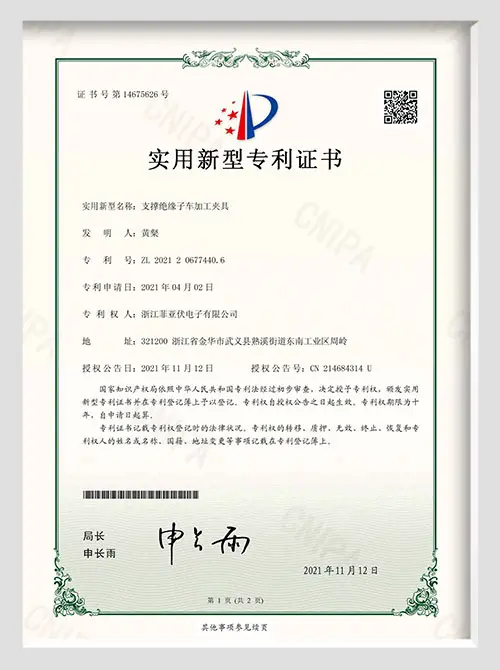
Flyaford operates the municipal-level Jinhua Feifaf High-Performance Insulator Science and Technology R&D Center. Driven by an elite team including senior electrical engineers and full-time researchers, Flyaford maintains deep industry-university-research collaborations with key institutes in Hangzhou, Jinhua, and Tsinghua University, serving as a designated insulator supplier for Tsinghua University’s electrical research initiatives.
Our smart digital factory utilizes automated compression molding equipment (over 60 molding machines) and real-time parameters monitoring to execute zero-defect, traceable end-to-end production—from raw material batching to final torque and flash testing.

Every insulator series undergoes full electrical performance testing and appearance validation backed by over 20 state-of-the-art laboratory testing devices.
• Microcomputer Torsion Testing Machine (0 - 500 N.m)
• Universal Mechanical Testing Machine (0 - 200 KN)
• Verticality Testers & Hardness Testing Apparatus
• Partial Discharge Test Shielded Room (0 - 120 KV)
• Lightning Impulse Surge Tester (0 - 300 KV)
• Withstand Voltage Tester (0 - 100 KV)
• High Insulation Resistance Tester (0 - 1 TΩ)
• High-Low Temp Thermal Shock Chamber (-40°C to 140°C)
• Double 85 Humid-Heat Test Chamber
• Arc Resistance & Salt Spray Corrosion Testers
• Vertical & Horizontal Flammability Burn Chamber
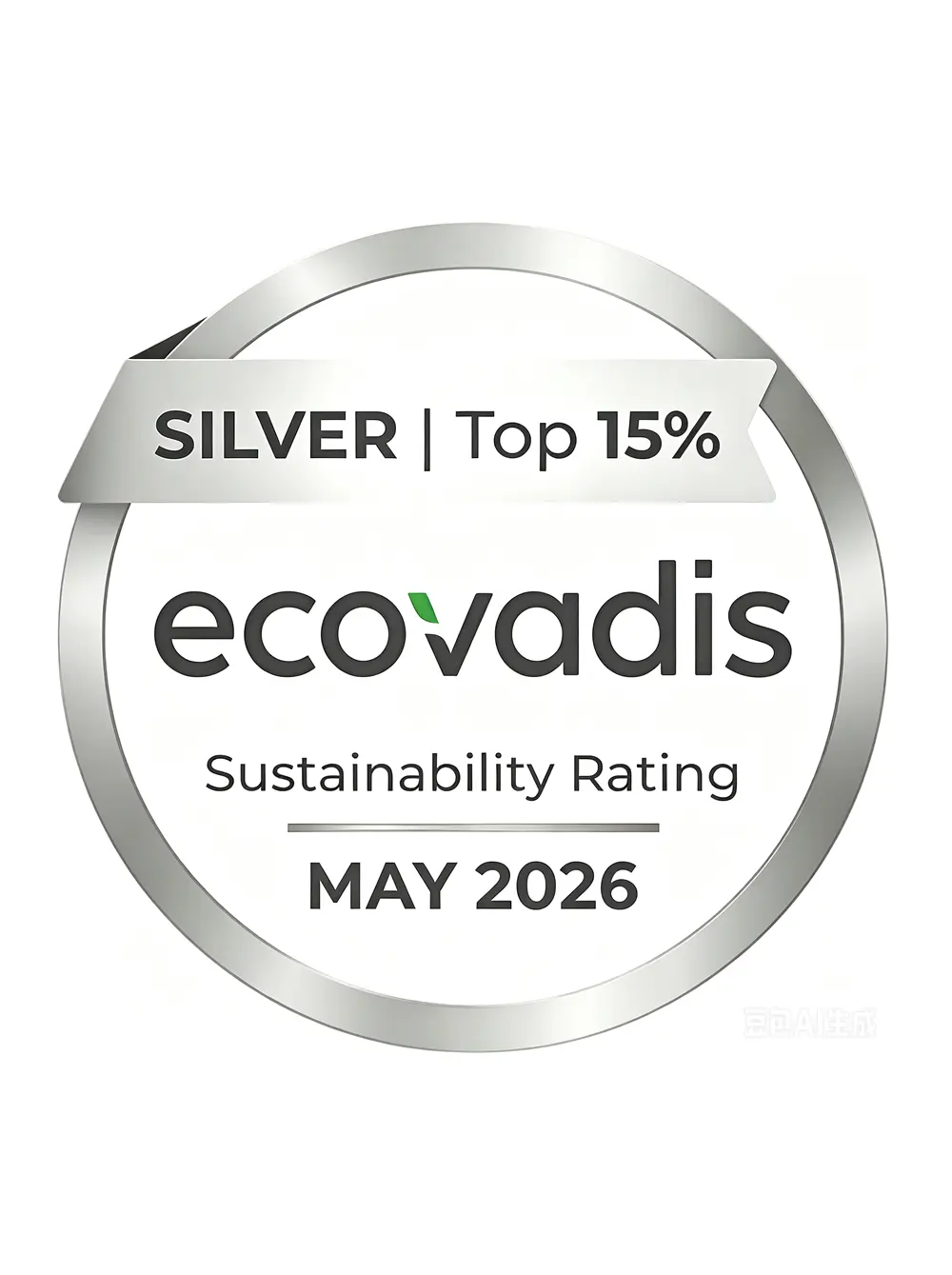
Our strict quality management system guarantees that all products meet international automotive, environmental, and electrical safety codes.


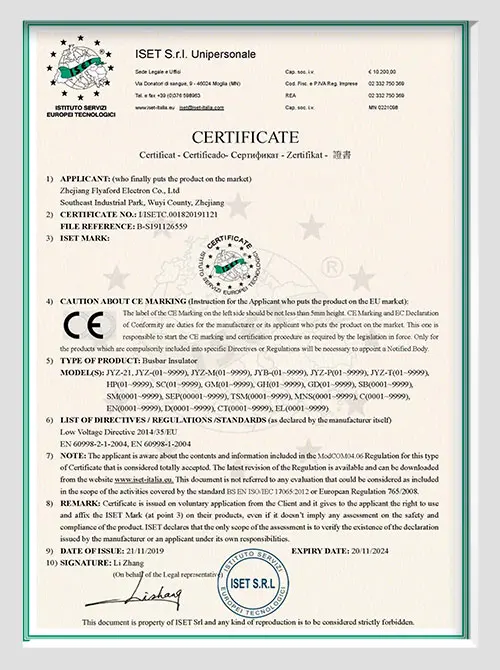
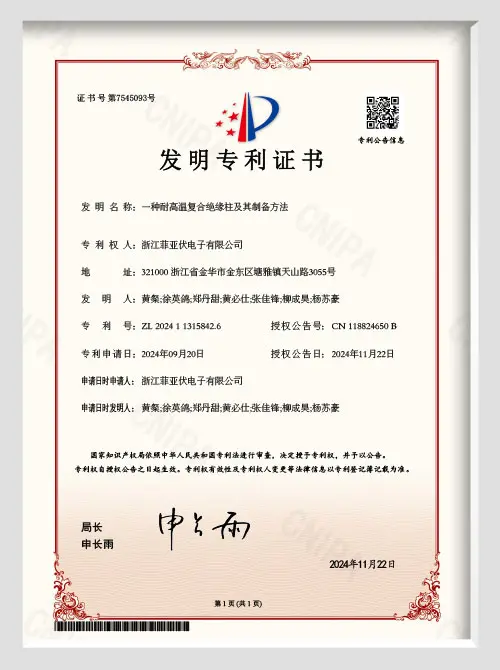

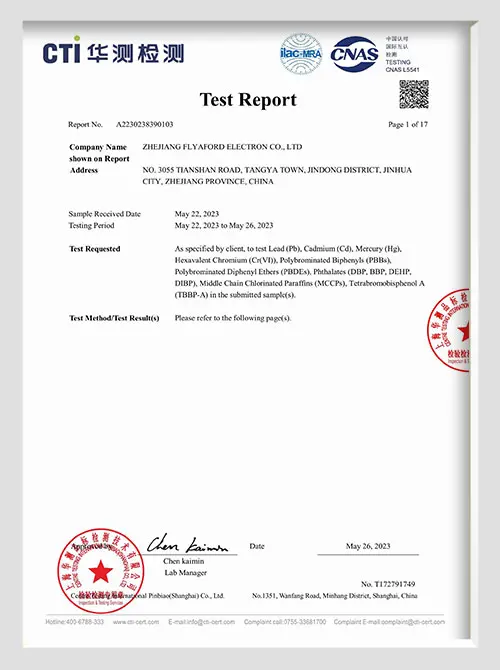
With over 20 years of OEM/ODM expertise, Flyaford delivers turnkey custom insulator solutions tailored to custom environment requirements and drawing specifications.
Analyzing operating environment, thermal bounds, mechanical torque, creepage distance, and electrical load constraints.
Custom precision mold design, raw composite resin selection (BMC/EMC/PF), and brass/steel threaded insert engineering.
Sample fabrication and rigorous physical/dielectric testing in our high-standard laboratory prior to mass production.
High-volume compression molding with 100% electrical and visual inspection under IATF 16949 quality protocols.
Flyaford electrical insulators are deployed across severe environments globally, ensuring continuous power distribution reliability.
Withstanding intense physical vibration, salt spray corrosion, and continuous mechanical stress in onshore and offshore wind power systems.

High UV resistance and thermal stability engineered for utility-scale photovoltaic solar farm combiner boxes and step-up transformers.
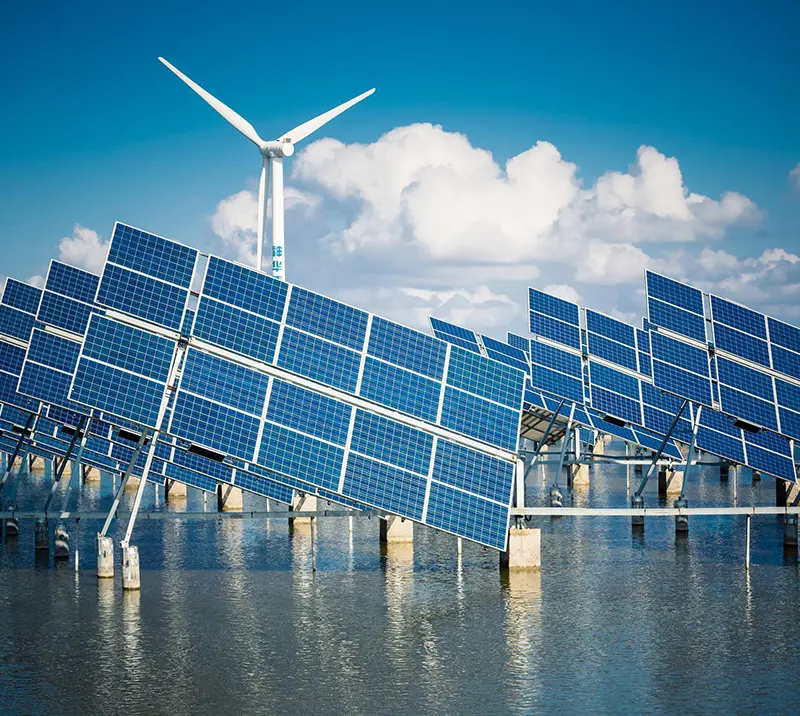
Chemical resistance against corrosive vapors and moisture in heavy municipal wastewater treatment facilities and chemical processing plants.
Pioneering smart dielectric isolation technologies and eco-friendly thermosetting compounds for the next era of global power networks.
Integration of micro-optic and capacitive dielectric degradation sensors embedded inside high-voltage standoff insulators to communicate real-time insulation health data directly to smart grid predictive maintenance algorithms.
Transitioning toward fully recyclable halogen-free composite resins and sustainable bio-based polyester matric structures to minimize carbon footprint while elevating flame retardancy ratings up to UL94 5VA.
Targeting an ultra-low defect rate below 30 PPM through AI-driven computer vision quality inspection during automatic compression molding and automated robotic insert placement.
Expert answers regarding dielectric selection, mechanical torque parameters, and installation compliance.
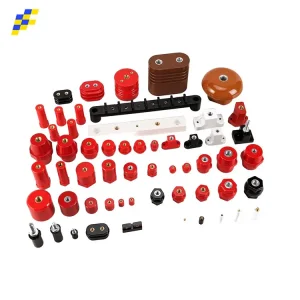
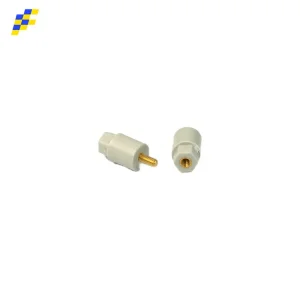
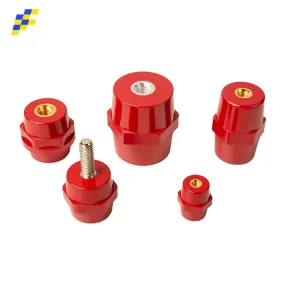
Explore our specialized series engineered for power distribution, renewable systems, and industrial electrical cabinets.
Collaborating with global power leaders, state utilities, and top-tier academic research institutions.