 Flyaford
Flyaford
Flyaford
As global energy architectures transition toward high-density electrification, Smart Grids, and localized microgrids, traditional electrical insulation materials such as porcelain and glass are rapidly giving way to advanced thermosetting composite materials. High-voltage composite insulators—manufactured utilizing Bulk Molding Compound (BMC), Sheet Molding Compound (SMC), and Epoxy Molding Compound (EMC)—represent a quantum leap in dielectric reliability, mechanical vibration damping, and atmospheric pollution endurance.
At the forefront of this industrial transformation stands ZHEJIANG FLYAFORD ELECTRON CO., LTD. Founded in 2007 in the Jinyi New District of Jinhua City, Zhejiang Province, Flyaford has evolved into an international technology leader specializing in medium and low-voltage busbar insulators, high-voltage composite standoff assemblies, and customized power distribution componentry.

Key drivers reshaping procurement requirements for utility companies, switchgear OEMs, and renewable energy system integrators worldwide.
Traditional porcelain is heavy, brittle, susceptible to flashovers in polluted environments, and expensive to transport. Unsaturated polyester resin based BMC and EMC compounds offer superior mechanical strength-to-weight ratios, self-healing hydrophobic surfaces, and exceptional resistance to thermal shock (-40°C to +140°C).
Solar PV plants, offshore/onshore wind turbines, and Battery Energy Storage Systems (BESS) demand standoff insulators capable of enduring harsh ambient conditions, extreme ultraviolet exposure, chemical airborne salinity, and severe electrical harmonics without dielectric degradation.
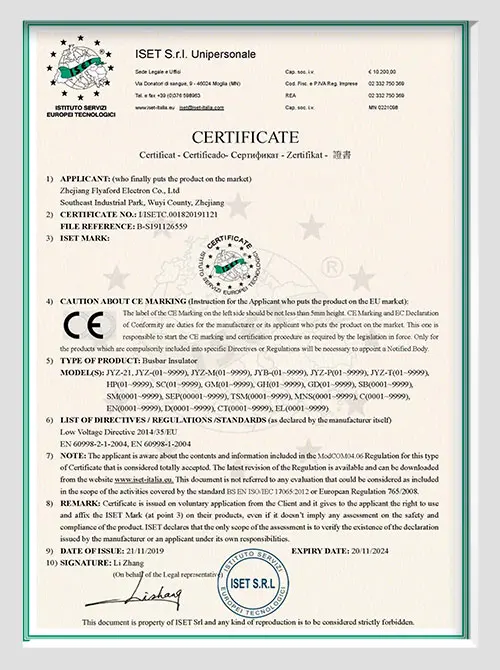
Global EPC firms require total regulatory certainty. Compliance with CE EU Safety directives, IATF 16949 automotive standards, UL 94 V-0 flame retardancy, ROHS 2.0, and REACH is mandatory for entry into European, North American, and Asian high-end power equipment markets.
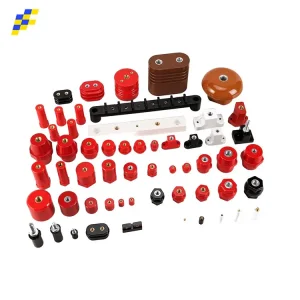
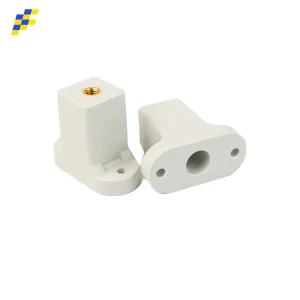
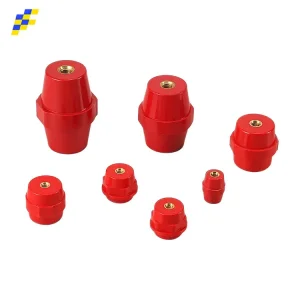
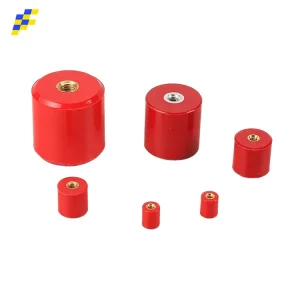
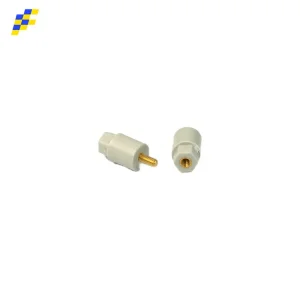
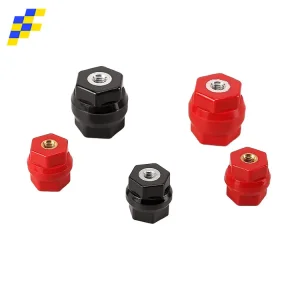
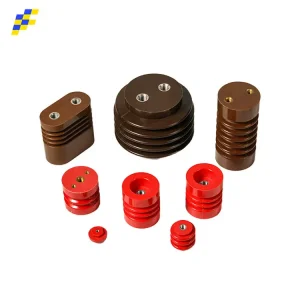
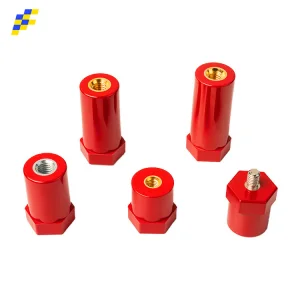
Flyaford engineers and manufactures a complete spectrum of low to medium-voltage standoff busbar insulators optimized for high short-circuit electrodynamic force withstand.
| Insulator Series | Primary Material Formulation | Rated Voltage Range | Dielectric Strength | Flame Retardancy | Core Application Domain |
|---|---|---|---|---|---|
| SM Series | Unsaturated BMC Polyester / Brass Inserts | 600V – 12kV | > 25 kV/mm | UL 94 V-0 | Low-Voltage Switchgear, Control Panels |
| EL Series | High-Density BMC / DMC Composite | 1kV – 17.5kV | > 30 kV/mm | UL 94 V-0 / Halogen Free | Indoor Power Distribution & Transformers |
| MNS Series | Fiberglass Reinforced BMC Material | 660V – 10kV | > 28 kV/mm | UL 94 V-0 | MNS Low-Voltage Cabinet Busbars |
| P Series (Standoff) | Flame-Retardant Epoxy / BMC Matrix | 1kV – 24kV | > 32 kV/mm | UL 94 V-0 | Frequency Inverters & Drive Systems |
| SB / SEP Series | EMC High-Thermal Composite | 600V – 15kV | > 26 kV/mm | UL 94 V-0 | Heavy Machinery & EV Battery Pack Busbars |
| T Type Series | Thermosetting BMC Polymer Composite | 400V – 6.6kV | > 25 kV/mm | UL 94 V-0 | Substation Busbar T-Connections |
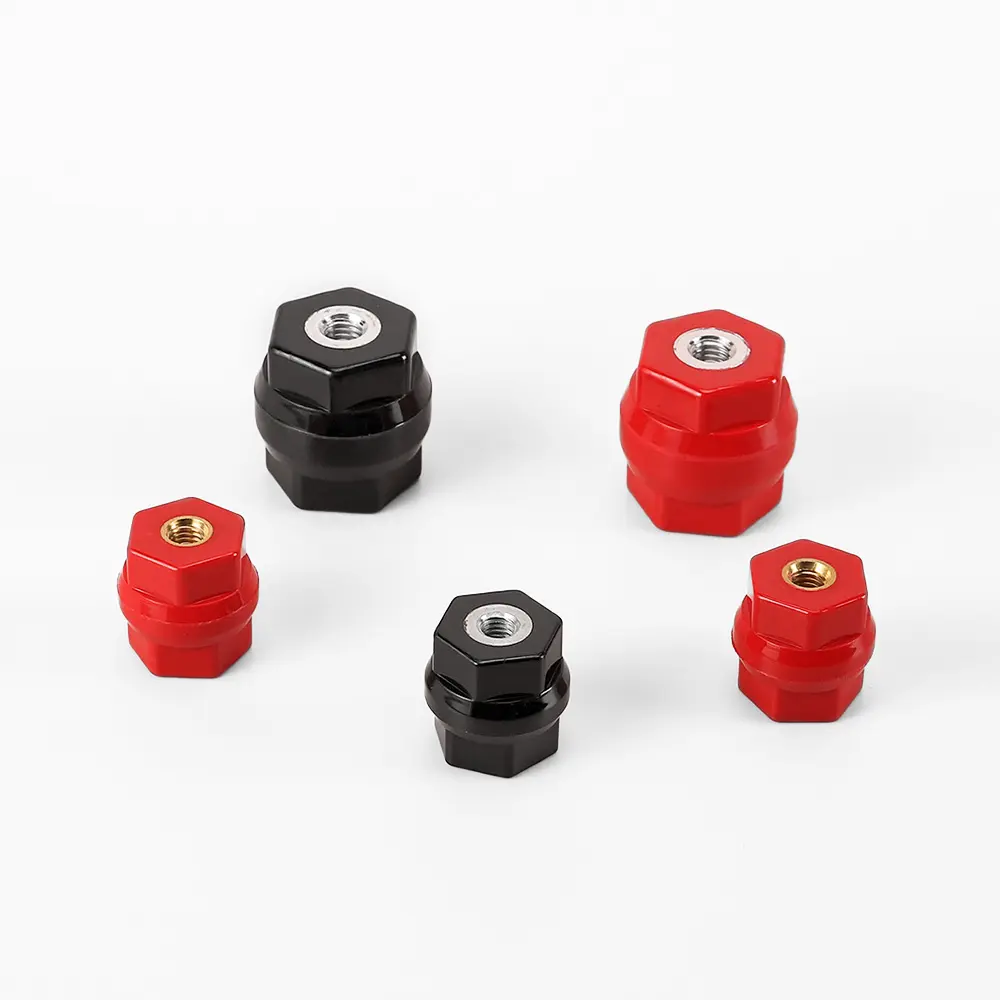
Compact standoff geometry for space-constrained cabinets.
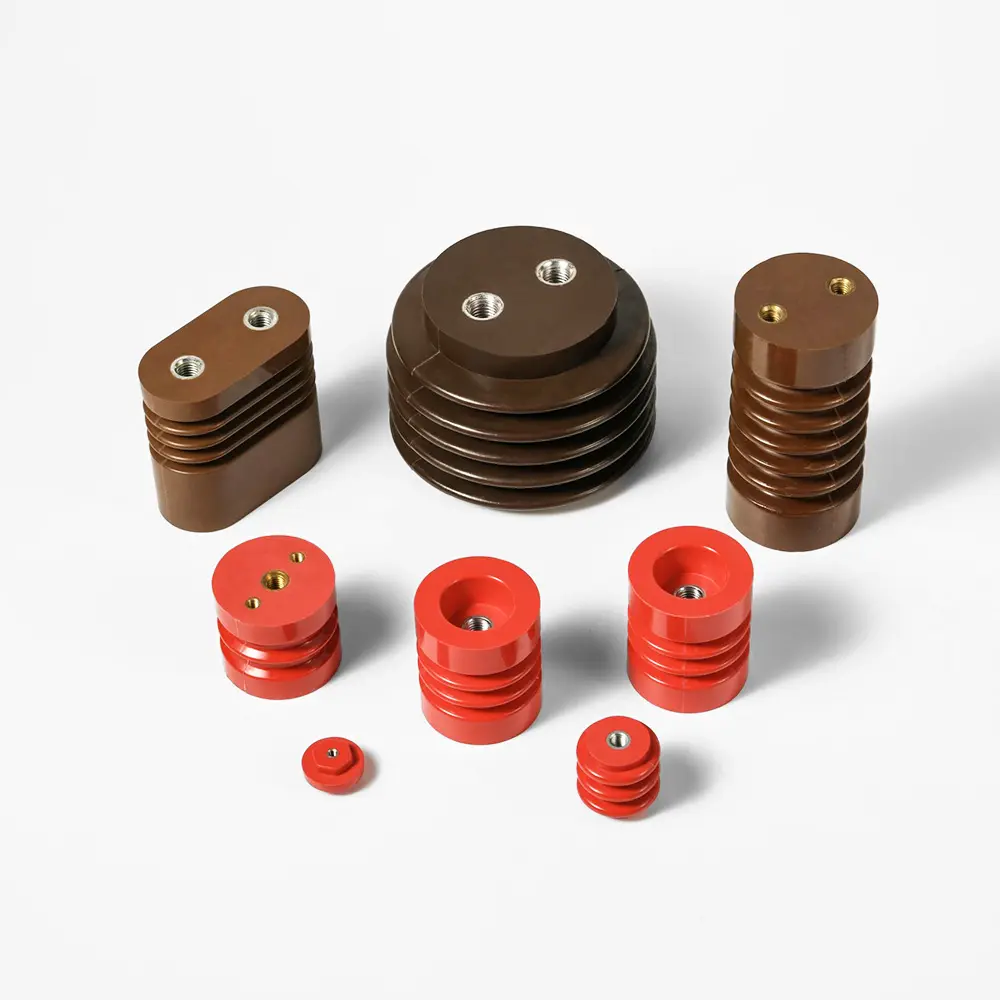
High mechanical bending and cantilever load capacity.

Designed specifically for standard modular switchgear.
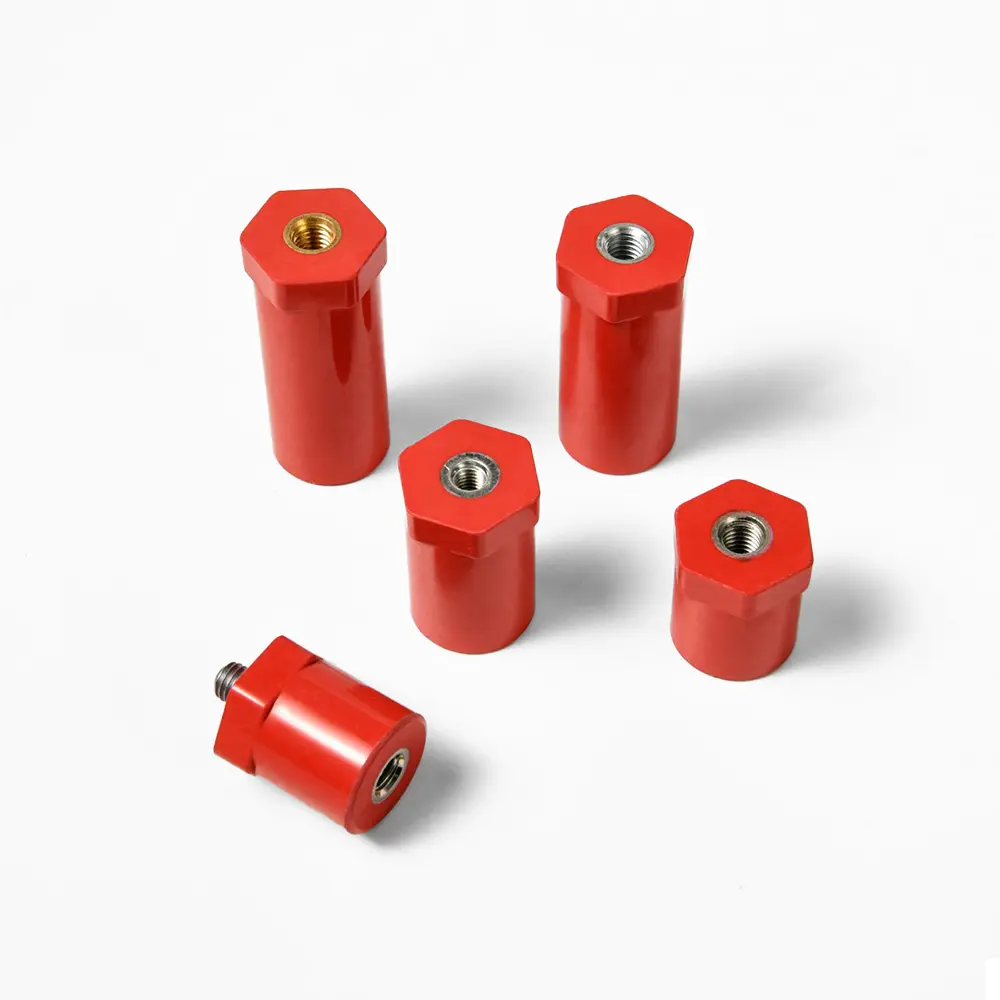
Precision embedded brass inserts for anti-stripping safety.
Deploying specialized composite insulator technologies across high-reliability mission-critical infrastructure.

Offshore and land-based nacelle transformers and frequency converters experience dynamic mechanical torque and moisture vibration. Flyaford composite insulators deliver CTI > 600V comparative tracking index protection to eliminate partial discharge risks under high humidity.

High-voltage central solar inverters and battery energy storage containers require compact insulators with thermal aging stability up to 140°C. Our BMC/EMC standoff insulators guarantee continuous thermal insulation under heavy load cycles.
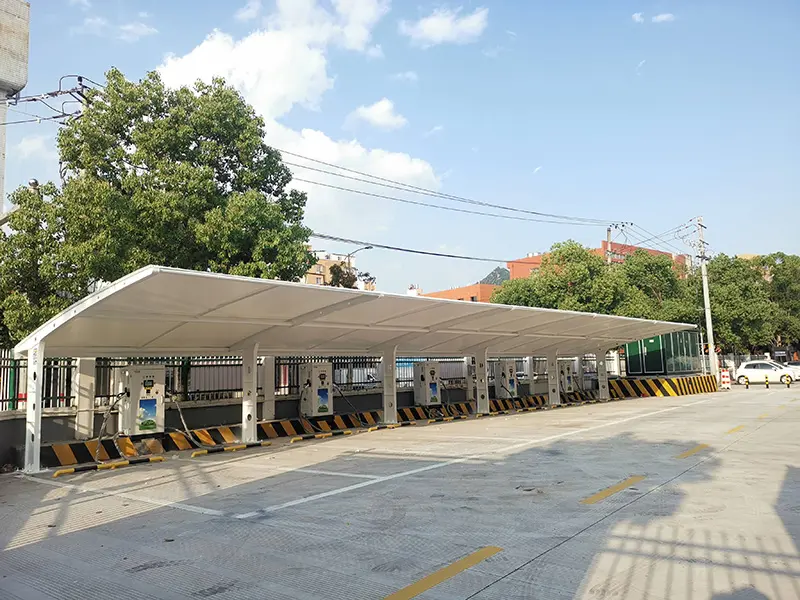
Certified under automotive quality standard IATF 16949, Flyaford supplies specialized lightweight composite insulators for electric vehicle power distribution units (PDUs), fast-charging stations, and high-speed railway traction power networks.
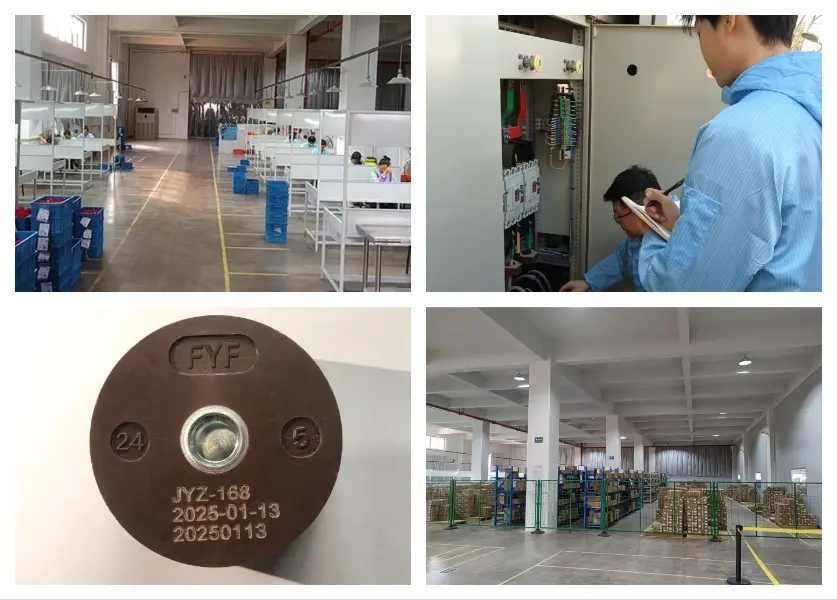
Zero-compromise testing methodology ensuring 100% full inspection across mechanical, thermal, and electrical performance parameters.
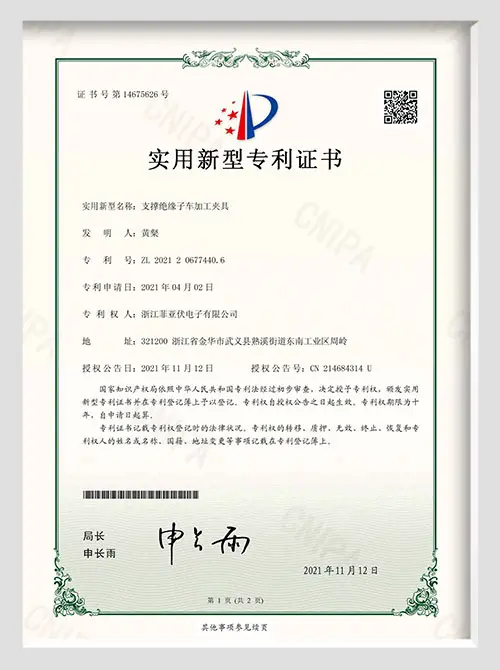
As a designated Jinhua Feifav High-Performance Insulator Science and Technology R&D Center, Flyaford maintains deep research partnerships with elite academic institutions, including Tsinghua University. Our in-house testing complex operates comprehensive testing capabilities:



Pioneering the convergence of smart sensing composite insulators, bio-based resin matrices, and AI-driven automated compression molding.
Integration of embedded micro-piezoelectric dielectric sensors and optical fibers within composite insulator cores. Enables real-time online monitoring of leakage current, partial discharge activity, and localized internal thermal stress, feeding data into AI grid diagnostics.
Advancing green composite formulations utilizing depolymerizable thermoset resins and bio-sourced unsaturated polyesters. Aimed at achieving full circularity at product end-of-life without sacrificing flame retardancy (UL 94 V-0) or arc tracking resistance.
Applying surface-engineered nano-silica outer layers that repel water droplets, dirt, and coastal salt deposits. Dramatically increases dry and wet flashover voltage thresholds while extending maintenance-free operating intervals in polluted industrial environments.
Detailed technical answers addressing OEM customization, testing standards, and compliance certifications.
CE Certification confirms that Flyaford high-voltage and medium-voltage composite insulators fully comply with EU Low Voltage Directive (LVD) and relevant European health, safety, and environmental protection standards. It ensures legal market entry across European Union member states and guarantees that the insulator meets strict electrical creepage, impulse withstand voltage, and mechanical flammability guidelines.
Bulk Molding Compounds (BMC) offer significantly higher flexural strength, dynamic impact resistance, and lower thermal expansion coefficients compared to fragile porcelain. They eliminate micro-cracking risks during transit or heavy short-circuit electrical shocks, reduce component weight by up to 50%, and feature superior hydrophobic properties that minimize flashovers in high-salinity or high-pollution installations.
Yes. With 20+ years of OEM/ODM expertise, over 60 molding machines, and an in-house mold tooling R&D team, Flyaford manufactures custom standoff insulators according to non-standard customer drawings. We produce customized brass, steel, or aluminum threaded inserts with strict torque resistance testing to prevent insert loosening or stripping during busbar mounting.
We implement automated digital molding parameter monitoring coupled with strict IATF 16949 automotive quality management protocols. Every batch undergoes 100% routine full inspection for visual flash surface defects and electrical flashover resistance. Automated raw material batching and closed-loop process tracking maintain consistent dielectric strength across all production runs.