 Flyaford
Flyaford
Flyaford
Explore our primary series of precision-molded BMC/EMC insulators engineered for low and medium voltage switchgear, distribution networks, and industrial power conversion environments.
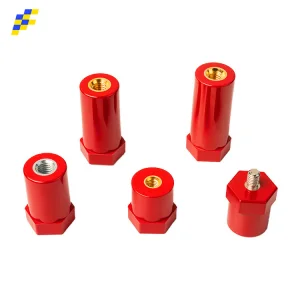

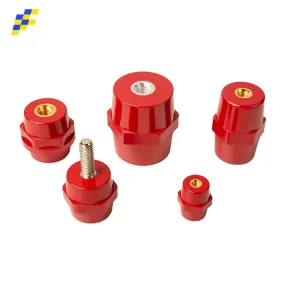
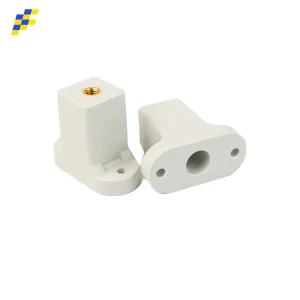
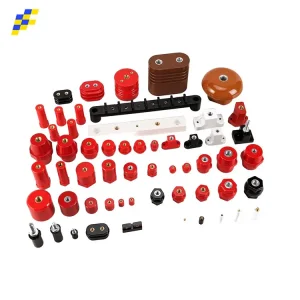
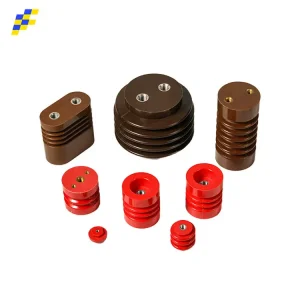
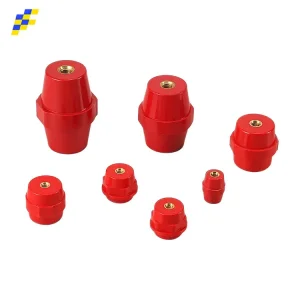
The accelerating global transition toward clean energy, combined with intense industrial electrification, has fundamentally altered the demands placed on modern low- and medium-voltage electrical architecture. Traditional insulating media—such as unreinforced ceramics or standard thermoplastic polymers like PBT and Nylon—are rapidly facing performance bottlenecks under harsh operating stresses. Modern power networks, grid-scale Battery Energy Storage Systems (BESS), offshore wind farms, and high-frequency variable frequency drive (VFD) cabinets subject components to extreme thermal cycling, intense mechanical vibration, electromagnetic interference, and corrosive environmental contamination.
As grid architectures shift from centralized fossil fuel generation to distributed renewable assets, electrical equipment operates under continuous higher ambient temperatures and transient overvoltage spikes. High-efficiency insulator systems manufactured from advanced thermosetting composite materials—specifically Bulk Molding Compounds (BMC), Epoxy Molding Compounds (EMC), and Phenolic (PF) resins—have emerged as the definitive global standard for modern busbar support, switchgear isolation, and power electronic enclosures.
Thermosetting composites do not melt when subjected to sudden short-circuit arc flashes or localized thermal surges, maintaining creepage path integrity where thermoplastics deform.
Precision compression-molded BMC/EMC standoff insulators achieve microscopic dimensional tolerances, eliminating micro-cracking around brass and steel inserts under heavy torque stresses.
Achieving Comparative Tracking Index (CTI) ratings of CTI 600V (PLC 0), our materials prevent carbon tracking even under severe dust, humidity, and salt spray exposure.
ZHEJIANG FLYAFORD ELECTRON CO., LTD. leverages proprietary resin formulations and thermosetting composite compression technology. Understanding the chemical and physical divergence between BMC, EMC, and Phenolic materials is essential for power system designers seeking to optimize total cost of ownership (TCO) while guaranteeing absolute operational safety.
| Material Property | BMC (Bulk Molding Compound) | EMC (Epoxy Molding Compound) | PF (Phenolic Resin Compound) | Standard Thermoplastic (PBT/Nylon) |
|---|---|---|---|---|
| Base Matrix Polymer | Unsaturated Polyester + Glass Fiber | Epoxy Resin + Silica Filler | Phenol-Formaldehyde Polymer | Polybutylene Terephthalate / PA66 |
| Dielectric Strength (kV/mm) | 18 – 24 kV/mm | 22 – 30 kV/mm | 12 – 16 kV/mm | 14 – 18 kV/mm |
| Comparative Tracking Index (CTI) | CTI 600V (Class 0) | CTI 600V (Class 0) | CTI 175 - 400V | CTI 250 - 600V |
| Flame Retardancy Standard | UL94 V-0 Self-Extinguishing | UL94 V-0 Self-Extinguishing | UL94 V-0 / HB | UL94 V-2 to V-0 (additives required) |
| Continuous Heat Resistance | 130°C – 155°C (Class B/F) | 180°C – 220°C (Class H) | 150°C – 180°C (Class H) | 100°C – 120°C (Thermal Creep Risk) |
| Mechanical Tensile / Cantilever Strength | High (Glass Fiber Reinforced) | Ultra-High Impact Resistance | Moderate / Brittle | Low under Elevated Thermal Load |
Established in 2007, ZHEJIANG FLYAFORD ELECTRON CO., LTD. is situated in the Jinyi New District of Jinhua City, Zhejiang Province. Spanning a modern standardized construction footprint of 35,000 square meters, Flyaford has developed into an internationally recognized manufacturer specializing in low-to-medium voltage electrical insulation solutions, standoff busbar supports, and custom engineered composite components.
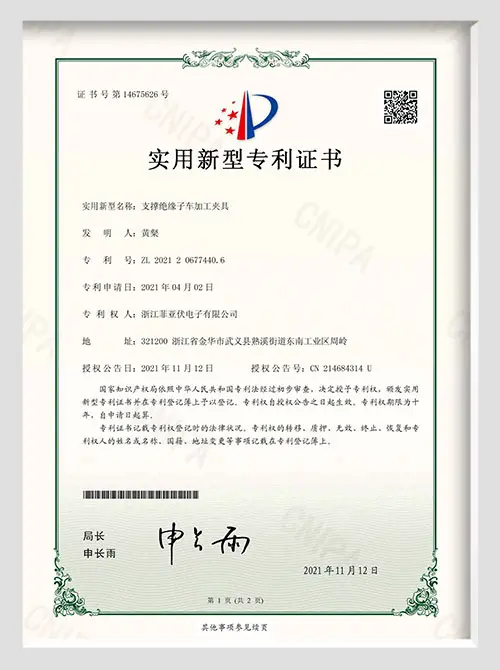
With over 120 specialized personnel, a dedicated engineering research team, and more than 60 high-precision thermosetting molding presses, Flyaford maintains a daily output exceeding 200,000 pieces per day while enforcing a rigorous quality target of below 100 PPM (Parts Per Million) defect rates. Recognized officially as a National High-Tech Enterprise, a Zhejiang Provincial Specialized, Refined, Distinctive, and Innovative SME, and home to the Jinhua Feifav High-Performance Insulator Science and Technology R&D Center, Flyaford maintains 26 active utility and invention patents, 5 award titles, and 2 software copyrights.
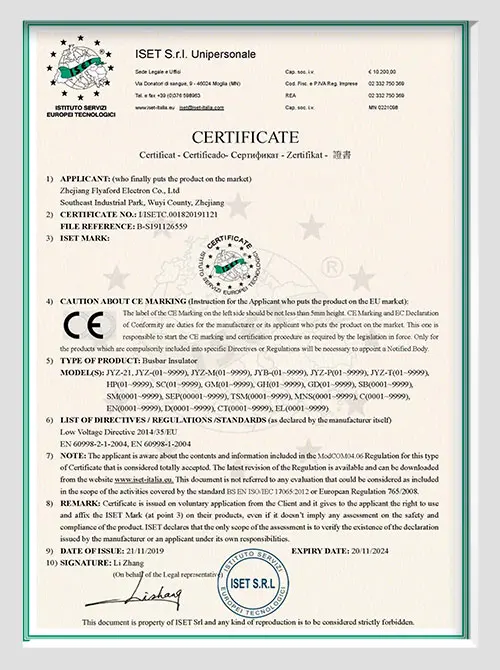
Flyaford maintains full compliance with international automotive and electrical infrastructure standards. We hold IATF 16949 automotive certification, ISO 9001 quality management, ISO 14001 environmental safety, alongside UL product certifications and CE compliance for European distribution. Furthermore, Flyaford is the designated technical insulator research and supply partner for prestigious institutions, including Tsinghua University.




To guarantee zero field failures across high-vibration and high-voltage grid installations, Flyaford operates a state-of-the-art metrology and electrical laboratory. Raw materials (BMC, EMC, resin binders, glass fiber content) and finished insulators undergo 100% full-inspection for appearance and electrical performance, alongside rigorous destructive and environment-simulation testing.
Equipped with a 0-120kV Partial Discharge Test Room, a 0-300kV Lightning Impulse Tester, and a 0-100kV Withstand Voltage System to verify insulation integrity under extreme grid transients.
Features a Microcomputer Torsion Tester (0-500 N.m) and a Universal Mechanical Testing Machine (0-200kN) measuring tensile, cantilever, and insert pull-out resistance.
Includes a Double 85 Chamber (85°C / 85% RH), Thermal Shock Chambers (-40°C to +140°C), and cryogenic test equipment down to -86°C for polar and arctic grid readiness.
Utilizes Vertical/Horizontal Burning Chambers (UL94 V-0), Arc Resistance Testers, ROHS Component Analyzers, and Salt Spray Testing for offshore marine applications.
For OEM equipment exporters and engineering procurement teams entering the European Single Market and international territories, full compliance with CE Directives is non-negotiable. Flyaford's high-efficiency insulator systems are designed, batch-tested, and certified under European harmonized standards:
Compliance with EN 61439-1 (Low-voltage switchgear and controlgear assemblies) and EN 60664-1 (Insulation coordination for equipment within low-voltage systems). Guarantees required clearance and creepage distances across all SM, SB, SEP, and EL insulator profiles.
Full testing verification confirming non-detection of restricted hazardous substances (heavy metals, PBDEs, phthalates) per Directive 2011/65/EU and EU Regulation 1907/2006, ensuring eco-conscious end-of-life recyclability.
Adherence to strict APQP (Advanced Product Quality Planning), PPAP (Production Part Approval Process), and FMEA risk mitigation standards for standoff insulators deployed in Electric Vehicle (EV) power distribution units.
Flyaford's low and medium voltage standoff busbar insulators are custom-configured to solve high-stress mechanical and dielectric challenges across critical global infrastructure:
High DC voltage isolation (up to 1500V DC) in modular battery racks and central power conversion systems (PCS), resisting electrolyte chemical exposure and thermal runaway conditions.
SEP and SM Series insulators handle severe mechanical nacelle vibration, salt-laden moisture, and dynamic harmonics generated by offshore giant turbine converters.
Eliminates partial discharge risks caused by fast-switching IGBT high-frequency dv/dt voltage spikes in heavy industrial motor controllers and steel mill drives.
T-Type and D-Series compact busbar insulators support ultra-fast megawatt DC charging PDU architecture under stringent automotive space constraints.
Driven by industry-university collaborations with Tsinghua University, Flyaford is advancing composite research toward smart, eco-sustainable grid infrastructure:
Embedding micro-piezoelectric and thermal optical sensors directly within the molded resin matrix, enabling real-time condition monitoring of internal partial discharge and busbar joint thermal spikes prior to physical flashover.
Developing next-gen green thermosetting polymers derived from plant-based polyols and depolymerizable epoxy matrix systems to reduce life-cycle carbon intensity without compromising UL94 V-0 flame retardancy.
Incorporating nano-silica and alumina trihydrate (ATH) surface modifiers to achieve exceptional dielectric strength (>35 kV/mm) and complete electrical erosion resistance under severe atmospheric pollution.
Browse our full range of custom OEM/ODM MNS, EL, D-Series, and T-Type busbar standoff components, manufactured to rigorous international standards.
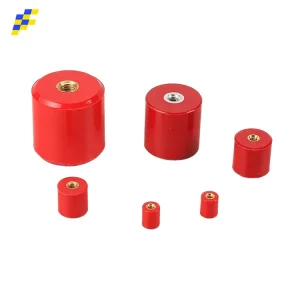
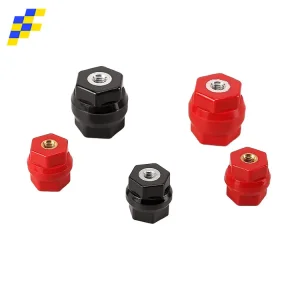
Engineering technical answers regarding mechanical torque specifications, creepage calculations, dielectric degradation, and OEM tooling customized for global power networks.
From initial mold design, compound selection (BMC, EMC, PF), hardware insert engineering, to final batch production under IATF 16949 standards—Flyaford delivers uncompromised reliability, <100 PPM quality, and 7*24 fast-response engineering support worldwide.