 Flyaford
Flyaford
Flyaford
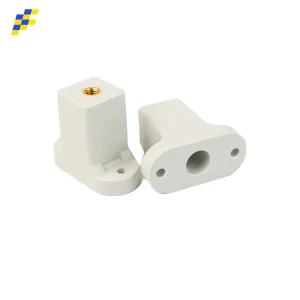
In modern power systems, microgrids, renewable energy hubs, and industrial automation control cabinets, electrical insulators perform a vital dual role: providing physical structural support to conductive busbars while maintaining complete electrical isolation under dynamic electrical and environmental stress. As global energy transitions accelerate, the demand for precision-engineered, high-performance insulators has expanded beyond traditional power networks into electric vehicle (EV) charging units, battery energy storage systems (BESS), 5G infrastructure, and smart factory switchgears.
Understanding electrical insulator classification is crucial for EPC contractors, electrical panel builders, and procurement officers. Insulator classification determines structural performance, dielectric integrity, flame retardancy, creepage distance, and overall system longevity. ZHEJIANG FLYAFORD ELECTRON CO., LTD. (established in 2007 in Jinhua City, Zhejiang Province) stands at the forefront of this industrial evolution, leveraging thermosetting composite molding technologies to engineer insulators that outperform traditional porcelain and epoxy counterparts in fracture toughness, dimensional precision, and thermal shock resistance.
Insulators are structurally categorized based on nominal operating voltage levels and dielectric breakdown thresholds under IEC 60664-1 standard guidelines:
Modern composite insulation technology relies on advanced polymer matrix systems engineered for specific thermal and mechanical stresses:
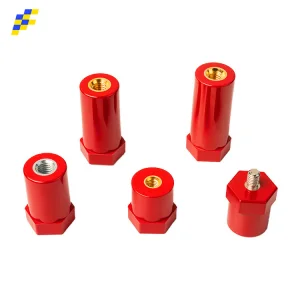
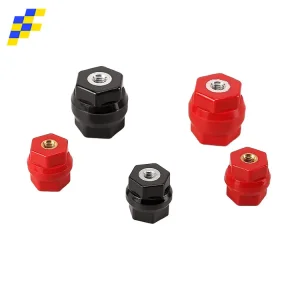
Standardized structural classifications suited for precise mounting, mechanical torque loads, and creepage distance compliance:
| Performance Metric | BMC Composite (Flyaford) | Porcelain / Ceramic | Unreinforced Epoxy Resin | Thermoplastic (Nylon/ABS) |
|---|---|---|---|---|
| Dielectric Strength (kV/mm) | 18 - 25 kV/mm | 10 - 15 kV/mm | 15 - 20 kV/mm | 12 - 16 kV/mm |
| Tensile & Flexural Strength | High (Fiberglass Reinforced) | Brittle (Low Impact Force) | Moderate | Low under continuous thermal load |
| Flame Retardancy Standard | UL 94-V0 Self-Extinguishing | Non-flammable | UL 94-V1 / V2 | UL 94-HB to V2 |
| Comparative Tracking Index (CTI) | CTI > 600V (Class 0) | CTI > 600V | CTI 400V - 500V | CTI 175V - 300V |
| Thermal Shock (-40°C to 140°C) | Zero Micro-cracking Integrity | Susceptible to thermal fracture | Risk of internal void cracking | Deforms above 90°C |
International engineering procurement companies (EPCs) and switchboard OEMs demand rigorous compliance and validated engineering data. Critical decision criteria include:
The global electrical market is experiencing shift dynamics driven by green transition projects and high-density computing installations:
Situated in the Jinyi New District of Jinhua City, Zhejiang Province, ZHEJIANG FLYAFORD ELECTRON CO., LTD. operates a modern 35,000 square meter standardized production center equipped with over 60 automated thermosetting molding machines and over 20 specialized testing units.
With an active workforce of 120+ skilled technicians, Flyaford achieves a daily output capacity exceeding 200,000 high-precision insulator pieces, while maintaining a strict defective rate below 100 PPM (Parts Per Million). Through automated digital real-time monitoring, raw material sourcing directly from world-class suppliers, and full-process digital traceability, we provide unparalleled supply chain resilience for international markets.

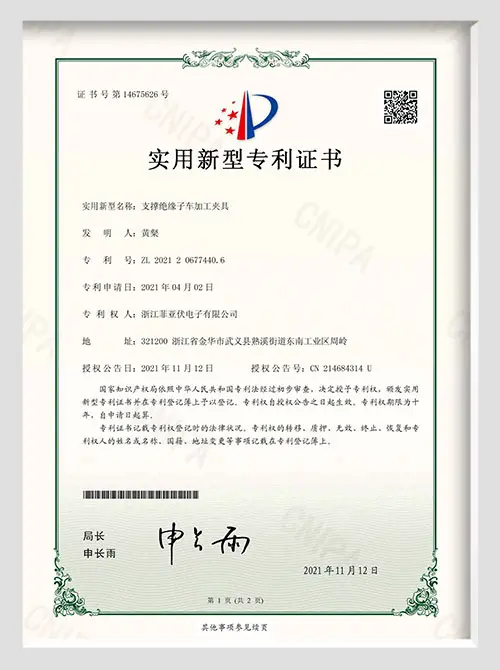

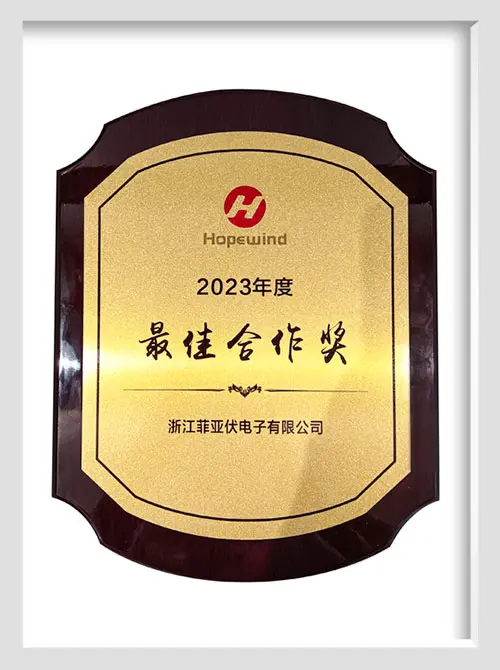
Innovation is the primary growth engine at Flyaford. Recognized as a National High-Tech Enterprise, Zhejiang Provincial Specialized, Refined, Distinctive, and Innovative SME, and housing the official Jinhua High-Performance Insulator Science and Technology R&D Center, our technical leadership is backed by 26 utility and invention patents (including 5 primary invention patents and 2 software copyrights).
Flyaford maintains ongoing industry-university-research partnerships with regional technical institutes in Hangzhou and Jinhua, and is honored as an official designated insulator supplier for Tsinghua University. Our engineering team, headed by senior industry experts and full-time polymer scientists, delivers continuous technical breakthroughs in low-partial-discharge composite formulations and micro-crack resistant insert encapsulation.
Equipped with a 0-120kV Partial Discharge Testing Room, 0-300kV Lightning Impulse Tester, 0-100kV Withstand Voltage Tester, and 0-1TΩ Insulation Resistance Tester.
Precision Microcomputer Torsion Testing Machine (0-500N.m) and Universal Tensile/Compression Testing System (0-200KN) ensuring structural integrity.
Double 85°C Chamber, Thermal Shock Chamber (-40°C to +140°C), Ultra-Low Temp Chamber (-86°C), and High-Temp Oven (up to 300°C) for accelerated aging.
ROHS 2.0 Component Analyzers, Arc Resistance Testers, Ball Pressure Devices, Vertical/Horizontal Burning Test Chambers, and Salt Spray Testing units.


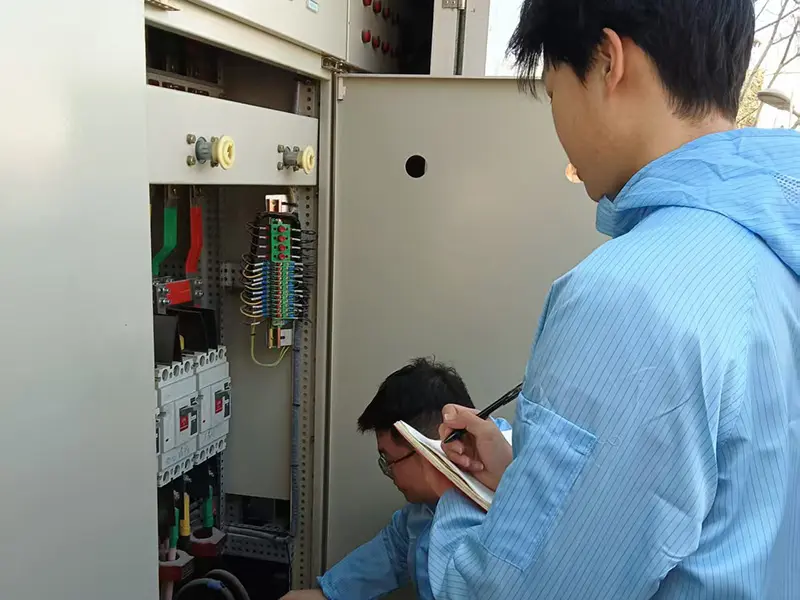

Supports live primary busbars within power distribution cabinets, gas-insulated switchgears (GIS), and control units. Guarantees safe phase-to-phase and phase-to-ground isolation under surge conditions.
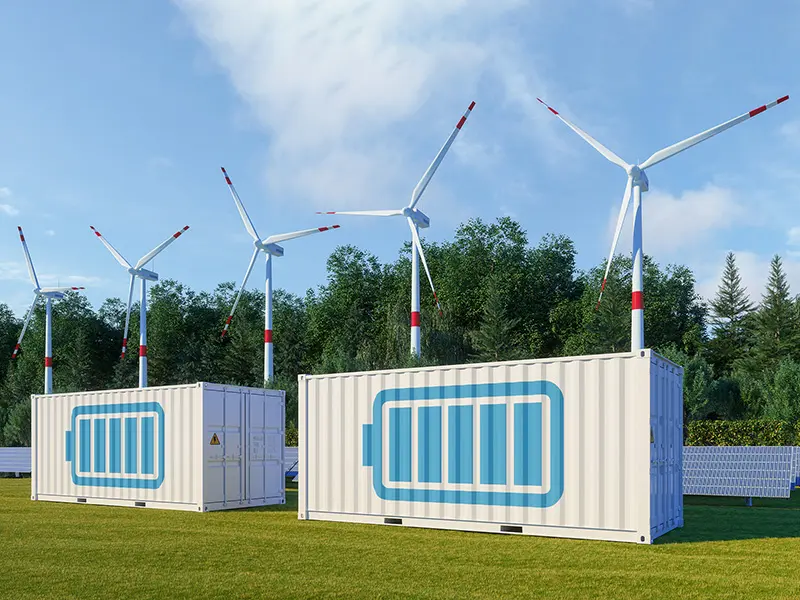
Critical isolation components in utility-scale lithium battery racks, containerized energy storage units, and high-current power conversion systems (PCS) operating under high thermal ambient loads.
Vibration-proof standoff insulators designed for wind nacelle power distribution and central solar inverter stations subject to severe mechanical dynamic forces and salt atmospheric exposure.
Built to withstand continuous high-frequency harmonic voltages and rapid dV/dt voltage spikes generated by variable speed industrial drive systems without dielectric degradation.
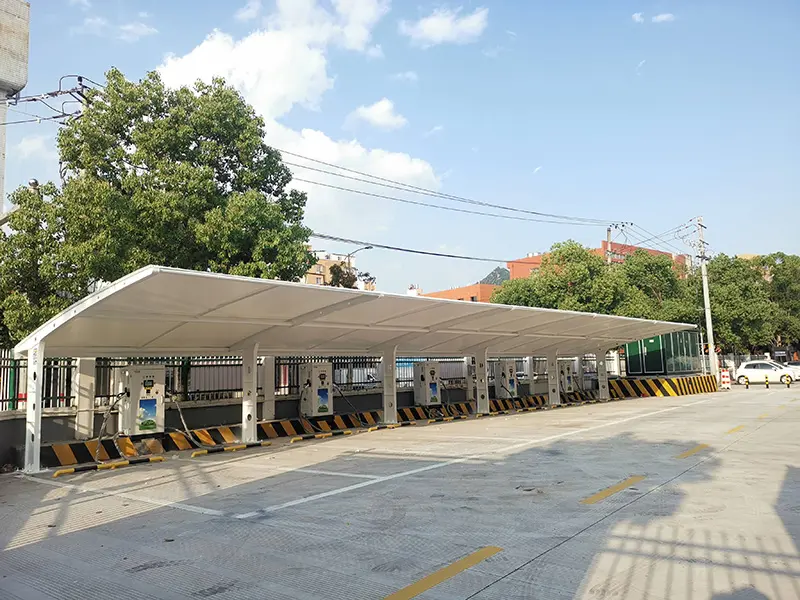
Custom lightweight BMC insulators engineered for automotive high-voltage junction boxes, fast-charging megawatt stations, and electric locomotive traction systems under IATF 16949 standards.
Compact busbar supports designed for dense server power distribution racks, 5G telecom base stations, and smart commercial building microgrids demanding uninterrupted power reliability.
Custom product modeling, tooling layout, finite element stress simulation, and precise thread insert alignment.
Tailored compounding of BMC, DMC, EMC, or PF resins depending on operating temperatures and electrical limits.
Automated thermosetting compression molding via 60+ specialized presses for continuous unit uniformity.
Full appearance inspection, flash removal, dielectric withstand confirmation, and fast global export fulfillment.
BMC (Bulk Molding Compound) and DMC (Dough Molding Compound) are glass fiber-reinforced thermosetting polyester composites. Compared to brittle porcelain, BMC/DMC insulators offer significantly higher impact strength, zero risk of shattering during high electrodynamic short-circuit forces, superior dimensional precision for insert positioning, and lower overall weight while maintaining equal or better dielectric strength and tracking resistance (CTI > 600V).
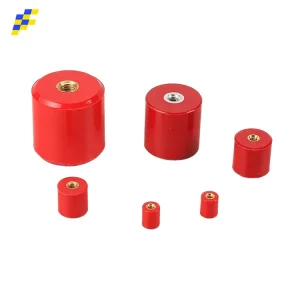
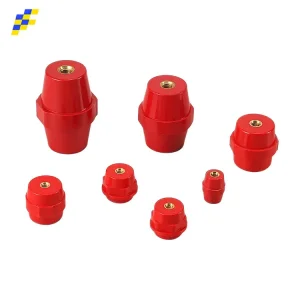
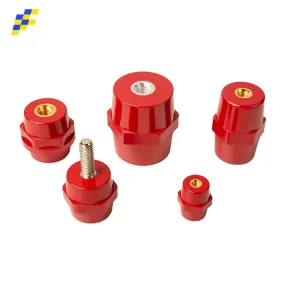
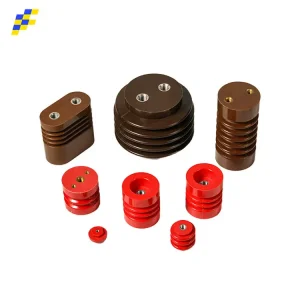
Insulator series designations reflect geometry and installation intent. SM and MNS series represent standard hexagonal standoff pillars for general low-to-medium voltage switchboards. SEP and EL series feature increased ribbed surface profiles to maximize creepage distance in humid or coastal environments. D-Type, SB, and T-Type insulators feature specialized slotted or flat mounting bases designed to hold heavy rectangular copper/aluminum busbars securely against electromagnetic displacement.
Flyaford manufacturing facilities are certified under IATF 16949 (Automotive Quality Management System), ISO 9001, and ISO 14001. Products carry EU CE certification, UL recognition, and full material test compliance reports for RoHS 2.0, REACH, UL 94-V0 flammability, and CTI tracking resistance.
Yes. Flyaford specializes in complete ODM/OEM customization. Our engineering team provides one-stop development from mold design and brass/steel insert tooling to thermoset resin selection. We confirm 2D/3D technical drawings prior to production and supply evaluation samples for mechanical torsion and electrical flashover testing.
With 35,000 square meters of production space and over 60 molding machines, our standard daily production capacity exceeds 200,000 pieces. Standard series products are dispatched within 7 to 15 days, while custom ODM mold tooling and sample validation typically take 20 to 30 days.