 Flyaford
Flyaford
Flyaford
Precision-molded low-to-medium voltage insulators engineered for high mechanical strength, creepage distance reliability, and low thermal expansion in sub-zero operational environments.
As global power transmission systems, high-altitude wind farms, battery energy storage systems (BESS), and electric vehicle traction networks expand into extreme polar and sub-zero operational environments, the selection of reliable electrical insulating materials becomes paramount.
Standard electrical insulation often suffers from micro-cracking, brittle fracture, and loss of flexural strength under rapid thermal cycling. Flyaford's thermoset polymer formulations—combining specialized Bulk Molding Compounds (BMC), Dough Molding Compounds (DMC), and Epoxy Molding Compounds (EMC)—are specifically engineered to maintain structural integrity across sub-zero temperature extremes ranging from -86°C to +300°C.
Operating in low-temperature and high-humidity condensation conditions creates intense surface tracking risks. Our CE-certified standoff insulators utilize high-purity unsaturated polyester matrix systems reinforced with chopped E-glass fibers and aluminum trihydrate (ATH) flame retardants, yielding a Comparative Tracking Index (CTI) rating of 600V (PLC Class 0) and UL 94-V0 self-extinguishing flame retardancy.
Every piece manufactured at Zhejiang Flyaford Electron Co., Ltd. complies with stringent European Safety Standard (CE Directives), UL certification standards, RoHS 2.0, REACH, ISO 9001 quality frameworks, ISO 14001 environmental protocols, and the automotive-grade IATF 16949 quality system, ensuring absolute risk mitigation for international OEM/ODM procurement.
The global demand for low-temperature insulated busbar standoffs, switchgear insulators, and specialized composite insulation components is undergoing unprecedented growth. Major industrial drivers include:
Containerized BESS installations deployed in Nordic regions, North America, and Northern China experience thermal fluctuations during high-current charging and discharging cycles in sub-freezing ambient conditions. Insulators must resist thermal expansion mismatches between brass/copper threaded inserts and the composite matrix to prevent internal delamination.
Wind turbine nacelles and frequency converter switchgears operating in mountainous or offshore cold climates demand standoff insulators capable of resisting continuous vibrations, severe mechanical torque up to 500 N.m, and high impulse voltages (up to 300kV) under dense ice or frost accumulation.
With 800V high-voltage EV platform architectures becoming standard, insulators inside power distribution units (PDUs) and motor inverter cabinets require zero thermal memory creep, exceptionally low partial discharge characteristics (0-120kV clean spectrum), and ultra-compact profile heights (e.g., SB 14-20 and SM series).
High-speed rail power supply systems and sub-station MV/LV switchgears require high creepage distance designs (such as D-Type, T-Type, and MNS Series) that remain stable against industrial pollutants, moisture ingress, and thermal shock between -40°C and 140°C.
Selecting the optimal material chemistry is critical for low-temperature electrical insulation. Flyaford manufactures across Bulk Molding Compound (BMC), Dough Molding Compound (DMC), Epoxy Molding Compound (EMC), and Phenolic Resin (PF).
| Material Parameter / Property | BMC (Bulk Molding Compound) | EMC (Epoxy Molding Compound) | PF (Phenolic Resin Composite) | Engineering Benefit in Low Temp |
|---|---|---|---|---|
| Low Temp Fracture Limit | -60°C to -86°C | -70°C to -100°C | -40°C to -50°C | Prevents micro-cracking in extreme sub-zero conditions |
| Dielectric Strength (kV/mm) | 18 - 25 kV/mm | 22 - 30 kV/mm | 12 - 16 kV/mm | High breakdown resistance prevents internal electrical arc-through |
| Flexural Strength (MPa) | 120 - 160 MPa | 160 - 220 MPa | 90 - 120 MPa | Withstands short-circuit electrodynamic forces on busbars |
| Comparative Tracking Index (CTI) | 600 V (Class 0) | 600 V (Class 0) | 175 - 250 V | Eliminates carbon tracking during surface moisture condensation |
| Flame Retardancy Rating | UL 94-V0 Self-extinguish | UL 94-V0 Self-extinguish | UL 94-V0 Self-extinguish | Prevents flame propagation in enclosed switchgear equipment |
| Thermal Expansion Coeff. (CTE) | (1.5 - 2.5) × 10⁻⁵ /K | (1.2 - 1.8) × 10⁻⁵ /K | (3.0 - 4.5) × 10⁻⁵ /K | Matches metallic inserts (Brass/Steel) to prevent stress cracking |
Established in 2007 and situated in the Jinyi New District of Jinhua City, Zhejiang Province, ZHEJIANG FLYAFORD ELECTRON CO., LTD. has grown into a recognized global leader in low-to-medium voltage electrical insulation solutions.
Spanning a modern 35,000 square meter construction area, our high-tech intelligent production complex houses over 60 automated thermoset compression molding machines and over 20 advanced analytical test units. With an elite workforce of over 120 specialized technicians and engineers, Flyaford delivers a daily capacity exceeding 200,000 insulator units while maintaining an industry-leading quality defect rate strictly under 100 PPM.
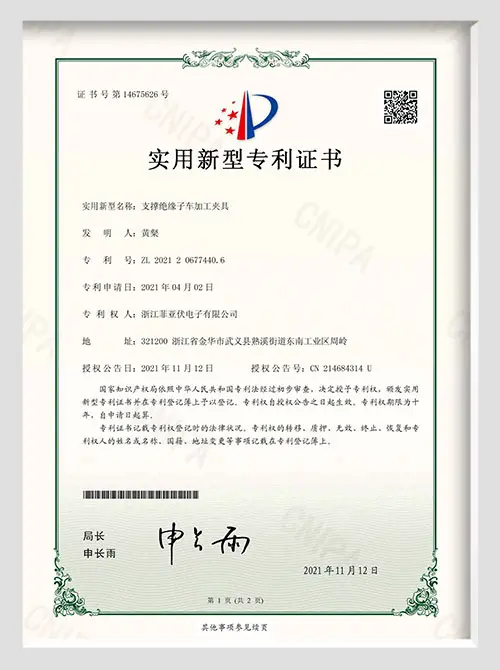
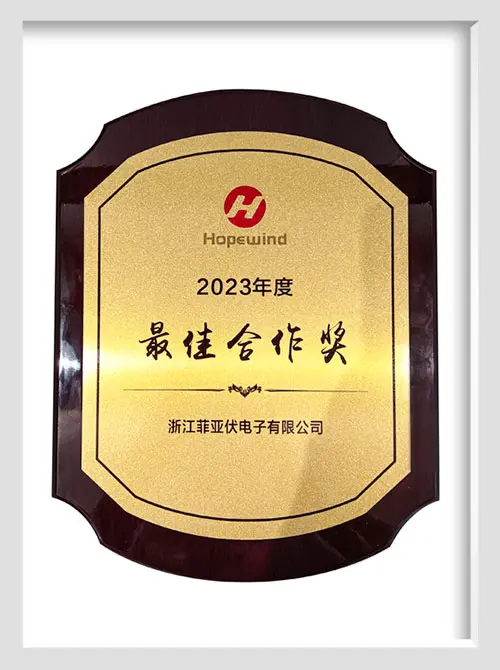
Recognized as a "National High-Tech Enterprise", "Zhejiang Provincial Specialized, Refined, Distinctive, and Innovative SME", and host of the "Jinhua High-Performance Insulator Science and Technology R&D Center", we hold 26 patents including 5 invention patents and 2 software copyrights.
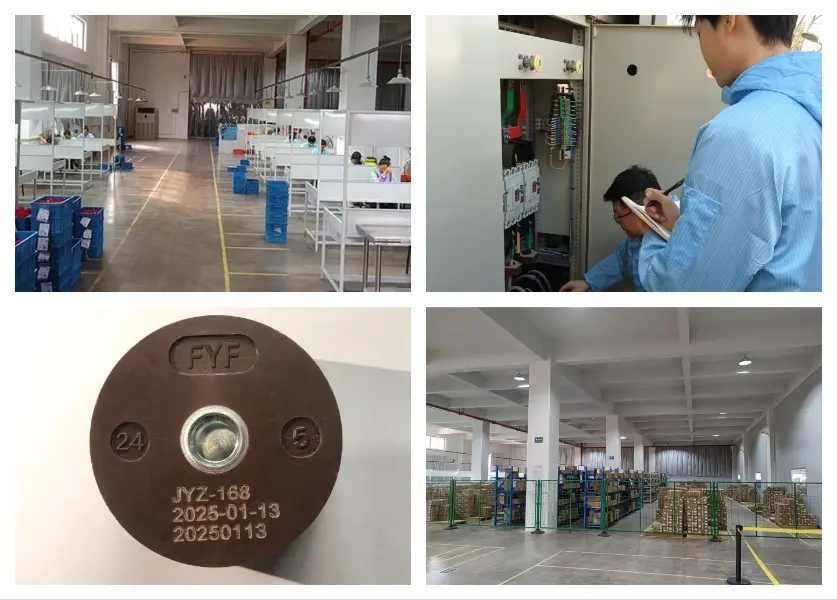
Innovation drives Flyaford. We actively collaborate with top-tier academic research institutes, including Hangzhou universities and Tsinghua University—for which we are a designated specialized insulator engineering vendor.
Verifies material embrittlement thresholds, micro-crack formation, and load retention under sub-zero polar conditions.
Simulates rapid environmental ambient drops to validate interface bonding between metallic insert threads and polymer matrix.
Ensures zero internal voids, air pockets, or dielectric imperfections down to sub-picocoulomb thresholds.
Tests structural withstand against sudden atmospheric high-voltage surges and transient grid switching spikes.
Measures maximum tightening torque tolerances during heavy copper busbar bolting and mechanical installation.
Evaluates mechanical shear strength, cantilever bending resistance, and ultimate structural break limits.


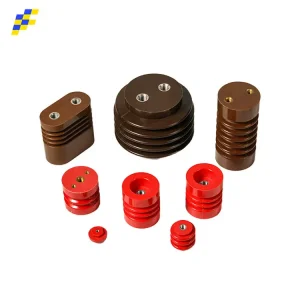
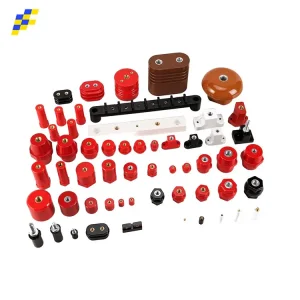
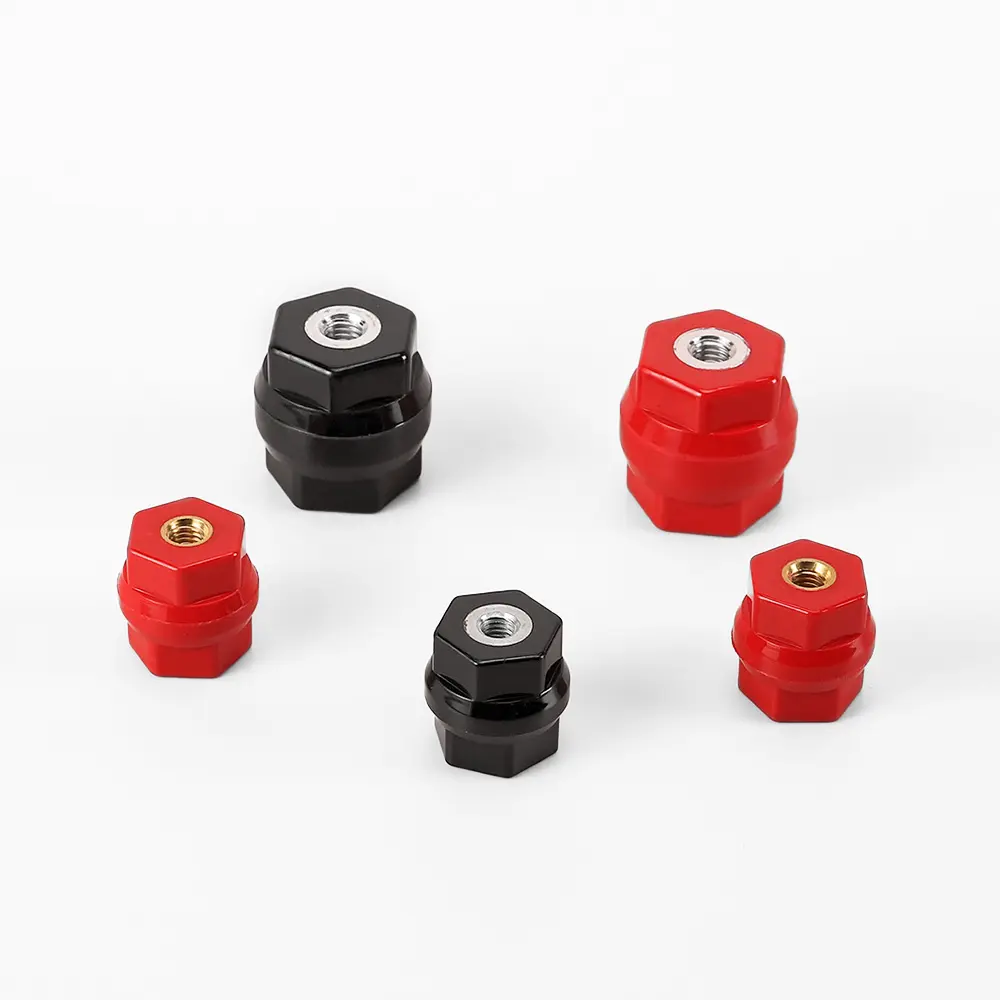
Flyaford manufactures an extensive catalog of standardized and customizable standoff insulators designed for diverse indoor and enclosed electrical switchgears.
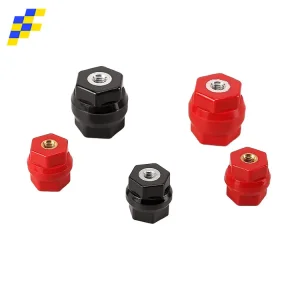
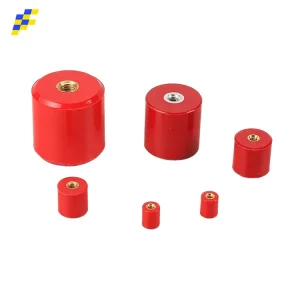
Widely utilized in energy storage cabinets and power distribution boxes. Compact cylindrical profile with ribbed surface geometry to maximize creepage length in tight spaces.
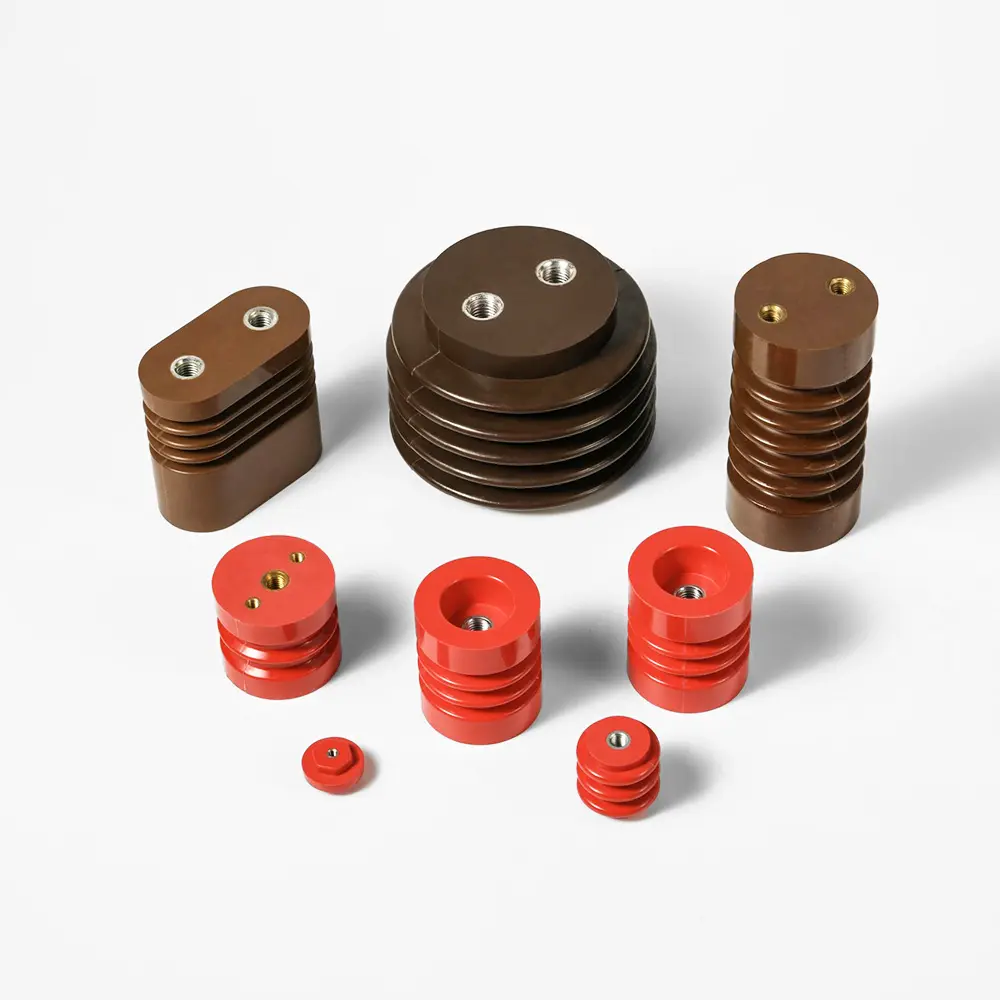
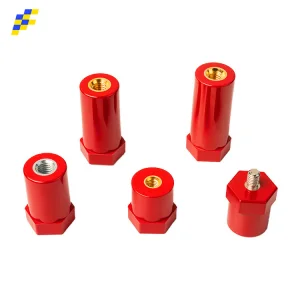
Engineered for high-voltage indoor electrical applications up to 12kV. Features high mechanical bending resistance and heavy-duty M8/M10/M12 internal threaded metal inserts.

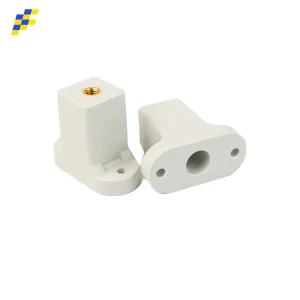
Tailored for low-voltage draw-out switchgears (such as MNS systems). Provides exceptional dimensional stability, high arc resistance, and flame-retardant properties.
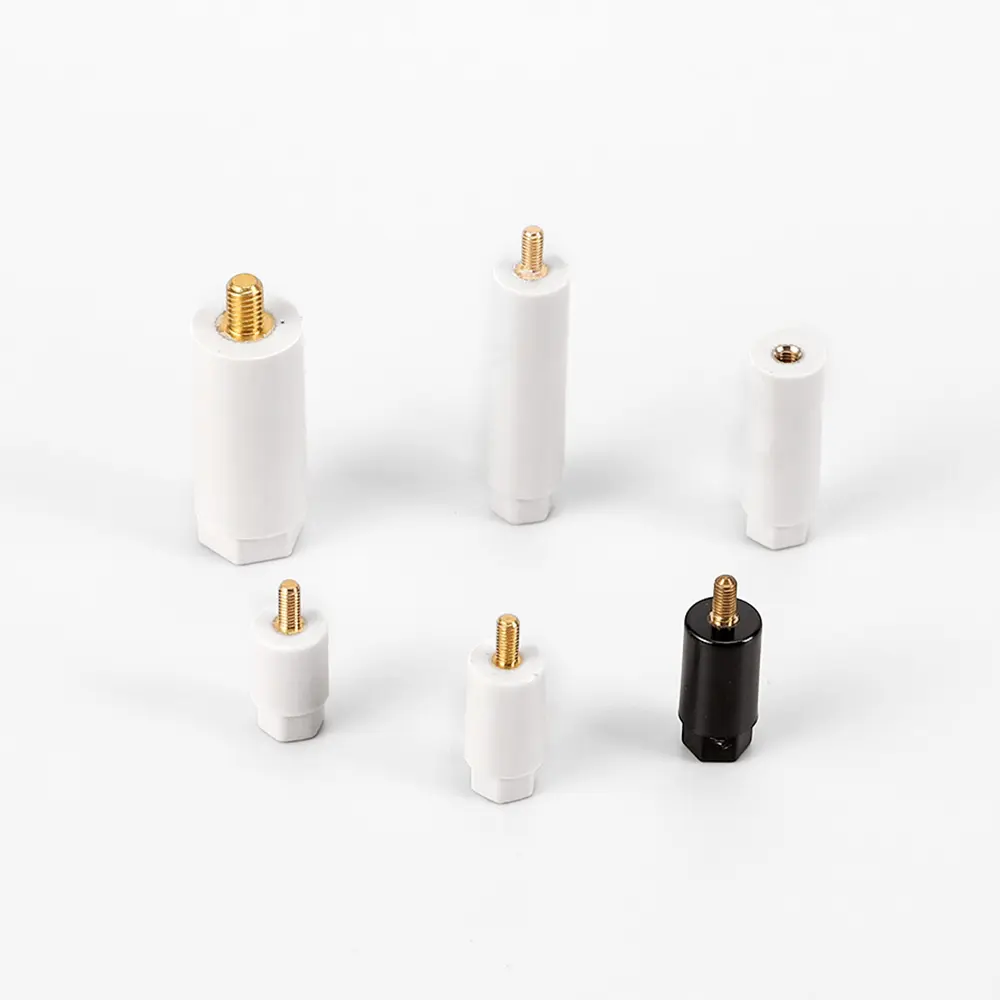
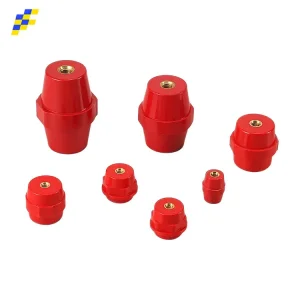
Hexagonal and pillared structural design offering non-slip wrench handling during installation and superior mechanical tension resistance under dynamic vibration.
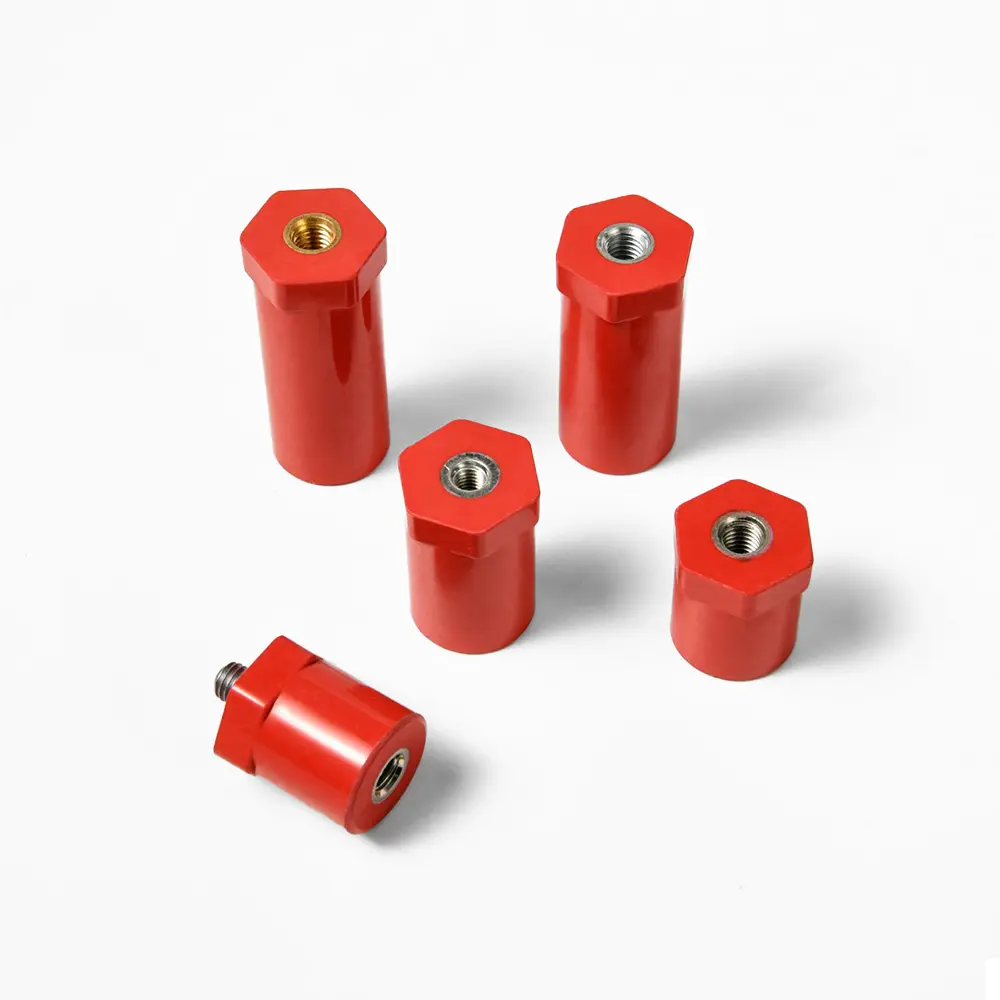
Includes SB 14-20 and SB 25-60 sub-ranges. Optimized for low-to-medium voltage busbar clamping with high thermal endurance and zero moisture absorption.
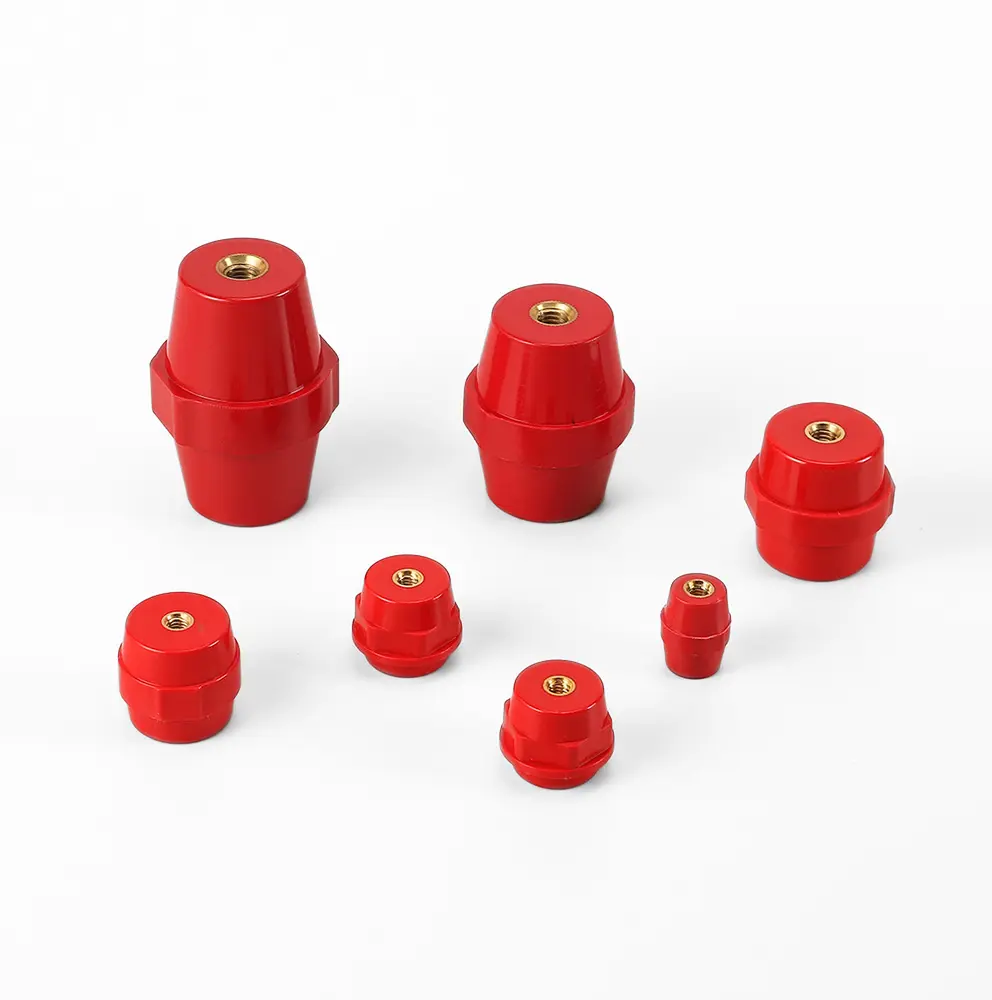
Industry-standard red BMC standoff insulators (SM25, SM35, SM51, SM76). CE-compliant with high mechanical compression ratings for global panel builders.
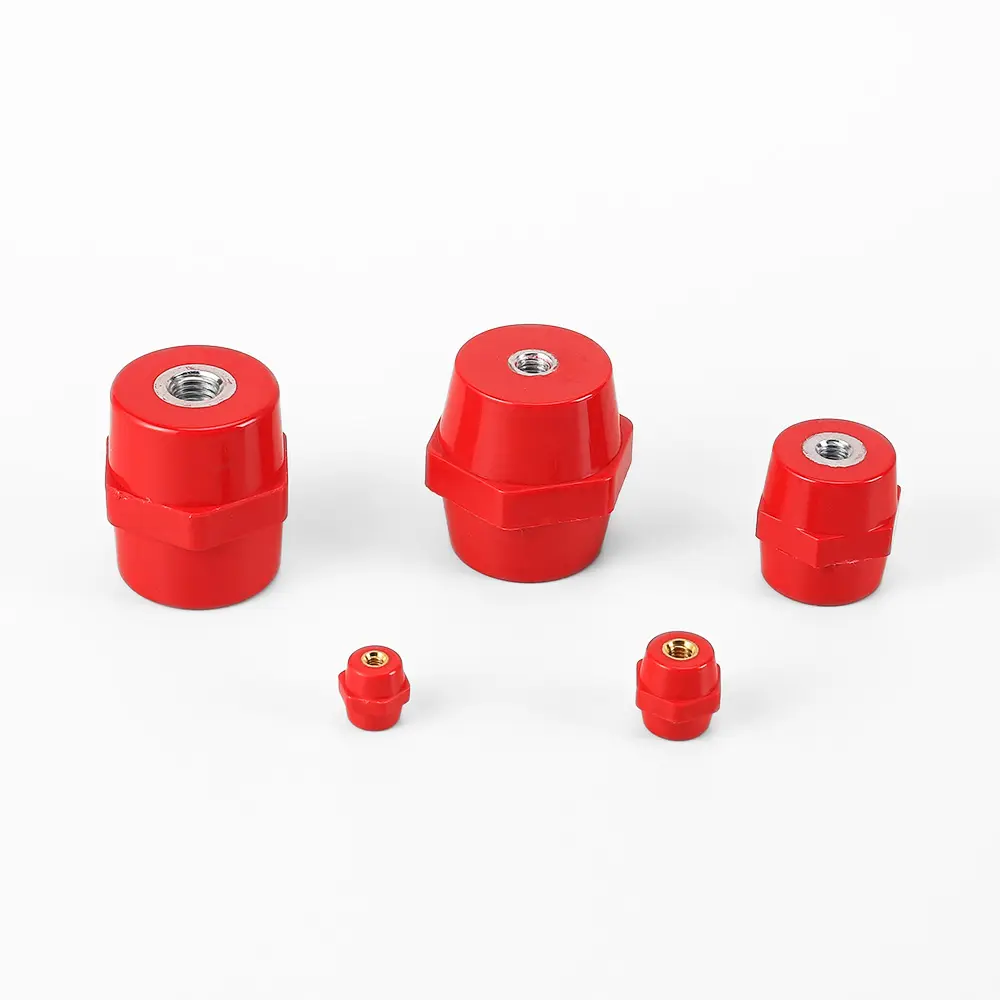
Conical standoff profiles engineered for high surge withstand voltage and enhanced tracking resistance in dusty or harsh industrial micro-environments.

T-shaped busbar supports facilitating multi-phase parallel bar runs in frequency converter cabinets and solar inverter enclosures.
Flyaford insulators are deployed globally in high-demanding energy transition sectors.

Insulating busbars inside nacelle transformers and frequency converters subjected to continuous structural vibrations and cold climate thermal shifts.

Supporting high-DC voltage combiner boxes and central solar inverter stations operating under intense ultraviolet and desert ambient extremes.
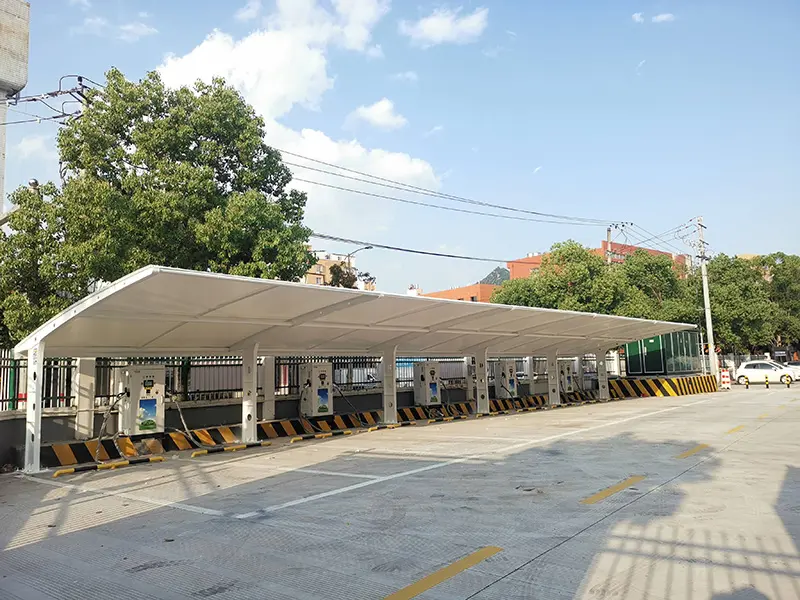
High-voltage battery junction boxes, onboard chargers (OBC), and motor control units requiring compact, ultra-lightweight BMC/EMC insulating supports.
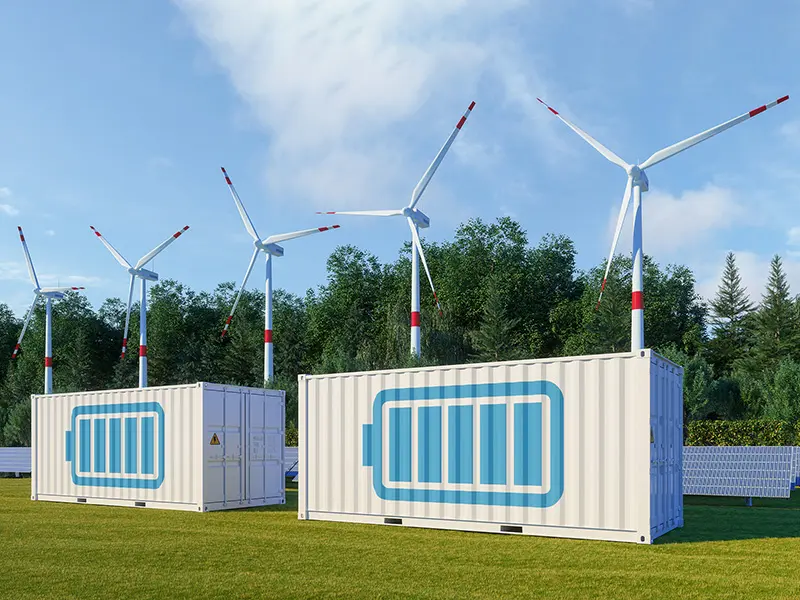
Isolating high-energy density lithium battery racks and power conversion system (PCS) switchgears with high thermal endurance.
With over 20 years of dedicated OEM/ODM manufacturing expertise, Flyaford provides end-to-end engineered solutions tailored to your unique equipment geometry and electrical demands.
Technical Consultation: Fast 1-on-1 engineer assignment; inquiries answered within 2 hours.
Sample Prototyping: Rapid prototype sampling provided within 3-7 business days upon drawing approval.
Quality Assurance: 1-to-1 replacement guarantee during the warranty period for any non-conforming quality units.
Global Support: 7*24 hours online multilingual support for global procurement managers.
Proudly supplying international power utilities, university research centers, and fortune-listed electrical panel manufacturers.




Select from our standard high-demand models manufactured strictly to international electrical standards.
In-depth answers from our engineering team regarding material selection, testing standards, and compliance.
Bulk Molding Compound (BMC) and Dough Molding Compound (DMC) combine thermosetting unsaturated polyester resin with chopped glass fiber reinforcement (typically 15%-30%) and inorganic mineral fillers like ATH. Thermosets do not undergo a ductile-to-brittle transition temperature shift like traditional thermoplastics. Their cross-linked molecular structure maintains exceptional dimensional stability, impact strength, and dielectric performance down to sub-zero temperatures as low as -86°C.
CE Certification validates that the insulator complies with the European Union’s stringent Low Voltage Directive (LVD 2014/35/EU) and relevant EN/IEC standard frameworks (such as IEC 664-1 and IEC 60664). It guarantees that electrical clearance, creepage distance, dielectric strength, and thermal resistance standards are fully met, allowing seamless commercial distribution and deployment across EU and global markets.
Threaded metallic inserts (brass or steel) are precision knurled with deep anti-spin profiles. Furthermore, our raw composite chemistry is optimized to closely align the Coefficient of Thermal Expansion (CTE) of the BMC matrix with that of the metallic insert. This prevents differential expansion stress, micro-fissuring, or insert loosening during thermal shock cycles between -40°C and +140°C.
CTI measures a material's resistance to electrical surface tracking under wet or polluted conditions. A CTI rating of 600V (Class 0, the highest achievable tier) ensures that under moisture condensation common in cold temperature ambient switches, no conductive carbonized paths form across the insulator body, preventing catastrophic short circuits.
Yes. We possess full in-house tooling, mold design, and custom hardware insert fabrication capabilities. Whether you require specific height profiles, extended creepage ridges, metric/imperial thread pitch variations (M6 to M16, UNC threads), or custom color formulations, our engineering team provides turnkey OEM/ODM support from CAD drawing to mass production.
We provide comprehensive documentation with orders, including raw material mill test certificates, RoHS 2.0 and REACH environmental compliance reports, UL 94-V0 flammability reports, ISO 9001/IATF 16949 inspection certificates, and factory batch testing reports for mechanical torsion and electrical withstand voltage.
Need specialized technical guidance, CAD drawings, or custom quotation for low temperature insulating materials? Our senior engineering team is ready to support your project requirements.