 Flyaford
Flyaford
Flyaford
Rigorous CE & UL certified thermosetting resin standoff insulators engineered for extreme creepage, flame resistance, and mechanical stability.
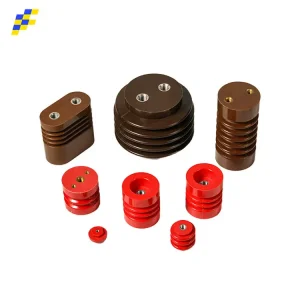
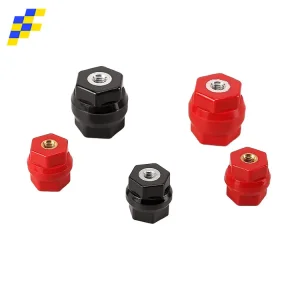
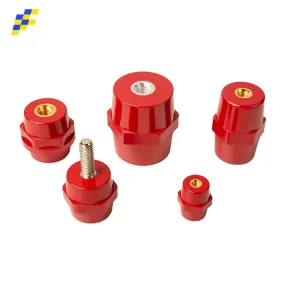

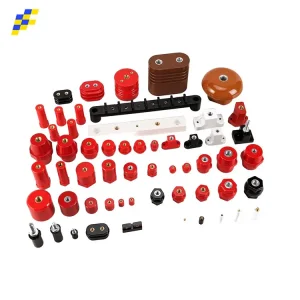
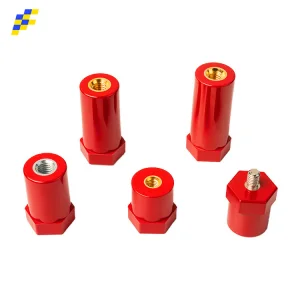
Operating from a state-of-the-art 35,000 m² facility, Zhejiang Flyaford Electron Co., Ltd. integrates advanced polymer synthesis with automated compression molding.
The global shift toward net-zero carbon emissions, high-density renewable energy grids, and electrification of transportation systems has placed unprecedented stress on low-to-medium voltage electrical infrastructure. Electrical insulators—once considered passive mounting components—are now dynamic critical failure prevention nodes within modern switchgear, Battery Energy Storage Systems (BESS), solar central inverters, and high-power EV charging infrastructure. Modern busbar standoff insulators must sustain high dielectric stress, severe harmonic thermal oscillations, ambient chemical degradation, and mechanical short-circuit repelling forces simultaneously.
As a premier CE Certification Custom Electrical Insulator Manufacturing Supplier & Exporter, Zhejiang Flyaford Electron Co., Ltd. addresses the evolving strict requirements of international electrical standards (including IEC 61439, UL 94 V-0, and EU Low Voltage Directive 2014/35/EU). By synthesizing custom thermosetting compound materials—specifically Bulk Molding Compounds (BMC), Sheet Molding Compounds (SMC), Epoxy Molding Compounds (EMC), and Phenolic Resin Formulations (PF)—Flyaford delivers customized insulation profiles tailored to withstand harsh industrial micro-environments.
Standard electrical insulators frequently fail at the interface between the embedded brass/steel insert and the surrounding thermosetting resin due to differential Thermal Expansion Coefficients (CTE). Flyaford solves this through proprietary knurling insert geometries combined with low-shrinkage BMC matrices, ensuring zero micro-fracturing and consistent torque limits (up to 500 N.m test rating) under -40°C to +140°C thermal shock cycles.
Selecting the optimized polymer composite is critical to ensuring long-term dielectric performance and creepage distance compliance under high pollution degrees (Pollution Degree III & IV according to IEC standards). Below is a comparative technical breakdown of our primary material formulations:
| Material Classification | Dielectric Strength (kV/mm) | UL 94 Flammability | Comparative Tracking Index (CTI) | Flexural Strength (MPa) | Target Application Scenario |
|---|---|---|---|---|---|
| BMC (Bulk Molding Compound) | ≥ 18.0 | V-0 Rated | CTI ≥ 600V | ≥ 100 | High-voltage switchboards, SM/SB standoff series, general distribution. |
| EMC (Epoxy Molding Compound) | ≥ 24.0 | V-0 / 5VA | CTI ≥ 600V | ≥ 160 | EV traction inverters, dense BESS busbar racks, high-vibration systems. |
| PF (Phenolic Resin Compound) | ≥ 15.0 | V-0 Rated | CTI 175V - 400V | ≥ 80 | High thermal resistance applications, legacy industrial switchgear, motor terminal plates. |
| DMC (Dough Molding Compound) | ≥ 16.0 | V-0 Rated | CTI ≥ 400V | ≥ 90 | Cost-optimized low-voltage busbar supports, EL & D-Series mounting blocks. |
From molecular raw material blending to 5-axis mold tool machining, our digital smart factory yields high consistency across massive volume production runs.
Utilizing 60+ fully automated compression molding presses, we control precise temperature, pressure, and cure time profiles to eliminate micro-voids and internal flashover paths inside complex insulator geometries.
Hardware inserts made of high-conductivity brass, copper, or high-tensile steel (plated with Zinc or Nickel) are robotic-placed into molds. The thermal matrix bonding withstands high mechanical cantilever forces during dynamic short circuits.
Our dedicated tooling center executes custom CAD/CAM mold designs rapidly. From 3D prototyping and stress analysis simulation to final steel hardening and polishing, we shorten ODM project cycles from months to days.
As an official insulator research partner for Tsinghua University and a Jinhua Municipal High-Tech R&D Center, Flyaford subjects every batch to comprehensive electrical and physical testing.
Equipped with a 0-120kV Partial Discharge Test Room and 0-300kV Lightning Impulse Tester to verify zero internal dielectric breakdown under surge events.
Universal Testing Machines (0-200KN) and Microcomputer Torsion Testers (0-500N.m) measure ultimate tensile, compressive, and rotational torque limits.
Thermal shock chambers (-40°C to +140°C), double 85 test chambers (85°C / 85% RH), and sub-zero testing (-86°C) simulate decades of severe real-world deployment.
In-house ROHS component analyzers, arc resistance testers, ball pressure devices, and salt spray fog chambers guarantee total CE, REACH, and UL compliance.

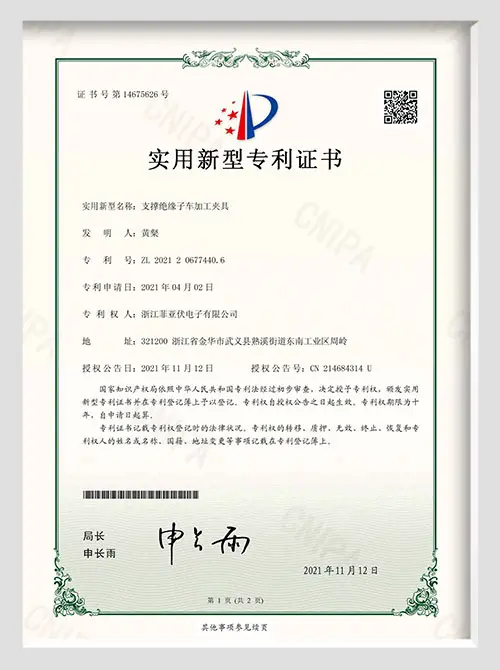

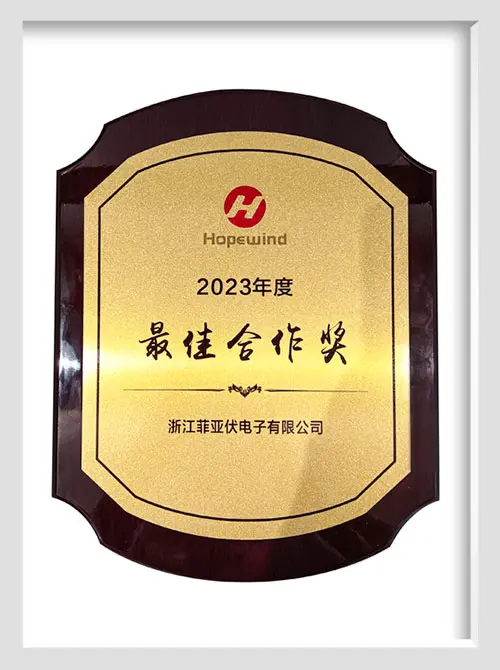
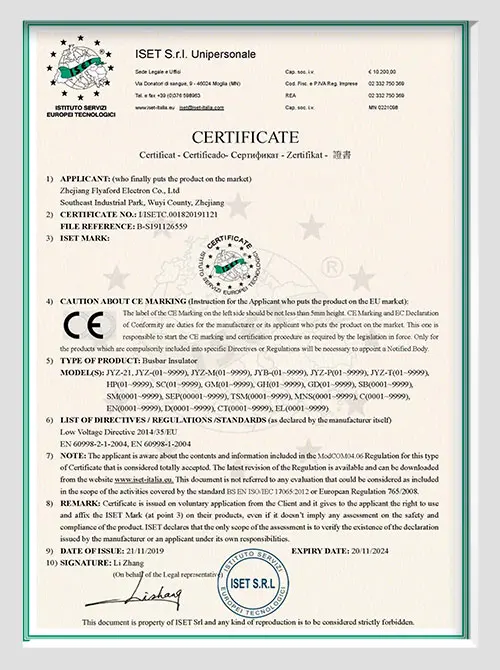
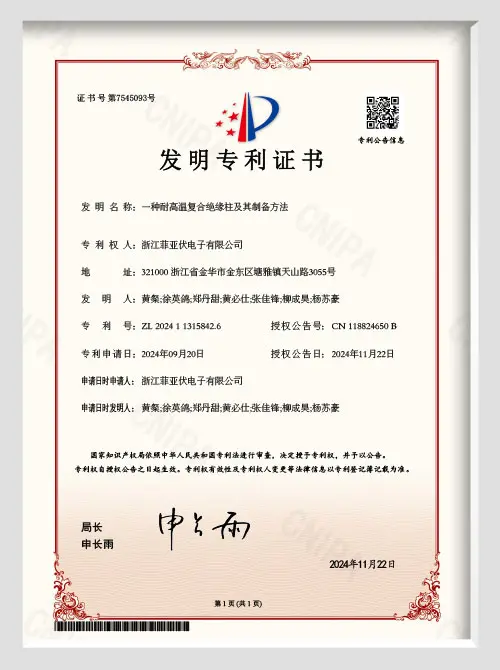
Flyaford custom insulators serve high-tier international OEMs across challenging operating environments.
Ensuring mechanical separation and rigid spacing of multi-phase copper busbars inside main power distribution cabinets, GIS switchgear, and secondary unit substations under elevated ambient thermal states.
High-density liquid-cooled battery racks demand fire-retardant (UL94 5VA), non-hygroscopic insulators that stop fault currents across packed lithium battery string busbars.
Vibration-resistant standoff mounts built for central solar PV inverters and nacelle power conversion cabinets in offshore/onshore wind turbines subject to humidity and airborne salt mist.
Designed with high dV/dt transient immunity and low dielectric loss tangents to isolate fast-switching IGBT modules and heavy-duty industrial VFD chokes.
Manufactured under IATF 16949 standards for EV main distribution units (PDU), traction motor housing isolation, and megawatt-level ultra-fast charging stations.
Compact footprint standoff insulators offering EMI/RFI neutral performance and high mechanical shear strength for high-density server rack busways.
Zhejiang Flyaford Electron Co., Ltd. manufactures a wide array of standardized and semi-customized standoff insulator geometries. Each product series is designed to satisfy distinct spatial, mechanical, and electrical creepage distance requirements:
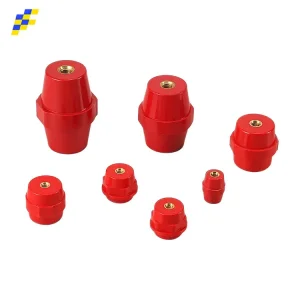
Features a classic hexagonal/octagonal body for easy wrench tightening during busbar mounting. Manufactured from high-strength BMC composite with threaded inserts from M6 to M16, rated for operating voltages up to 12kV.
Specifically engineered for medium-voltage switchgear. Designed with heightened creepage skirts to lengthen the surface breakdown path in high-humidity industrial environments (SB 14-20 and SB 25-60 series).
Slim-profile profile developed for space-constrained MCC (Motor Control Center) switchboards and low-voltage distribution boxes requiring dependable dielectric breakdown margins.
Multi-step stepped height insulators offering multi-tier busbar stacking options. Supports complex internal panel geometry while maintaining flame retardancy compliant with UL94 V-0 standards.
Designed for low-voltage draw-out switchgear systems (such as MNS cabinets). Offers zero deformation under high fault-current dynamic mechanical loads.
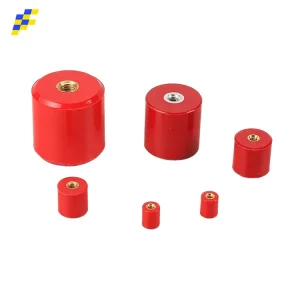
Heavy-duty structural mounting pillars for phase-to-phase and phase-to-ground separation in central transformers and high-frequency power conditioning units.
We provide technical support, localized regulatory compliance assistance, and agile prototyping for engineering teams across Europe, the Americas, and the Asia-Pacific region.
Engineers review dielectric strength, creepage distance, tensile loading, thermal environment, and standard requirements (CE/UL/IEC).
Selection of optimal raw resin (BMC/EMC/PF) and CAD/FEA simulation of knurled insert retention forces and structural load paths.
In-house tooling center produces sample prototypes for full lab evaluation (partial discharge, flashover, torque retention, and UL thermal testing).
Automated compression molding delivers 200,000+ daily units backed by full batch traceability and complete 100% inspection modes.
Technical clarification on custom insulator design, certification compliance, and material performance parameters.
Explore our full line of SM, SB, EL, and MNS series standoff busbar insulators manufactured under strict ISO9001 and IATF16949 quality protocols.
Advancing intelligence, eco-friendly polymer formulations, and smart diagnostic integration for global power distribution systems.
Development of micro-scale fiber-optic and piezoelectric sensors co-molded inside composite insulators to deliver real-time partial discharge monitoring and localized temperature reporting directly to cloud SCADA nodes.
Formulating next-generation thermosetting compounds using bio-derived resin matrixes and zero-halogen flame retardants, reducing cradle-to-gate carbon footprint by up to 35% while keeping V-0 self-extinguishing ratings.
Engineering advanced high-CTI nanocomposite BMC matrixes designed to resist space-charge accumulation under high-voltage direct current (HVDC) fields in grid-scale energy storage and intercontinental interconnects.