 Flyaford
Flyaford
Flyaford
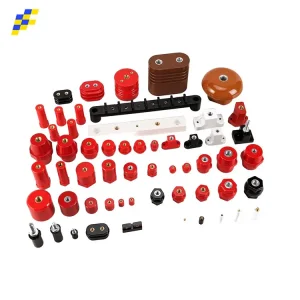
Explore our premier series of BMC/DMC standoff and busbar insulators engineered for high electrical breakdown strength and extreme mechanical loads.
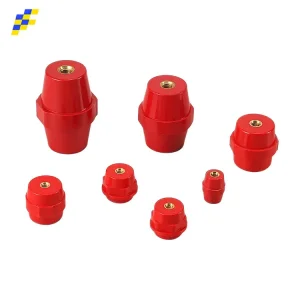
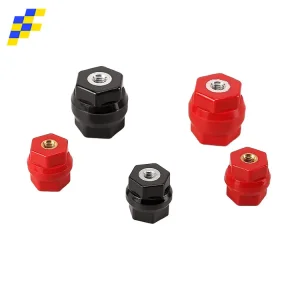
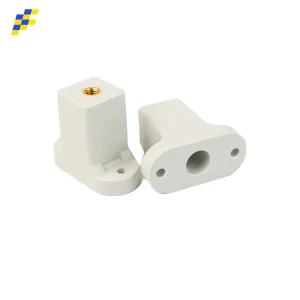

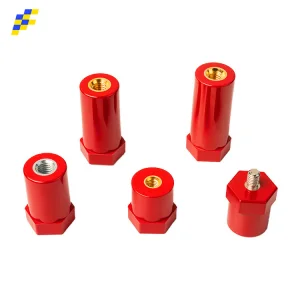
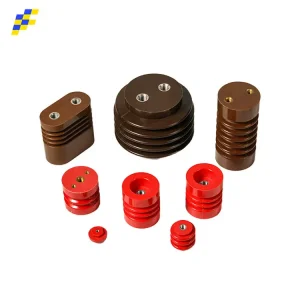
Modern electrical power distribution grid architectures, renewable energy generation facilities, and industrial automation networks require unprecedented dielectric safety and mechanical endurance. Traditional porcelain and glass insulators—historically favored for basic low and medium voltage applications—are increasingly being replaced by Advanced Composite Insulators manufactured from thermosetting formulations such as Bulk Molding Compound (BMC), Dough Molding Compound (DMC), Epoxy Molding Compound (EMC), and Phenolic Resin (PF).
Engineered via high-pressure compression molding technology, composite insulators deliver superior structural integrity, hydrophobic surface properties, exceptional resistance to electrical tracking (CTI ≥ 600V), and zero risk of brittle catastrophic fracture under mechanical vibration or seismic impact. As high-density switchgears, frequency conversion cabinets, energy storage systems (ESS), and electric vehicle (EV) charging infrastructures become more compact, the electrical insulation medium must handle intense thermal dynamics while maintaining strict creepage and clearance distances.

Situated in the Jinyi New District of Jinhua City, Zhejiang Province, FLYAFORD has established itself as an authoritative benchmark manufacturer of low to medium voltage insulators since 2007.
Innovation serves as the primary engine at Flyaford. Operating as the designated Jinhua Feifav High-Performance Insulator Science and Technology R&D Center, our team includes senior electrical engineers collaborating directly with prestigious academic institutions such as Tsinghua University. As a certified designated supplier for Tsinghua University’s electrical engineering labs, we continually push the limits of material density, mechanical tensile strength, and arc suppression under severe thermal shocks.
Equipped with over 60 automated molding compression machines, 20+ specialized high-voltage testing instruments, and a workforce of over 120 dedicated technicians, Flyaford has fully upgraded to digital smart factory operations. Real-time data tracking, raw material compounding control, and fully automated insert loading guarantee traceable zero-defect quality across all low and medium voltage standoff insulators.
Every batch of Flyaford advanced composite insulators undergoes 100% full electrical performance testing and appearance verification in strict compliance with IATF 16949 standards.
Our in-house high-voltage laboratory is equipped with a 0-120KV Partial Discharge Test Room, a 0-300KV Lightning Impulse Tester, and a 0-100KV Withstand Voltage Tester to guarantee absolute electrical resistance under surge conditions.
We test mechanical durability across extreme climate shifts using our Double 85-degree Test Chamber, High-Low Temperature Thermal Shock Chamber (-40°C to +140°C), and cryogenic test equipment operating down to -86°C.
Mechanical rating is validated via Microcomputer Torsion Testing (0-500N.m), Universal Tensile Testing (0-200KN), ROHS component analyzers, horizontal/vertical burning test chambers, ball pressure units, and salt spray fog chambers.
| Testing Parameter / Equipment | Operational Range / Standard | Engineering Purpose & Benefit |
|---|---|---|
| Microcomputer Torsion Tester | 0 - 500 N.m | Ensures internal brass/steel hardware inserts withstand heavy tightening torque during busbar assembly. |
| Universal Strength Testing Machine | 0 - 200 KN Tensile / Compression | Verifies maximum mechanical load ratings against dynamic electromagnetic short-circuit stresses. |
| Partial Discharge Test Room | 0 - 120 KV Sensitivity | Detects microscopic air voids inside BMC/EMC molded matrices to eliminate localized electrical treeing. |
| Lightning Impulse Generator | 0 - 300 KV (1.2/50 μs wave) | Simulates atmospheric transient overvoltages and switching surges according to IEC 60664-1 standards. |
| Thermal Shock Environmental Chamber | -40°C to +140°C Rapid Cycling | Prevents micro-cracking and material delamination under rapid environmental temperature fluctuations. |
| Insulation Resistance & Tracking Tester | 0 - 1 TΩ / CTI ≥ 600V (UL 746A) | Prevents carbon conductive path formation on insulator surfaces exposed to conductive dust and moisture. |
China has become the global center of gravity for advanced composite material synthesis and high-volume electrical component manufacturing.
From raw BMC/DMC polymer resin formulation and compound mixing to custom mold tool design, insert precision machining, compression molding, and final testing—everything is performed in-house at our 35,000 m² facility. This eliminates middleman markups and drastically shortens lead times for global OEMs.
China's mature industrial ecosystem provides immediate access to high-purity glass fibers, unsaturated polyester resins, flame retardant additives (Aluminum Trihydrate - ATH), and specialty curing agents. Flyaford custom-formulates thermosetting compounds tailored specifically to target dielectric and thermal criteria.
Our experienced toolmakers convert customer CAD files into physical compression molds in as little as 10 to 15 days. Whether you require custom insert thread metrics (M6, M8, M10, M12, M16) or unique creepage rib configurations, our engineering team offers seamless ODM customization.
Flyaford composite insulators power mission-critical infrastructure across key modern energy and industrial sectors worldwide.
With high-voltage EV battery architectures transitioning to 800V and 1000V platforms, Flyaford flame-retardant (UL94 V-0) BMC insulators are critical within DC fast-charging stations, battery power distribution units (PDUs), and onboard traction inverters to safeguard against electrical breakdown under continuous high thermal stress.
Offshore and onshore wind turbines experience harsh environmental salt spray, extreme mechanical vibration, and dynamic harmonic oscillations. Our SM, D, and SB series composite insulators isolate busbars within wind tower nacelles and converter cabinets, maintaining reliable power transmission despite humidity and salt air.
Utility-scale photovoltaic farm central inverters demand insulation materials capable of handling continuous direct current (DC) fields without ionic migration or dielectric degradation. Flyaford EL and P-type standoff insulators deliver high tracking index resistance for 1500V DC solar power collection systems.
Utility-scale containerized BESS installations require robust structural support for high-current copper busbars connecting lithium-ion cell racks. Flyaford heavy-duty MNS and SEP busbar insulators absorb structural thermal expansion forces while offering flame retardancy to prevent thermal runaway propagation.
Substation switchboards, ring main units (RMU), and power control centers (PCC) depend on our CE-marked T-type and D-type insulators to securely clamp main busbars, eliminating Phase-to-Phase and Phase-to-Ground short circuit arc-over risks during system faults.
Electrified railway traction substations and remote 5G cellular transceiver power modules require lightweight, weather-resistant, zero-maintenance composite insulators capable of surviving high dynamic vibration and continuous outdoor exposure.
Our commitment to global standards ensures seamless entry into European, North American, and Asian power markets.
Zhejiang Flyaford Electron Co., Ltd. operates under strict international quality, environmental, and automotive management systems. Our certifications confirm full compliance across global supply chains:
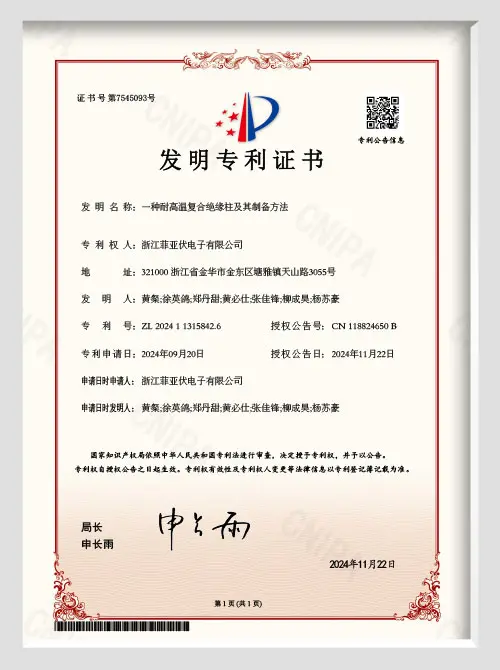
Recognized as an authoritative leader in technical composite insulation technology, Flyaford holds numerous state and provincial honors:

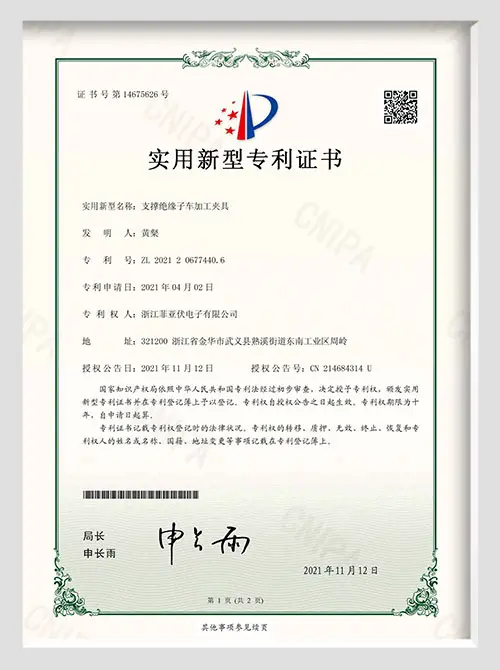

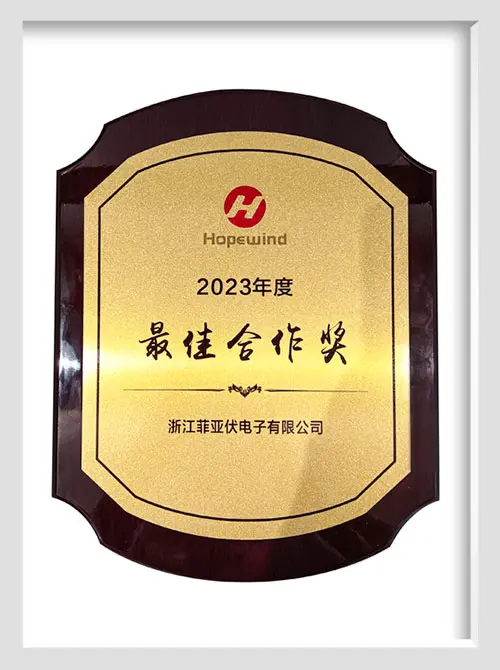
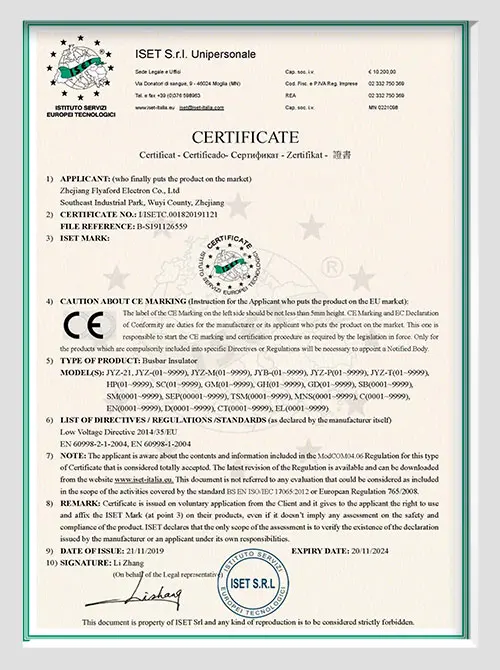
From initial design consultation to lifetime technical troubleshooting, Flyaford delivers a seamless, reliable experience.
Before order placement, our dedicated electrical engineering team helps clients select the optimal composite insulator model based on installation environment, mechanical shear stress, breakdown voltage requirements, and busbar footprint.
We back every delivered product with comprehensive warranty coverage and fast technical support to maintain client satisfaction and build long-term partnerships.
Expert answers to critical procurement and technical questions regarding advanced composite insulators.
Bulk Molding Compound (BMC) and Dough Molding Compound (DMC) consist of unsaturated polyester resins reinforced with chopped glass fibers (typically 10-20%), mineral fillers, and flame retardants, offering balanced mechanical strength and low cost. Epoxy Molding Compound (EMC) utilizes epoxy resin, providing exceptional dielectric breakdown resistance and superior mechanical strength under severe thermal loads. Phenolic Resin (PF) features high heat resistance and excellent arc suppression capabilities, ideal for high-temperature switchgear environments.
The Comparative Tracking Index (CTI) measures an insulating material's resistance to electrical tracking—the formation of conductive carbon paths on the surface caused by electrical stress and environmental contamination. Flyaford composite insulators achieve a CTI rating ≥ 600V (Group I), preventing short-circuit flashovers in humid, dusty, or polluted industrial conditions.
We incorporate high concentrations of non-toxic flame-retardant additives such as Aluminum Trihydrate (ATH) into our thermosetting matrix. Under flame exposure, ATH undergoes endothermic decomposition, releasing water vapor to cool the substrate and suppress combustion, ensuring the material extinguishes within 10 seconds without flaming drips (UL94 V-0 certified).
We provide extensive customization for internal metallic inserts, including solid brass, passivated stainless steel, or zinc-plated carbon steel. Thread sizes range from metric M4 up to M16 (and UNC/UNF imperial equivalents), with blind-hole or pass-through designs engineered to resist high tightening torque (up to 500 N.m depending on thread size).
Yes. Our insulators undergo environmental testing in thermal shock test chambers spanning -40°C to +140°C, as well as deep cryogenic testing down to -86°C. They retain structural toughness and electrical breakdown strength under rapid temperature swings, making them suitable for sub-zero Arctic sub-stations and high-desert solar installations.
We supply premium insulator solutions to world-renowned power corporations, academic laboratories, and system integrators.




Browse our additional wholesale series certified for international electrical distribution projects.