 Flyaford
Flyaford
Flyaford
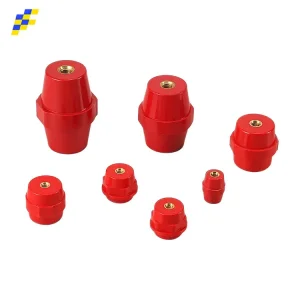
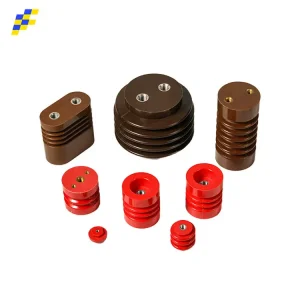
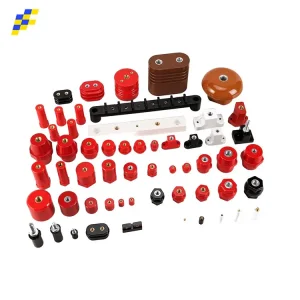
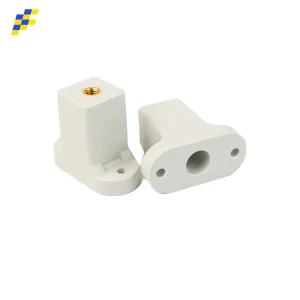
The global electrical power infrastructure is undergoing a radical paradigm shift driven by decarbonization, electrification of transport, and the rapid deployment of utility-scale energy storage systems (BESS). As electrical grids transition toward decentralized smart grid architectures, the operational demands placed on passive electrical insulation infrastructure have escalated dramatically. Modern medium-voltage (MV) and low-voltage (LV) busbar supports, standoff insulators, and switchgear components are no longer mere mechanical spacers; they are high-performance safety barriers critical to grid resilience and operational longevity.
Historically dominated by ceramic and wet-process porcelain, the global utility insulator market has overwhelmingly migrated toward advanced thermosetting composite materials—specifically Bulk Molding Compounds (BMC), Dough Molding Compounds (DMC), and Epoxy Molding Compounds (EMC). Original Design Manufacturers (ODM) and custom component fabricators are at the forefront of this material evolution, providing global Original Equipment Manufacturers (OEMs) with customized insulation geometry optimized for thermal dissipation, mechanical strength under short-circuit stress, and superior dielectric withstand performance.
As global supply chains demand enhanced risk mitigation, selecting qualified ODM Utility Insulators Suppliers & Companies requires deep technical auditing. A tier-one supplier must possess vertically integrated tooling capabilities, rigorous material synthesis controls, and extensive lab-verification frameworks capable of simulating extreme environmental stress, seismic acceleration, and partial discharge phenomena.
Bulk Molding Compound (BMC) combines unsaturated polyester or vinyl ester resins reinforced with 15% to 30% chopped glass fibers. Engineered for high mechanical strength, dimensional stability, and arc resistance under continuous thermal loads up to 160°C. UL94 V-0 flame rating certified.
Epoxy Molding Compound (EMC) offers superior cross-linking density, providing near-zero moisture absorption (<0.05%) and supreme tracking resistance (CTI 600V). Ideal for harsh outdoor environments, marine applications, and partial discharge critical switchgear applications.
Phenolic (PF) composite moldings are deployed where supreme resistance to structural deformation, high thermal degradation resistance, and chemical immunity to industrial solvents are mandated. Excellent cost-to-performance ratio in legacy power equipment.
| Performance Metric / Parameter | BMC Insulator Grade | DMC Standard Grade | EMC High-Spec Grade | Standard Test Method |
|---|---|---|---|---|
| Dielectric Strength (kV/mm) | 18.5 - 22.0 | 15.0 - 18.0 | 24.0 - 28.0 | IEC 60243-1 / ASTM D149 |
| Comparative Tracking Index (CTI) | CTI 600 (PLC 0) | CTI 400 - 500 | CTI 600+ (Track Resistance) | IEC 60112 / UL 746A |
| Flexural Strength (MPa) | 120 - 160 | 90 - 120 | 160 - 210 | ISO 178 / ASTM D790 |
| Tensile Strength (MPa) | 50 - 75 | 40 - 60 | 80 - 110 | ISO 527 / ASTM D638 |
| Flammability Rating | UL 94 V-0 (0.8mm) | UL 94 V-0 (1.5mm) | UL 94 V-0 / 5VA | UL 94 Standard |
| Continuous Thermal Index (RTI) | 130°C - 155°C (Class F) | 120°C - 130°C (Class B) | 180°C (Class H) | UL 746B |
| Insulation Resistance (GΩ) | > 100 GΩ | > 10 GΩ | > 1,000 GΩ | IEC 60093 |
Established in 2007, ZHEJIANG FLYAFORD ELECTRON CO., LTD. (located in Jinyi New District, Jinhua City, Zhejiang Province) operates a state-of-the-art 35,000 square meter smart manufacturing campus. Operating as a recognized "Zhejiang Provincial Specialized, Refined, Distinctive, and Innovative SME" and "Jinhua Feifav High-Performance Insulator Science and Technology R&D Center", Flyaford maintains over 60 high-tonnage thermosetting compression molding machines and over 20 specialized electrical/mechanical testing systems.
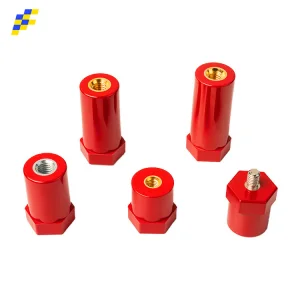
Threaded metallic inserts (brass, copper, or steel) are embedded via automated precision insert placement robotics. Torque-out resistance and axial pull-out forces are rigorously maximized by computer-optimized knurling profiles, preventing insulation fracturing during high-torque busbar tightening.
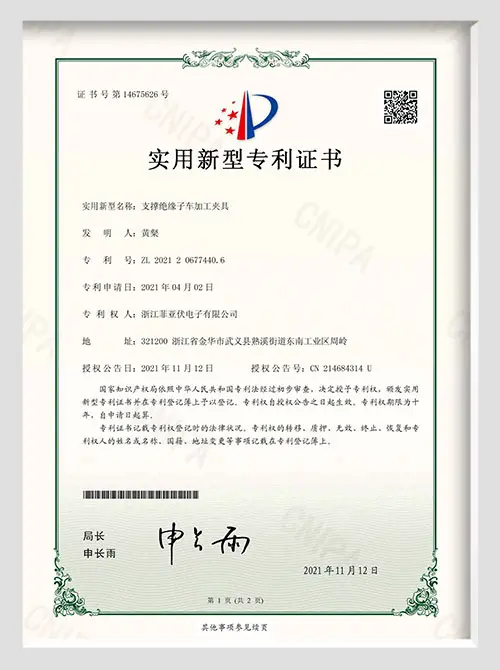
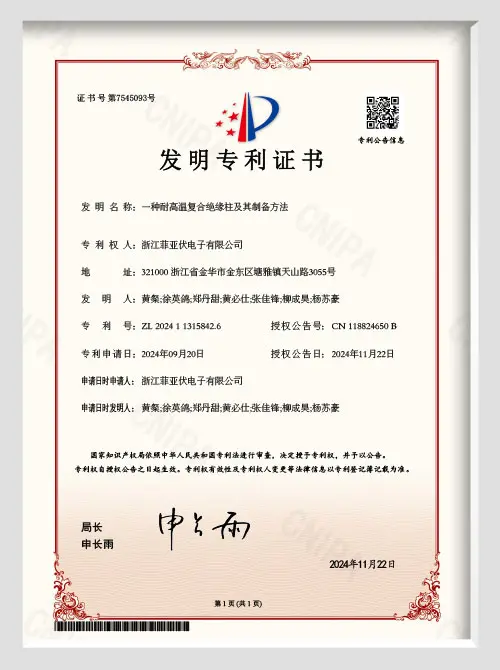
As a designated insulator supplier for Tsinghua University, Flyaford collaborates with top academic researchers to advance dielectric performance, thermal dissipation, and polymer formulation resilience, holding 26 patents (including 5 invention patents and 2 software copyrights).
To maintain a production defect rate below 100 PPM across 150,000 to 200,000 daily output units, Flyaford conducts 100% full-inspection for critical electrical and dimensional parameters using an advanced laboratory equipped with:
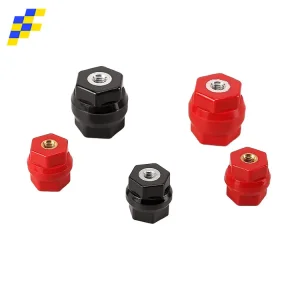
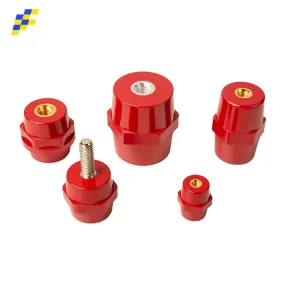
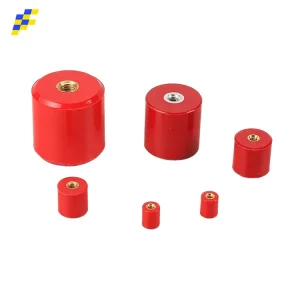
MNS, SM, and D Series standoff insulators provide structural busbar mounting inside medium and low-voltage distribution panels. Engineered to withstand high electrodynamic repulsive forces generated during dynamic short-circuit faults (up to 100kA peak current handling).
Custom T-Type and SB Series compact busbar insulators isolate high-voltage DC battery racks in utility grid-scale storage units and EV power distribution units (PDUs). High CTI values prevent thermal runaway tracking and electrical flashovers in tight spatial enclosures.
SEP Series insulators are formulated with enhanced anti-hygroscopic hydrophobic resins, preventing dielectric breakdown in high-humidity marine atmospheres, offshore wind turbines, and floating solar array inverter switchgear.
Variable Frequency Drives (VFDs) subject insulators to rapid high-frequency pulse-width modulation (PWM) voltage spikes. Advanced BMC formulations mitigate partial discharge degradation caused by high dV/dt voltage harmonics in heavy manufacturing plants.
Ultra-compact standoff designs supporting heavy-gauge copper busbars in outdoor telecommunications power cabinets and electric traction substations for high-speed rail networks, featuring high mechanical vibration resistance.
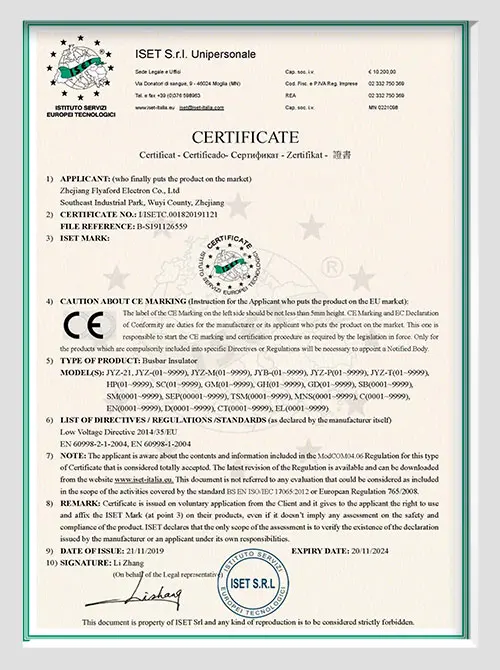
Navigating global regulatory landscapes requires ODM Utility Insulators Suppliers to hold comprehensive international certifications. ZHEJIANG FLYAFORD ELECTRON CO., LTD. guarantees complete compliance through a robust quality architecture certified under IATF 16949 (automotive quality management system standard), ISO 9001, ISO 14001, alongside product-level UL Listing, CE Certification, RoHS 2.0, and REACH compliance.


Embedded Fiber Bragg Grating (FBG) optical sensors and micro-dielectric sensors integrated inside BMC/EMC bodies enable real-time monitoring of internal thermal stress, partial discharge degradation, and structural strain in smart grid digital substations.
Transitioning toward recyclable thermosets and bio-derived unsaturated polyester resins that retain UL94 V-0 flame retardancy while reducing carbon footprint by 45% across the component lifecycle.
Engineered nano-doped epoxy compounds designed to prevent space-charge accumulation under high-voltage direct current (HVDC) power transmission fields, enabling ultra-compact converter stations.