 Flyaford
Flyaford
Flyaford
High-precision standoff insulators manufactured to rigorous international safety and dielectric strength standards.
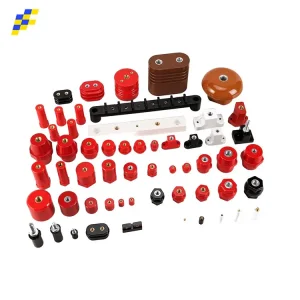
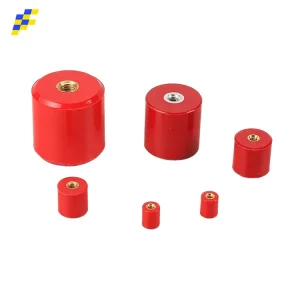
A Comprehensive Technical Analysis of BMC, DMC, EMC, and Phenolic Resin Formulations for High-Stress Electrical Infrastructure
Bulk Molding Compound (BMC) and Dough Molding Compound (DMC) are thermosetting glass-fiber reinforced polymer matrices engineered for superior electrical insulation. Formulated with unsaturated polyester resins, chopped glass strands (10–15% reinforcement), and inorganic mineral fillers (such as aluminum trihydrate for flame retardancy), BMC provides an exceptional strength-to-weight ratio, high dielectric strength (>20 kV/mm), and high resistance to tracking (CTI ≥ 600V).
For extreme medium-voltage demands, Epoxy Molding Compound (EMC) offers ultra-low shrinkage, elevated mechanical modulus, and phenomenal thermal stability up to 180°C continuous operation. EMC is particularly favored in tight enclosure environments where precision metal inserts (brass or steel) are direct-molded into the insulator core, guaranteeing zero air gap voiding and micro-cracking under severe electrodynamic short-circuit stresses.
Phenolic Formaldehyde (PF) composites retain historical and functional importance due to their unparalleled heat endurance, zero halogen smoke generation, and high creepage insulation capabilities. Applied across specialized rail traction switchgear and industrial motor drive cabinets, PF insulators prevent catastrophic thermal runaway and withstand repetitive thermal shock cycling ranging from -40°C to +140°C.
| Technical Parameter | BMC / DMC Compound | EMC (Epoxy Compound) | PF (Phenolic Resin) | Testing Standard |
|---|---|---|---|---|
| Dielectric Strength | 18 - 24 kV/mm | 22 - 30 kV/mm | 14 - 18 kV/mm | IEC 60243-1 |
| Comparative Tracking Index (CTI) | CTI 600 (Class 0) | CTI 600 (Class 0) | CTI 175 - 400 | IEC 60112 |
| Flame Retardancy Rating | UL 94 V-0 (0.8mm) | UL 94 V-0 (0.4mm) | UL 94 V-0 / V-1 | UL 94 |
| Tensile & Flexural Strength | 70 / 140 MPa | 110 / 190 MPa | 50 / 90 MPa | ISO 527 / ISO 178 |
| Continuous Thermal Class | Class F (155°C) | Class H (180°C) | Class B / F (130-155°C) | IEC 60085 |
Situated in Jinyi New District, Jinhua City, Zhejiang Province. Established in 2007, operating a 35,000 m² smart factory supplying high-stability insulating components worldwide.
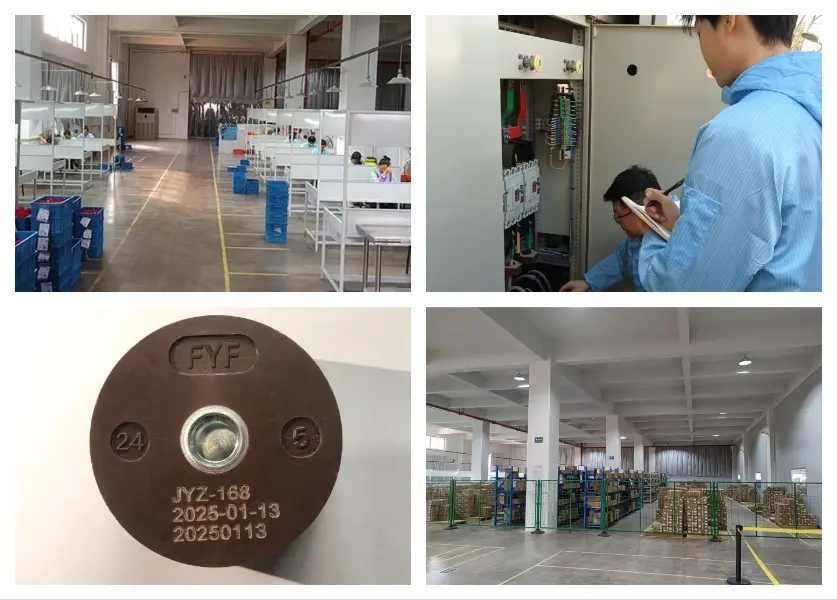
Operating across a sprawling 35,000 square meters of standardized modern production space, Flyaford houses over 60 high-tonnage thermosetting compression molding machines, advanced CNC insert tapping systems, and automated material handling infrastructure. With daily throughput exceeding 200,000 units, we serve over 500 global clients maintaining an industry-leading quality defect rate below 100 PPM.

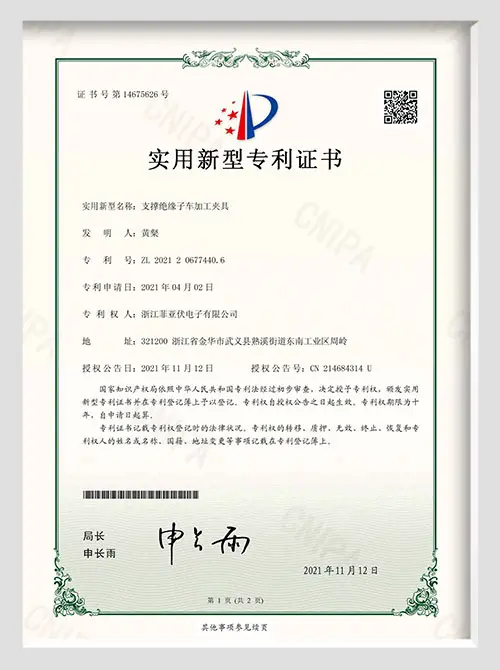
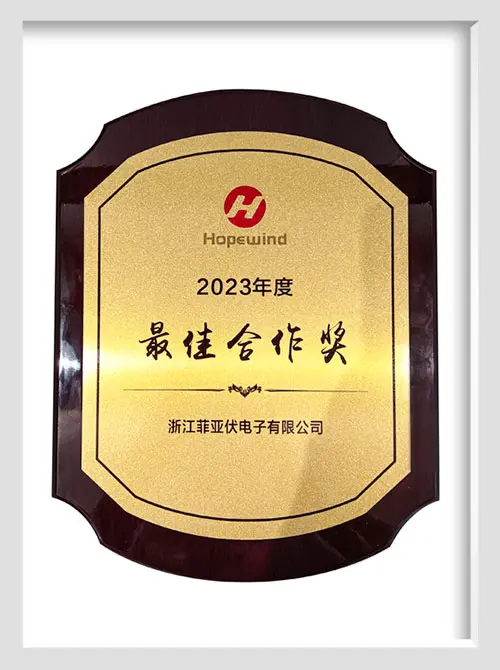
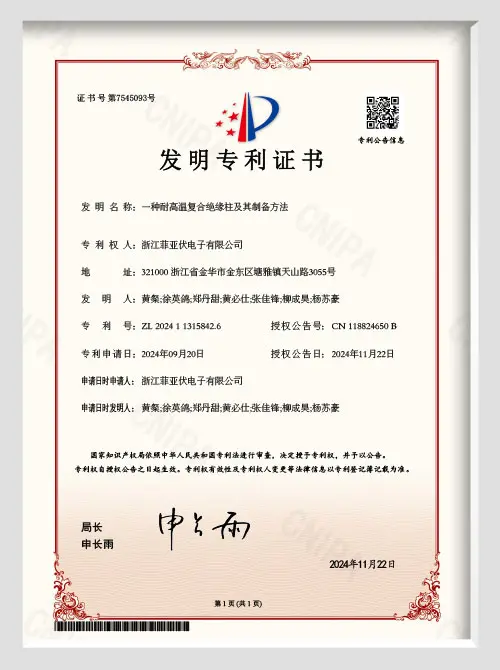
Recognized as a National High-Tech Enterprise and Zhejiang Provincial Specialized SME, Flyaford operates the municipal-level "Feifav High-Performance Insulator Science & Technology R&D Center". In strategic collaboration with Tsinghua University and premier academic institutions, our senior engineering team holds 26 patents (including 5 core invention patents). We operate custom testing rooms featuring 0-120kV partial discharge testers, 0-300kV lightning impulse setups, and microcomputer torsion units.
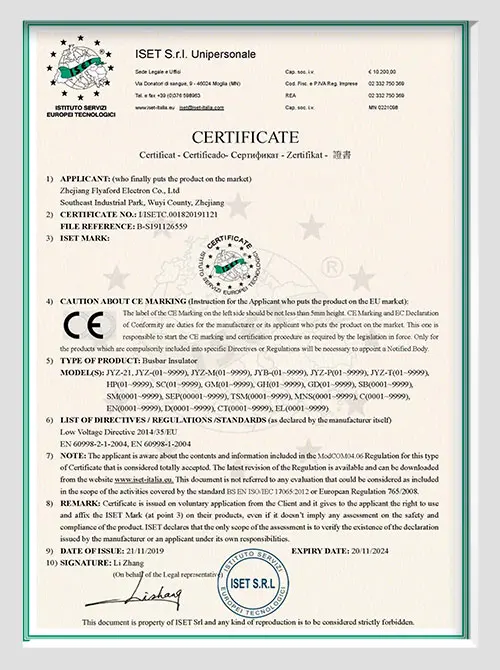
Flyaford enforces rigorous full-inspection quality controls backed by global automotive and industrial management systems: IATF 16949, ISO 9001, ISO 14001, and CE Safety Certifications. Raw materials and finished insulators fully comply with EU RoHS 2.0, REACH, and UL94 flame safety parameters.


How Ecosystem Synergy, Supply Chain Integration, and Process Automation Redefine Global Cost-to-Performance Ratios
The global electrical power equipment landscape has undergone a monumental shift toward concentrated manufacturing hubs capable of delivering precision engineered components at scale. China—specifically the industrial corridor of Zhejiang Province—has emerged as the undisputed epicenter of low and medium-voltage electrical insulation manufacturing. Zhejiang Flyaford Electron Co., Ltd. sits at the center of this industrial cluster, combining localized raw material synthesis with advanced compression molding technology.
Direct proximity to world-class resin synthesizers, specialty glass fiber processors, and brass insert cold-forging facilities eliminates supply chain lead-times and buffers raw material cost volatility.
In-house mold design and ultra-fast CNC machining enable fast prototyping within 7–10 days, compared to the standard 6–8 week lead times typical of Western tooling shops.
Smart factory digitalization continuously logs curing pressures, temperatures, and cycle times, granting 100% batch traceability for stringent automotive and energy storage OEM audits.
Furthermore, China's vast inland high-speed logistics networks and seamless port access via Ningbo-Zhoushan and Shanghai enable rapid global containerized shipping. Global EPC contractors and switchboard builders leveraging Flyaford's Zhejiang manufacturing facility benefit from significant Total Cost of Ownership (TCO) reductions without compromising on CE compliance, UL flame standards, or mechanical strength parameters.
Navigating Global Grid Decarbonization, Battery Energy Storage (ESS), EV Architecture, and Smart Infrastructure
The rapid scale-up of megawatt-class Containerized Energy Storage Systems (BESS) introduces unprecedented DC voltage ripple, thermal stress, and high short-circuit duty requirements. Specialized T-Type and D-Type BMC standoff insulators are designed specifically to secure copper busbars within compact power conversion systems (PCS). Featuring exceptional creepage distance profiles and non-flammable UL94 V-0 ratings, Flyaford insulators safeguard lithium-ion battery banks against arc flash incidents and thermal propagation.
With commercial electric vehicle platforms transitioning from 400V to 800V+ architecture, insulation components must demonstrate superior dielectric breakdown protection while undergoing constant high-frequency vibration. Under our IATF 16949 quality system, Flyaford manufactures ultra-lightweight, high-mechanical strength standoff supports customized for vehicle traction inverters, on-board chargers (OBC), and power distribution units (PDU).
Modern compact MV switchgears require insulators with integrated capacitive voltage sensing elements and low partial discharge levels (<10 pC at rated nominal voltage). Our SM and SEP Series insulators incorporate precision brass inserts with optimized electric field stress cones, minimizing localized dielectric breakdowns inside gas-insulated (GIS) and air-insulated switchgear (AIS) assemblies.
Deployments in offshore wind turbines, solar PV farms, and heavy industrial chemical plants subject insulators to aggressive salt spray, intense UV exposure, and moisture ingress. Flyaford's anti-tracking composite formulations pass 1000-hour salt spray mist testing and Double 85 environmental chamber aging tests (85°C temperature / 85% relative humidity), preventing hydrophobic degradation over 25+ years of operational lifecycle.
From Wind Energy Turbines to High-Speed Rail Substation Infrastructure
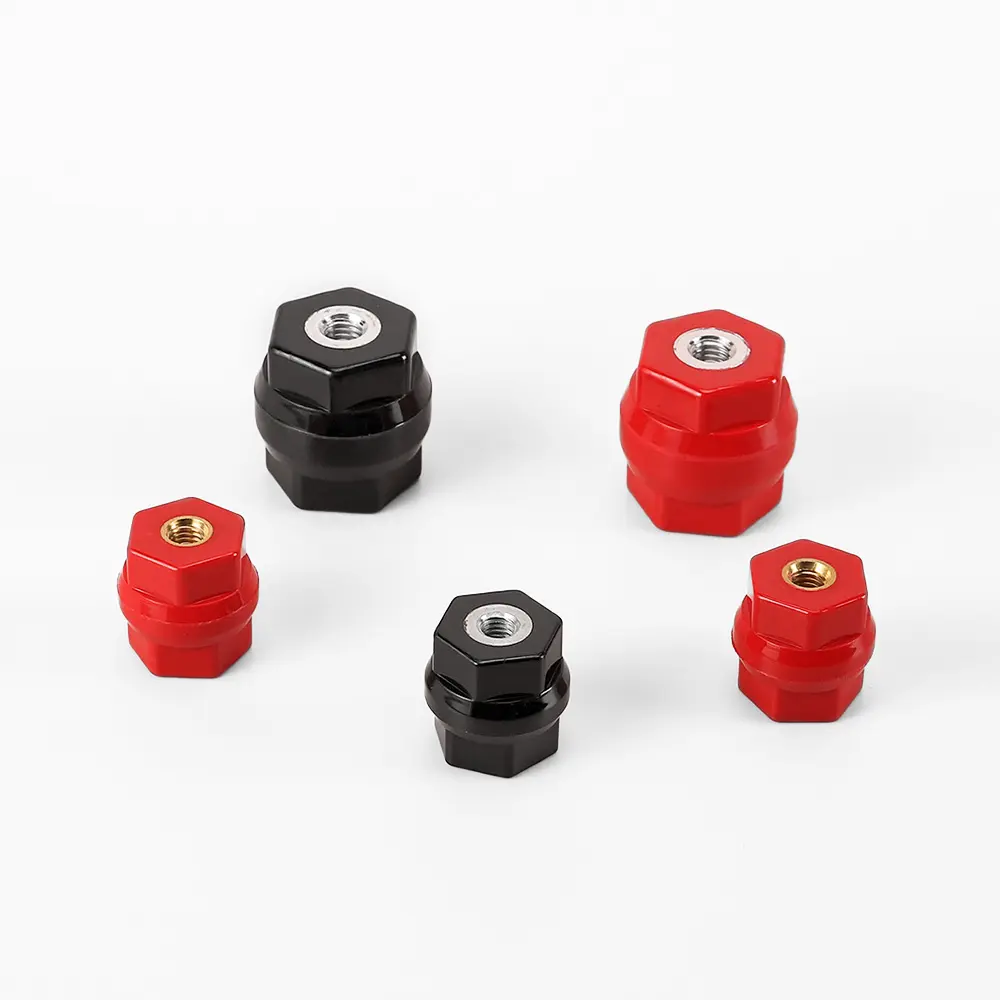
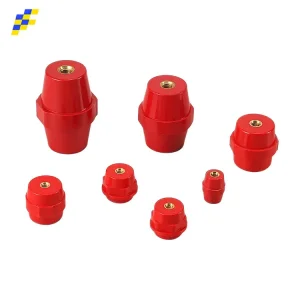
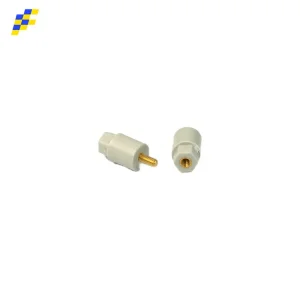
Compact cylindrical standoff design ideal for low-voltage switchboards.
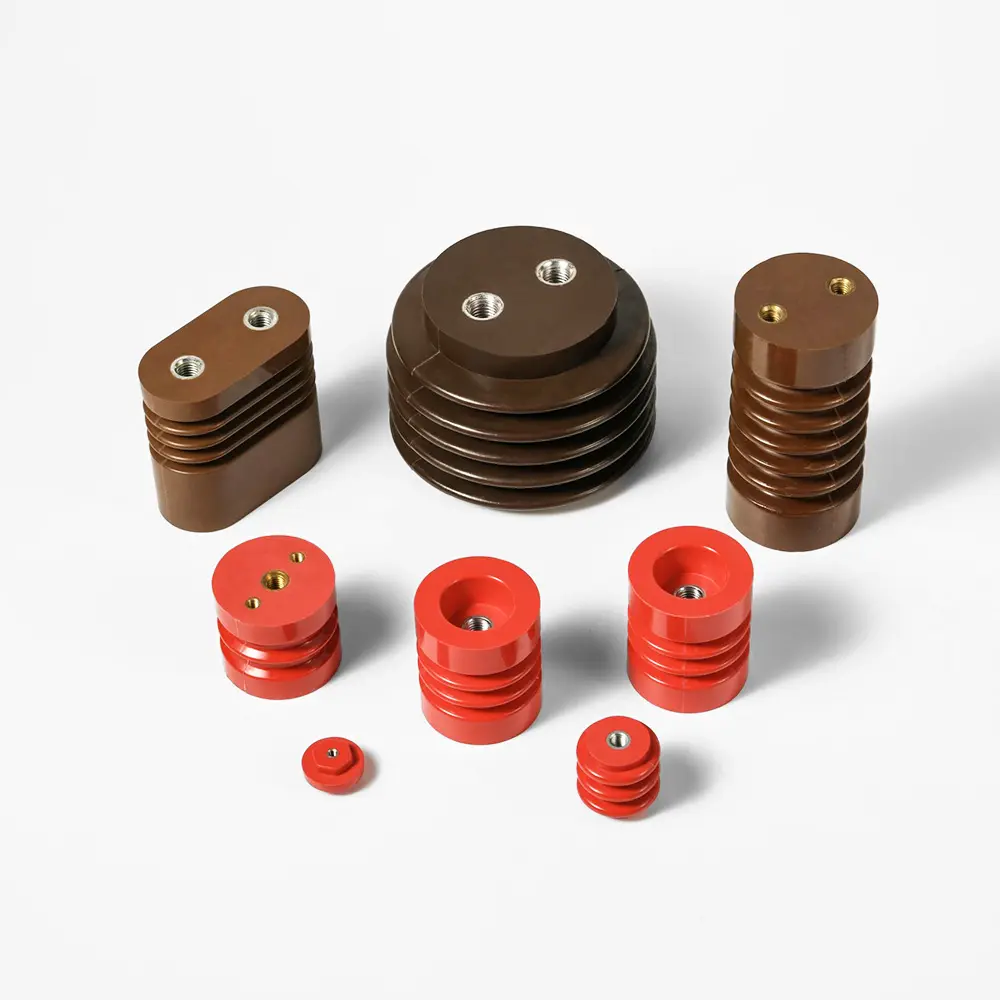
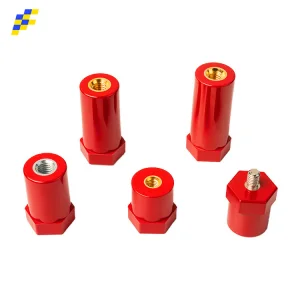
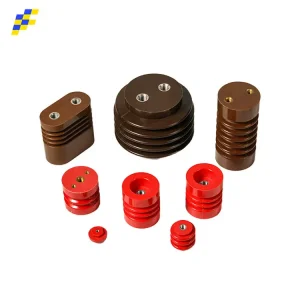
Extended creepage height engineered for elevated voltage separation.

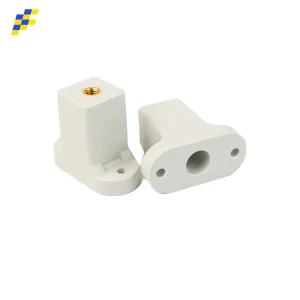
Designed specifically for MNS low-voltage modular switchgear systems.
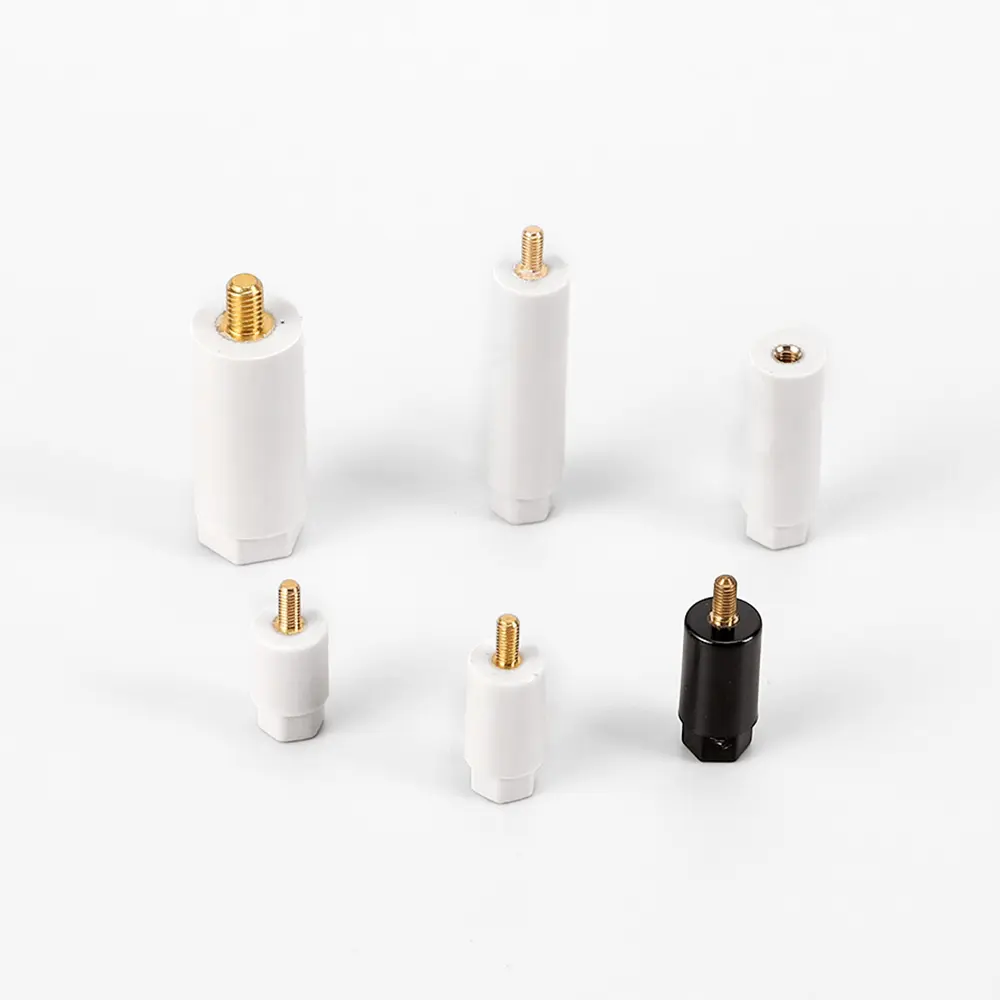
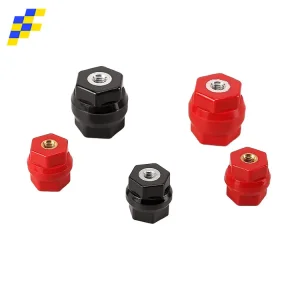
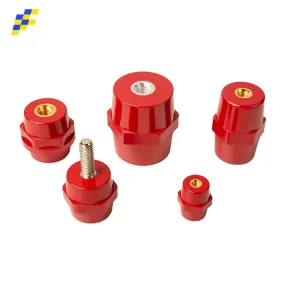
Heavy-duty hexagonal base profile providing maximum tightening torque.




How Fortune 500 Industrial Buyers Audit, Select, and Qualify Thermosetting Insulator Suppliers
For strategic sourcing managers, electrical project engineers, and supply chain directors at global firms like Siemens, Schneider Electric, ABB, and Eaton, selecting an insulator manufacturer extends far beyond price per unit. The financial impact of insulator failure in an industrial switchboard or grid substation can lead to millions of dollars in downtime, catastrophic arc-flash fires, and severe liability.
Procurement frameworks require direct supplier verification of virgin resin grade vs. recycled scrap ratio. Certified thermosetting compounds must be accompanied by supplier Certificates of Analysis (CoA) confirming glass fiber length uniformity, filler dispersion, and moisture content control prior to mold insertion.
A frequent failure point in standoff insulators is thread stripping or insert pull-out during field installation bolt torquing. World-class vendors utilize knurled copper or zinc-plated steel inserts embedded via direct transfer/compression molding, verified by destructive micro-computer torsion tests (0-500 N.m) and tensile universal pull testers (0-200 kN).
Unlike standard commercial plastic suppliers that sample 1 in 1,000 units, CE-compliant insulator factories execute 100% full-inspection screening for withstand voltage (0-100kV) and insulation resistance (0-1TΩ). Micro-voids and internal air bubbles created during compression molding are identified and rejected via routine partial discharge sampling.
Global enterprises demand dual-sourcing reliability. Suppliers must demonstrate rapid tooling scalability (over 60 molding machines), a large daily capacity (>200,000 pcs/day), and an established engineering team capable of customizing thread depth, metal material, height tolerances, and color coding within rapid project deadlines.
20 Years of Specialized Insulator Design, Tooling Prototyping, and End-to-End Client Support
Our senior electrical engineers assist in calculating creepage and clearance distances, selecting raw material matrices (BMC/DMC/EMC/PF), and delivering 3D CAD drawing confirmations within 24 hours.
Operating an in-house tooling center, we execute precision mold making, custom insert threading, surface texturing, and initial prototype physical sample delivery for rapid customer evaluation.
Comprehensive after-sales coverage including problem response within 2 hours, field failure analysis reproduction, rapid replacement/return guarantees, and lifetime technical guidance.





Expert Technical Insights into Insulator Selection, CE Certification Standards, and Installation Guidelines
CE Certification for electrical standoff insulators mandates compliance with the Low Voltage Directive (LVD 2014/35/EU) and relevant IEC/EN standards (such as IEC 664-1, IEC 60243, and IEC 60664). Insulators must undergo rigorous dielectric withstand testing, creepage and clearance distance verification, resistance to thermal shock, and self-extinguishing flame retardancy checks (UL94 V-0 level) to ensure complete electrical safety.
BMC thermosetting polymer composite insulators offer significant advantages over traditional ceramic/porcelain insulators, including 40% lower weight, dramatically superior impact and shatter resistance during transit, tighter dimensional mold tolerances (±0.05mm), and directly co-molded metal inserts. Unlike ceramic, BMC will not chip or crack under intense mechanical vibration or mounting bolt torquing.
Comparative Tracking Index (CTI) measures the electrical breakdown (tracking path formation) properties of an insulating material under surface contamination and moisture. Flyaford's BMC and EMC insulators achieve the highest rating of CTI 600 (Material Group I), making them resistant to tracking breakdown even in harsh, high-humidity, or dusty environments.
Yes. As a specialized OEM/ODM manufacturer, we customize brass, stainless steel, or zinc-plated steel thread inserts (M6, M8, M10, M12, M16, UNC threads) and body dimensions according to your specific switchgear or battery pack CAD drawings. Custom tooling design can be completed rapidly in-house.
Partial discharge occurs when internal microscopic air voids ionized under strong electrical fields cause gradual insulation degradation. Flyaford eliminates micro-voids by utilizing vacuum-assisted thermosetting compression molding techniques and conducts batch testing in our 0-120kV partial discharge laboratory to ensure readings remain strictly below 10 pC.
Our BMC insulators are rated under Thermal Class F (continuous operating temperature up to 155°C), while our specialized Epoxy Molding Compound (EMC) insulators reach Thermal Class H (up to 180°C continuous). Both material lines maintain mechanical structural integrity without softening under short-duration thermal surges up to 250°C.
Explore our full line of SM, SEP, MNS, and Customized Standoff Busbar Support Insulators.