 Flyaford
Global buyers need more than a supplier list when evaluating BMC Insulator manufacturers. They need evidence that supports every purchasing decision. Resin quality, molding accuracy, dielectric strength, tracking resistance, thermal stability, and long-term reliability all matter. So does documentation.
This guide introduces ten manufacturers serving international electrical equipment markets. The selection considers production capability, testing practices, product consistency, export experience, customization support, and certification transparency. Typical applications include switchgear, transformers, busbar systems, railway equipment, and outdoor distribution assemblies. A dependable BMC Insulator should maintain its shape under heat, resist moisture, and perform consistently across repeated electrical stress.
Dr. Arvind Kumar, a composite-materials specialist, once stated, “A reliable insulator is not defined by resin alone; it is proven through process control, testing, and service life.” That principle shapes this review. However, supplier comparisons are never perfectly permanent. Factory capacity changes. Certifications expire. Product grades differ between markets.
Buyers should verify technical data directly.
A polished website is not enough. Ask for batch records, test reports, dimensional tolerances, material specifications, and references from comparable projects. Review how each manufacturer handles mold maintenance and quality deviations. These details often reveal more than promotional claims.
The companies below represent practical options for global sourcing, but they should not be treated as automatic winners. Local voltage requirements, climate conditions, regulatory expectations, and delivery risks can change the best choice. Careful validation remains essential.
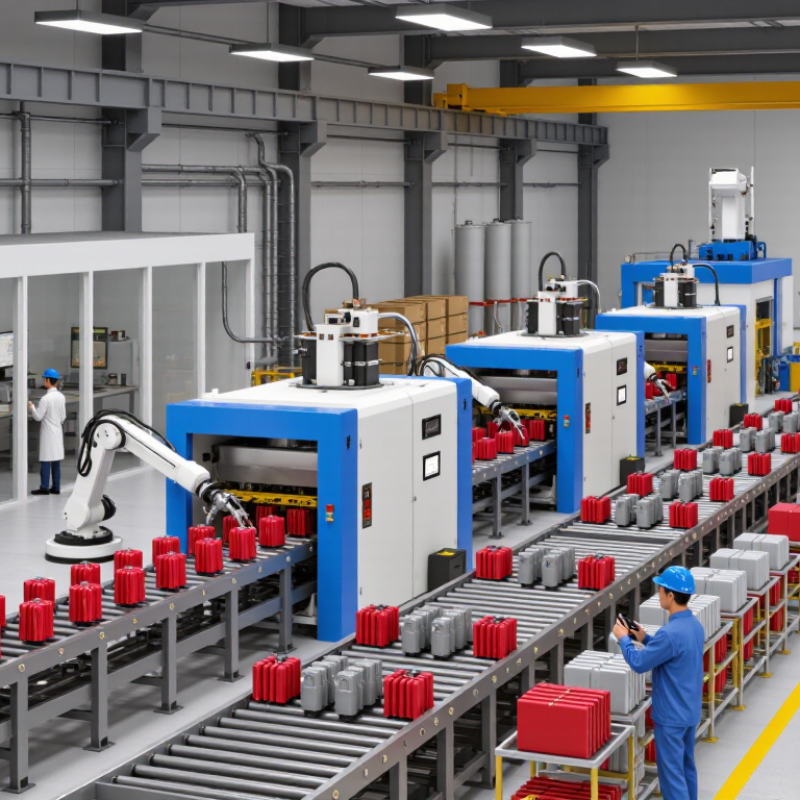
BMC (Bulk Molding Compound) insulators are rigid electrical components molded from a thermoset composite. They separate energized conductors from supports, cabinets, busbars, and mounting structures. Unlike simple plastic spacers, they must withstand voltage, heat, mechanical loads, and outdoor contamination. The definition sounds straightforward. Selection is not.
A typical BMC formulation contains unsaturated polyester resin, glass fibers, mineral fillers, pigments, and curing additives. Glass fibers provide reinforcement, while mineral fillers improve dimensional stability and flame resistance. The resin binds the mixture during compression molding and hardens permanently. Some grades target tracking resistance, low water absorption, or high-temperature service. Properties vary with formulation, fiber distribution, mold pressure, and curing control. A datasheet alone may not reveal weak points. Check creepage distance, dielectric strength, flexural strength, CTI, operating temperature, and torque performance.
In low-voltage switchboards, BMC insulators support copper busbars and maintain fixed phase spacing. In transformers, switchgear, and motor-control equipment, they help reduce flashover and vibration damage. Outdoor versions may face dust, rain, salt, and ultraviolet exposure. Global buyers should request test reports, traceability records, mold tolerances, and production samples. A small dimensional error can shift a busbar several millimeters. That detail matters. Some designs still overlook installation torque, causing cracks around mounting holes. Field feedback should influence the next specification, not merely confirm the first one.
BMC (bulk molding compound) is a fiber-reinforced thermoset molding material commonly formulated with a resin system, chopped glass fibers, mineral fillers, and additives. The entries below are generic supplier capability categories, not named companies or a verified ranking.
| No. | Supplier Capability Category | Typical BMC Construction | Common Applications | Buyer Checks |
|---|---|---|---|---|
| 1 | Low-voltage switchgear insulator specialist | Glass-fiber-reinforced thermoset BMC; formulation selected for electrical and mechanical requirements. | Insulating supports and barriers in low-voltage switchboards and distribution equipment. | Request dielectric, mechanical, dimensional, and heat-resistance test data for the exact part. |
| 2 | Busbar support component maker | Molded BMC geometry designed to provide insulation and support; properties depend on the grade and design. | Busbar supports and insulating spacers in electrical panels and power-distribution assemblies. | Check clearances, creepage distances, load requirements, and compatibility with the assembly. |
| 3 | Circuit-breaker molded-part supplier | Compression-molded thermoset compound, with formulation and geometry tailored to the component. | Insulating structural parts used in circuit-breaker and protective-device assemblies. | Verify dimensional repeatability, flame behavior, and performance under the intended service conditions. |
| 4 | Fuse and fuse-base component maker | Electrical-grade BMC molded into insulating carriers or housings. | Fuse carriers, fuse bases, and related low-voltage protection components. | Confirm fit, thermal performance, electrical test results, and compliance with the end-product requirements. |
| 5 | Metering-equipment insulator supplier | Molded BMC parts whose resin, filler, and fiber content should be specified by grade. | Insulating supports and structural parts in electricity-meter enclosures and assemblies. | Assess dimensional stability, enclosure fit, surface quality, and relevant electrical properties. |
| 6 | Motor terminal and connection-part producer | Thermoset BMC molded into parts designed for electrical insulation and mechanical support. | Terminal boards, connection supports, and insulating components in electrical motors. | Check operating-temperature requirements, fastening strength, and resistance to the intended environment. |
| 7 | Electrical enclosure component molder | BMC compound molded into insulating structural features or enclosure components. | Internal supports, barriers, and other insulating parts within electrical enclosures. | Review wall thickness, molding tolerances, environmental exposure, and assembly requirements. |
| 8 | Custom compression-molding supplier | BMC placed in a matched mold and cured under heat and pressure; process details vary by part and compound. | Custom electrical insulators and molded parts made to buyer drawings. | Request tooling details, first-article inspection, process controls, and change-management procedures. |
| 9 | Flame-performance-focused component maker | BMC grade selected for the required fire behavior; performance must be confirmed for the specific formulation and thickness. | Electrical components where fire performance is part of the product specification. | Ask for test reports identifying the exact material grade, specimen thickness, and test method. |
| 10 | Export-oriented electrical component supplier | BMC parts manufactured to agreed drawings and material specifications for the destination market. | Insulators and molded electrical components for international equipment supply chains. | Confirm traceability, packaging, inspection records, shipment terms, and applicable market requirements. |
BMC grades and finished-part performance vary by formulation, geometry, molding conditions, and test method. Buyers should evaluate the specific material and component against the applicable product specification and standards.
Request CTI, dielectric-strength, flame-performance, and dimensional test records. Check the test date, sample thickness, conditioning time, and laboratory identity. Numbers without conditions are weak evidence.
A single sample may not reflect routine production. Review three batches and measure warpage, burrs, threaded holes, and surface defects. One sample is not enough.
Ask about resin formulation, glass-fiber distribution, mold pressure, and post-curing. Review how rejected parts are separated and recorded. Daily process discipline matters.
No. Certification is a useful starting point, but it cannot show every product’s consistency. Check batch records, process controls, and product-specific test results.
Check the comparative tracking index, dielectric strength, and insulation performance under relevant conditions. Ask how specimens were prepared and tested. Conditions matter.
Compare samples with drawings for mounting holes, clearances, creepage distances, and tolerances. Small errors can delay installation. I may be overvaluing tidy drawings; field fit matters too.
Confirm minimum order quantities, lead times, spare tooling policies, and export packing. Moisture-resistant wrapping, separators, and labeled cartons help protect parts in transit.
Compare the quote with inspection, tooling, packaging, and delay costs. Ask how nonconforming units and replacement claims are handled. Cheap is not always cheaper.
This guide introduces the Bmc Insulator, explaining its definition, typical material composition, and core applications in electrical distribution, power transmission, industrial equipment, and transportation systems. It outlines how molded composite materials can provide mechanical strength, electrical insulation, weather resistance, and dimensional consistency when properly designed and manufactured. The article also presents a practical framework for evaluating manufacturers, including production experience, engineering capabilities, testing procedures, quality management, and compliance with relevant international standards.
The comparison of leading Bmc Insulator manufacturers focuses on market strengths rather than brand promotion, covering product quality, customization options, supply capacity, delivery reliability, and technical support. For international buyers, the most important purchasing factors include operating conditions, voltage requirements, mechanical loads, environmental exposure, certification needs, minimum order quantities, packaging, communication, and long-term after-sales service. By assessing these elements systematically, buyers can select dependable suppliers and establish a stable supply strategy for their specific electrical insulation requirements.
