
Flyaford Flyaford

China Top 10 Low Voltage Insulator Manufacturers 2026

Time:2026-09-17 Author:Mason
0%

China’s low-voltage electrical equipment market continues to attract global buyers seeking reliable insulation, practical pricing, and stable supply. This guide, “China Top 10 Low Voltage Insulator Manufacturers 2026,” introduces manufacturers serving distribution panels, control cabinets, busbar systems, and industrial wiring projects.

The selection considers manufacturing experience, product consistency, material quality, testing capability, customization support, and export communication. It also examines details that matter in daily use, such as creepage distance, flame resistance, mechanical strength, temperature performance, and mounting accuracy. A dependable Low Voltage Insulator should fit securely, resist cracking, and maintain electrical separation under demanding operating conditions.

Not every supplier presents information with the same level of detail. That matters. Company websites may highlight capacity, while buyers still need independent verification, technical drawings, sample checks, and clear certification records. This introduction does not treat marketing claims as final proof. Instead, it encourages a careful comparison based on documented specifications, application experience, factory responsiveness, and after-sales support.

Some manufacturers may be stronger in molded components, while others focus on customized assemblies or high-volume production. Their suitability can change with voltage requirements, enclosure design, installation environment, and order quantity. Readers should therefore confirm current certifications and production details before making a purchase decision in 2026. A factory visit is useful. A sample test is better. Reliable sourcing depends on evidence, not impressive wording alone.
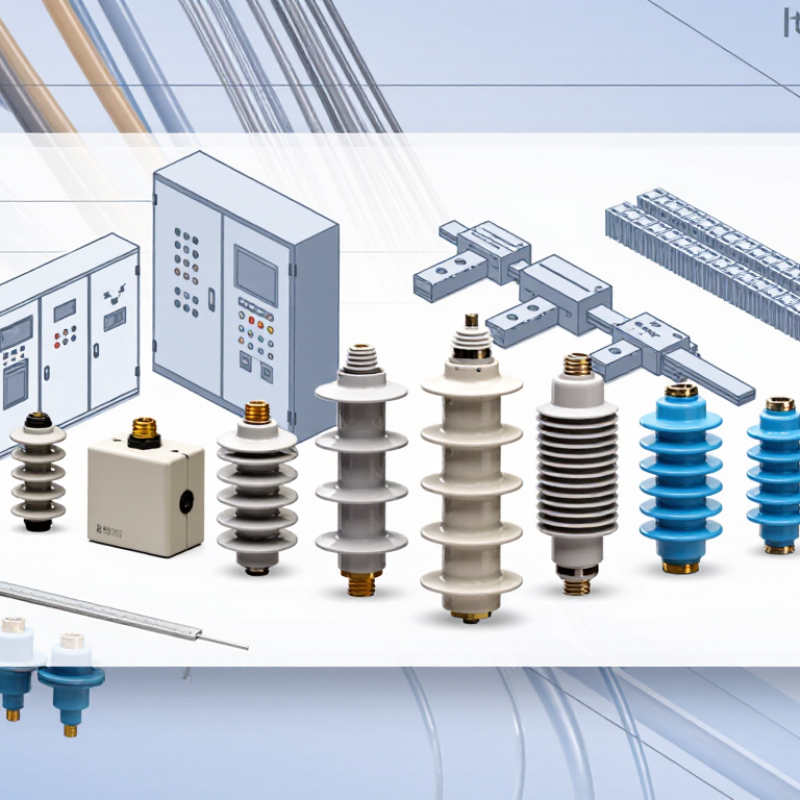
China Top 10 Low Voltage Insulator Manufacturers 2026

What Are Low Voltage Insulators and Why Do They Matter?

Low-voltage insulators separate energized conductors from grounded structures. They also hold wires in position inside switchboards, distribution boxes, and building networks. In most electrical standards, low voltage means up to 1,000 volts AC or 1,500 volts DC. Common forms include pin, spool, bushing, and standoff designs. Their materials may include porcelain, glass, or polymer compounds.

Why do they matter?

Insulation failure can create leakage current, overheating, arcing, or an unexpected outage. The risk grows with moisture, dust, salt, ultraviolet exposure, and repeated thermal expansion. A clean-looking component may still have internal damage. That is easy to miss.

The IEA’s Electricity 2024 report expects global electricity demand to grow by about 4% annually through 2026. More energized equipment means more insulation points requiring dependable protection.

The Ember Global Electricity Review 2024 reported that clean sources supplied about 30% of global electricity in 2023. New solar and wind connections increase demand for reliable low-voltage collection and control equipment.

In practical inspections, engineers should check creepage distance, surface tracking, cracks, discoloration, torque, and contamination. IEC insulation-coordination principles also require suitable clearances for voltage, pollution, and installation conditions.

Material selection alone is not enough. Installation quality matters. So does maintenance.

A weakness remains: many purchasing decisions compare price before service life, testing, or failure consequences. That habit deserves reconsideration.

How China’s Low Voltage Insulator Market Is Evaluated

Evaluating China’s low voltage insulator market requires more than counting factories or export volume. A credible review examines electrical performance, manufacturing discipline, testing evidence, and service capability. In practical assessments, polymer, ceramic, and composite products are checked against voltage class, installation environment, and mechanical load. Samples should survive thermal cycling, moisture exposure, and routine dielectric tests. Small cracks matter. They often reveal process weakness.

A top ten ranking should use transparent criteria. Product consistency may deserve greater weight than the lowest quotation. Inspectors can compare batch records, dimensional tolerances, material traceability, and inspection photographs. Factory visits add useful evidence when production lines, molds, curing temperatures, and storage conditions are visible. Independent laboratory reports strengthen confidence, but old reports cannot prove current output. This is where many market rankings become too simple.

Buyer experience also matters. A technically strong manufacturer may struggle with drawings, packaging, or replacement response. Evaluation should record delivery accuracy, technical communication, warranty handling, and field feedback. Weather resistance deserves close attention in coastal, industrial, and high-altitude locations. A product suitable for a dry inland cabinet may age differently near salt spray. No scoring model is perfect. Weights should be reviewed when failure data, new standards, or project conditions change. Claims need dates, test methods, and verifiable records.

China Top 10 Low Voltage Insulator Manufacturers 2026 - How China’s Low Voltage Insulator Market Is Evaluated
Market evaluation framework based on technical compliance, quality assurance, manufacturing capability, and procurement performance. No company or brand data is included.
Rank Evaluation Dimension Weight What Buyers Should Verify Objective Market Benchmark
01 Electrical Safety and Voltage Range 15% Rated voltage, insulation coordination, creepage distance, clearance, and dielectric withstand test records. Products should be clearly classified for low-voltage systems up to 1,000 V AC or 1,500 V DC, with application-specific electrical test evidence.
02 Applicable Standards and Compliance 14% Declaration of conformity, type-test reports, routine-test procedures, and traceability to the requested national or international standard. High-performing suppliers provide current, product-specific documentation rather than generic certificates or undated test summaries.
03 Material and Environmental Performance 12% Insulator material, resistance to moisture, UV exposure, pollution, temperature variation, tracking, and erosion. Suitable options normally include porcelain, glass, or polymeric materials selected according to climate, pollution level, mechanical load, and service environment.
04 Mechanical Strength and Safety Factor 12% Specified mechanical load, tensile or cantilever strength, impact resistance, mounting integrity, and failure-mode controls. The rated mechanical performance should match the actual conductor, bracket, wind, vibration, and installation loads with documented test margins.
05 Manufacturing Process Control 10% Raw-material inspection, molding or forming controls, curing or firing parameters, dimensional checks, and final inspection records. A mature production system uses documented process controls, calibrated equipment, batch identification, and corrective-action procedures.
06 Quality Management and Traceability 10% Quality-management certification, inspection plans, lot traceability, complaint handling, and retention of test records. Preferred suppliers can trace finished products to production batches, inspection results, materials, and shipment documentation.
07 Product Range and Customization 8% Availability of spool, shackle, pin, post, strain, service-entrance, and distribution-line configurations, plus custom dimensions and fittings. A broader product portfolio reduces qualification time and supports different conductor sizes, mounting arrangements, and regional specifications.
08 Supply Capacity and Delivery Reliability 7% Production capacity, tooling availability, capacity during peak demand, packaging controls, export experience, and delivery performance. Reliable suppliers provide realistic lead times, production schedules, pre-shipment inspection support, and protective export packaging.
09 Technical Support and Project Service 6% Drawing review, sample support, installation guidance, failure analysis, product substitution advice, and after-sales response. Higher-value suppliers support specification review and provide complete technical files before production approval.
10 Total Cost of Ownership 6% Unit price, tooling charges, minimum order quantity, freight efficiency, replacement rate, warranty terms, and expected service life. The lowest purchase price is not necessarily the lowest lifecycle cost; durability, rejection rate, installation efficiency, and warranty support should be included.
Overall Evaluation Model 100% Final supplier scores should combine documented evidence, product testing, commercial performance, and project-specific technical requirements.
Evaluation note: Low-voltage classification generally covers electrical systems up to 1,000 V AC or 1,500 V DC. The applicable product standard, test method, creepage distance, mechanical rating, and environmental requirements must be confirmed for each intended application.

China’s Top 10 Low Voltage Insulator Manufacturers in 2026

China’s Top 10 Low Voltage Insulator Manufacturers in 2026 reflect a broad manufacturing base serving distribution networks, industrial panels, rail systems, and renewable energy projects. The strongest candidates are assessed through production capability, material consistency, testing records, and delivery performance rather than advertising claims.

In practical inspections, engineers should examine porcelain density, polymer housing quality, creepage distance, and fitting torque. Small flaws can appear around threaded inserts or sealing edges. Reliable manufacturers usually provide batch traceability, dimensional reports, and electrical test results. Their facilities often include injection-molding lines, ceramic kilns, salt-fog chambers, and thermal-cycling equipment. Compliance with applicable IEC and Chinese GB standards remains essential, especially for outdoor installations exposed to moisture, dust, and ultraviolet radiation.

The top ten should also be compared by engineering support and response speed. A supplier that adjusts a mounting hole within days may be more useful than one offering the lowest quotation. Export experience matters, but it does not replace independent verification. Buyers should request recent samples, factory audit records, and third-party laboratory evidence before approval. Data can be incomplete. Rankings may change when warranty performance, rejection rates, and after-sales service are measured over several years. Even experienced purchasers sometimes overlook packaging damage, which can create hairline cracks before installation. Careful incoming inspection still matters.

Key Products, Technologies, and Applications of Leading Manufacturers

China Top 10 Low Voltage Insulator Manufacturers 2026

China’s leading low voltage insulator manufacturers are improving products for denser, smarter electrical networks. Their key products include pin insulators, spool insulators, busbar supports, cable accessories, and molded insulation parts. Common materials include porcelain, glass-reinforced polyester, and high-temperature thermoplastics. Each material suits different loads, moisture levels, and installation conditions.

The IEA’s Electricity 2024 report estimated China’s electricity demand increased by about 6.7% in 2023. This growth supports demand for reliable insulation in distribution cabinets, industrial control panels, renewable energy systems, and charging infrastructure. Leading manufacturers now use automated molding, robotic inspection, and digital traceability. Testing usually covers dielectric strength, heat resistance, tracking, and mechanical stress under IEC and Chinese GB/T requirements. However, product catalogs can look similar. Field performance still depends on creepage distance, pollution levels, torque control, and installation quality. That detail is easy to overlook.

Tips: Ask for recent test reports, batch records, and application references. Compare insulation performance at the actual operating voltage, not only the rated value. For coastal or dusty sites, request pollution-class guidance and surface-aging data. The IEA’s Renewables 2024 report also noted that China supplied nearly 60% of global renewable capacity additions in 2023, making outdoor insulation durability increasingly important. Yet some supplier claims remain too broad. Independent verification is worth the extra time.

How to Choose the Right Chinese Low Voltage Insulator Manufacturer

Choosing among China’s top low voltage insulator manufacturers in 2026 requires more than comparing unit prices. The IEA’s Electricity Grids and Secure Energy Transitions report estimates that over 80 million kilometers of grids exist worldwide, with an equal amount needing replacement or addition by 2040. That pressure increases demand, but it also rewards suppliers with stable production and traceable quality.

Ask for recent third-party test reports, material declarations, and batch inspection records. Verify resistance to heat, moisture, ultraviolet exposure, tracking, and mechanical stress. The manufacturer should explain which IEC or national standards apply to your voltage class and installation environment. ISO 9001 helps, but it does not prove every insulator is reliable. That distinction matters.

Audit the factory, even remotely if necessary. Watch raw-material storage, molding, firing or curing controls, and final visual inspection. Request samples from separate production batches, then test dimensions, dielectric performance, and fit with your hardware. A polished sample can hide weak process control. It happens. Check delivery history, corrective-action records, packaging, and replacement procedures. The World Bank’s Logistics Performance Index 2023 shows major differences in customs, tracking, and delivery reliability across exporting markets. Therefore, evaluate the supplier’s logistics evidence, not promises. A slightly higher quotation may reduce field failures, delays, and costly rework.

China Top 10 Low Voltage Insulator Manufacturers 2026

How to Choose the Right Chinese Low Voltage Insulator Manufacturer

How to use this chart: The Comparative Tracking Index (CTI) material groups are defined by IEC 60112. A higher CTI generally indicates better resistance to electrical tracking, which can support smaller creepage distances under the applicable insulation-coordination rules. When evaluating a Chinese low-voltage insulator manufacturer, confirm CTI test reports, IEC 60664-1 creepage and clearance calculations, rated voltage, operating temperature, flame-retardant grade, dimensional consistency, and routine quality-control records.

Reference basis: IEC 60112 material-group thresholds. CTI values are expressed in volts.

FAQS

What are low-voltage insulators?

They separate energized conductors from grounded structures. They also hold wires inside switchboards, distribution boxes, and building networks.

What voltage range is considered low voltage?

Low voltage generally means up to 1,000 volts AC or 1,500 volts DC. Definitions can vary slightly by local standards.

Which insulator designs are commonly used?

Common designs include pin, spool, bushing, and standoff types. Selection depends on voltage, mounting space, mechanical load, and installation conditions.

Which materials are used for low-voltage insulators?

Porcelain, glass, and polymer compounds are common choices. Material selection alone is not enough.

What can cause an insulator to fail?

Moisture, dust, salt, ultraviolet exposure, and repeated heating can weaken insulation. Cracks, tracking, leakage current, and arcing may follow.

What should inspectors check during an inspection?

They should check creepage distance, clearances, cracks, discoloration, surface tracking, contamination, and connection torque.Small cracks matter.

How should suppliers be evaluated?

Buyers should review electrical tests, batch records, material traceability, dimensional tolerances, and manufacturing consistency. The lowest quotation may not offer the lowest long-term cost.

Why are factory visits and laboratory reports useful?

Factory visits can reveal molding, curing, storage, and inspection practices. Independent reports add confidence, but outdated reports cannot prove current production.

Does the installation environment affect product selection?

Yes. Coastal salt spray, industrial dust, high altitude, and moisture can accelerate aging. A dry indoor product may perform differently outdoors.

What service details should buyers compare?

Compare delivery accuracy, technical drawings, packaging, warranty response, replacement support, and field feedback. These details are sometimes overlooked.That deserves reconsideration.

Conclusion

This article presents a practical overview of China’s Low Voltage Insulator industry in 2026. It explains what low voltage insulators are, how they support electrical safety and system reliability, and why their material quality, insulation performance, mechanical strength, and environmental resistance are important. It also introduces the key factors used to evaluate manufacturers, including production capability, quality control, technical expertise, certification readiness, customization services, delivery efficiency, and after-sales support.

The article further compares ten leading types of Chinese manufacturers through their product ranges, manufacturing technologies, and common applications in power distribution, construction, industrial equipment, renewable energy, and transportation systems. Finally, it offers guidance for selecting a suitable supplier by considering operating conditions, voltage requirements, installation environment, compliance expectations, order volume, cost, and long-term cooperation potential. The goal is to help international buyers make informed decisions and identify reliable solutions for safe and efficient electrical installations.

Mason

Mason

Mason is a seasoned marketing professional with a deep expertise in the company's offerings and a passion for driving brand awareness. With a strong background in digital marketing strategies, he has an innate ability to connect with diverse audiences and effectively communicate product benefits.......