
Flyaford Flyaford

2026 Top Switchgear Insulators for Global Buyers

Time:2026-10-26 Author:Sophia
0%

As electricity networks expand, Switchgear Insulators are becoming critical components for safer, more reliable power distribution. The International Energy Agency’s Electricity 2024 report projects global electricity demand to grow by about 3.4% annually from 2024 to 2026. That growth places more pressure on substations, medium-voltage systems, and high-voltage transmission equipment. Insulators must withstand electrical stress, mechanical loading, pollution, moisture, and temperature changes. A small surface defect can become a serious operational risk.

Investment is also reshaping buyer priorities. The IEA’s World Energy Investment 2024 report indicates that annual grid investment may need to increase from roughly $400 billion to more than $600 billion by 2030. This creates strong demand for dependable components with traceable quality. IEC 62271 standards provide an important reference for high-voltage switchgear assemblies, while CIGRE publications offer practical guidance on insulation performance and service conditions. For global buyers, compliance documentation, aging tests, creepage distance, material stability, and supplier inspection records deserve close attention.

Performance matters most.

Yet, no universal insulator suits every network. Climate, altitude, salt pollution, installation design, and maintenance capability can change the best choice. Some market comparisons also rely on incomplete testing or optimistic product claims. Buyers should remain cautious. The 2026 selection process should combine laboratory evidence, field experience, and total lifecycle cost. A lower purchase price may look attractive, but premature tracking, cracking, or replacement can quickly erase that advantage. This guide examines leading Switchgear Insulators for global buyers, while recognizing that technical decisions still require independent verification.
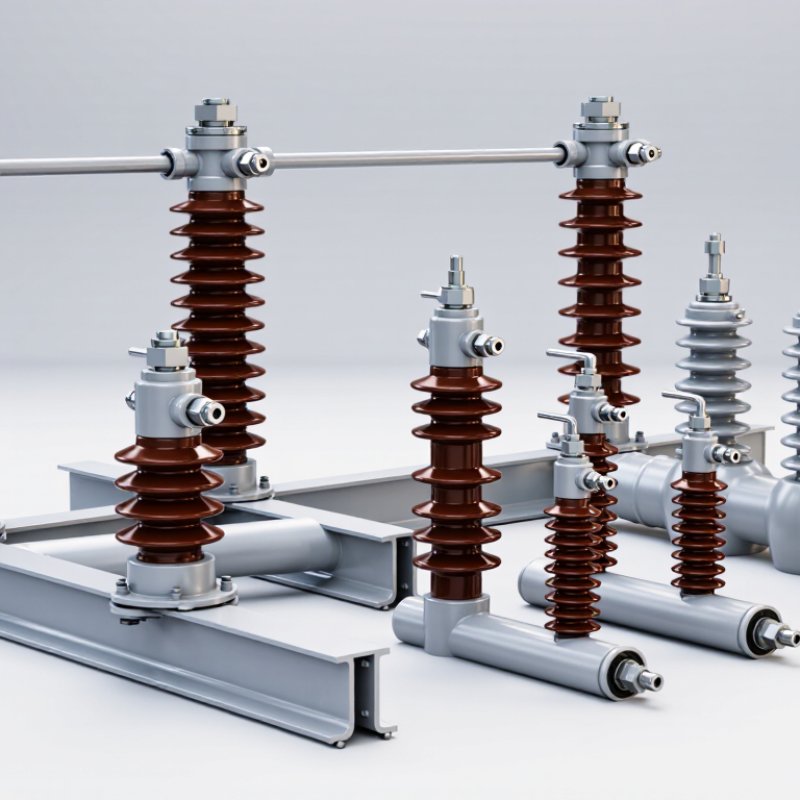
2026 Top Switchgear Insulators for Global Buyers

What Switchgear Insulators Are and Why They Matter

2026 Top Switchgear Insulators for Global Buyers

What Switchgear Insulators Are and Why They Matter

Switchgear insulators are electrical components that support conductors and separate energized parts from grounded metal. They combine mechanical strength with controlled insulation performance. In medium- and high-voltage equipment, they help maintain safe clearances around busbars, terminals, and switching devices.

Common materials include porcelain, epoxy resin, and silicone-based composites. Each option behaves differently under heat, moisture, pollution, and mechanical stress. A suitable insulator must match the system voltage, frequency, short-circuit forces, and installation environment. Creepage distance matters in coastal or industrial areas, where salt and dust can create a conductive surface film.

The details matter.

Experienced engineers also check partial-discharge data, thermal cycling results, impact resistance, and dimensional tolerances. A strong laboratory result may not predict years of outdoor service. Sealing quality, mounting pressure, and cleaning practices can change actual performance. That is an easy point to overlook.

Global buyers should review tested standards, traceable material records, and inspection procedures before comparing prices. They should also confirm altitude corrections and pollution classifications for the installation site. The highest voltage rating is not always the best choice. A larger insulator may create clearance problems inside a compact panel. A cheaper part may increase maintenance work later. Selection remains a balance between electrical safety, mechanical reliability, service conditions, and practical installation limits.

Key Types of Switchgear Insulators for Different Applications

2026 Top Switchgear Insulators for Global Buyers

Choosing the right switchgear insulator starts with the installation environment, not only voltage rating. Post insulators support busbars, disconnectors, and conductors inside metal-clad switchgear. Epoxy resin types suit indoor panels because they offer compact dimensions and stable insulation performance. They also simplify mounting around narrow busbar compartments. Small clearances matter.

Porcelain remains useful for outdoor switchgear, especially where mechanical strength and long service history are priorities. Its glazed surface can resist weathering, but heavy contamination may require careful washing schedules. Composite insulators combine a fiberglass core with a silicone housing. They are lighter than porcelain and often perform well in coastal, dusty, or industrial areas. Their hydrophobic surface can reduce leakage current, although aging and interface quality still need inspection.

Bushings insulate conductors passing through grounded enclosures, transformer walls, or cable compartments. Capacitive-grading bushings are common in higher-voltage equipment because they control electric-field stress. Hollow insulators may support pressurized gas compartments, but sealing design deserves close attention. A weak seal can undermine excellent insulation materials. In field work, I would check creepage distance, humidity, thermal cycling, pollution level, and mechanical load together. Catalog data helps, but local temperature and installation errors can change the result. No selection is perfect. Review it.

Essential Materials and Performance Characteristics

2026 Top Switchgear Insulators for Global Buyers

Essential materials and performance characteristics

Selecting switchgear insulators starts with the site, not the catalog. Porcelain remains valued for its compressive strength, thermal stability, and long service history. Its glazed surface handles outdoor exposure well, but hidden cracks can develop after transport or uneven tightening. Epoxy resin supports compact indoor assemblies and precise molded shapes. It offers strong insulation, though prolonged heat and moisture require careful evaluation. Composite insulators combine fiberglass-reinforced rods with silicone rubber sheds. They reduce weight and often perform well in polluted environments.

Performance depends on more than dielectric strength. Buyers should compare creepage distance, dry and wet withstand levels, partial discharge behavior, and mechanical load ratings. Silicone rubber can recover hydrophobicity after contamination, which helps near salt spray or industrial dust. Porcelain may need more attention during handling. Small chips matter. At high altitude, reduced air density can lower external insulation performance, so clearance calculations deserve local engineering review.

Temperature cycling is another practical test. Repeated heating and cooling can stress interfaces between metal fittings and insulating bodies. In inspections, uneven shed spacing, loose hardware, and surface tracking deserve immediate attention. No material wins every site. A lighter composite design may simplify installation, yet its seals and interfaces need long-term verification. Product data can look convincing, but field conditions are rarely perfect. Buyers should request tested values, manufacturing tolerances, pollution-class guidance, and traceable quality records before approval.

2026 Top Switchgear Insulators for Global Buyers - Essential Materials and Performance Characteristics

Material comparison for medium-voltage and high-voltage switchgear applications

Technical note: Values are typical indicative ranges for material selection. Actual performance depends on design geometry, manufacturing quality, pollution level, altitude, humidity, creepage distance, electrical stress, and applicable type-test requirements.
Material / Insulator Type Typical Switchgear Use Typical Dielectric Strength* Mechanical Characteristics Indicative Service Temperature Moisture and Pollution Performance Key Advantages Main Limitations Common Standards and Checks
Electrical Porcelain Indoor and outdoor support insulators, busbar supports, post insulators, disconnecting-switch components Approximately 5–15 kV/mm; equipment withstand rating is design-specific High compressive strength, commonly about 300–1,000 MPa; rigid and dimensionally stable About −50°C to +120°C, depending on formulation and hardware Glazed surface has low moisture absorption and good resistance to surface tracking; contamination washing may be required outdoors Long service life, strong compression performance, good arc and weather resistance, established supply base Heavy and brittle; vulnerable to impact, rapid thermal shock, and hidden cracks IEC 60168, IEC 62271 series, IEC 60672; visual inspection, dimensional checks, power-frequency withstand, impulse withstand, and mechanical tests
Cast Epoxy Resin Indoor epoxy insulators, encapsulated busbars, bushing bodies, sensors, embedded poles, and compact switchgear Approximately 15–25 kV/mm for suitable cured systems Compressive strength commonly about 120–200 MPa; high rigidity and strong adhesion to metal inserts Typically −40°C to +120°C; higher-temperature grades are available Low water absorption when properly cured and sealed; formulation must be qualified for tracking and erosion resistance Compact design, excellent dimensional accuracy, good sealing, easy integration with conductive inserts Can crack from thermal cycling, internal voids, incorrect curing, or excessive mechanical stress; usually preferred for indoor use unless specially formulated IEC 62271 series, IEC 60270 for partial-discharge measurement, IEC 60071 for insulation coordination, and relevant resin-material qualification tests
Silicone Rubber Composite Outdoor post insulators, cable terminations, bushings, instrument-transformer insulation, and compact overhead-to-switchgear interfaces Approximately 15–25 kV/mm for the polymer housing; system rating depends on the core and geometry Flexible housing over a glass-fiber-reinforced epoxy or similar core; good tensile and impact tolerance, but lower surface hardness than porcelain Typically −50°C to +150°C, subject to grade, installation, and thermal aging Strong hydrophobicity recovery and good behavior under salt or industrial pollution; surface aging and erosion must be evaluated Lightweight, impact-resistant, good contamination performance, and suitable for seismic or vibration-prone installations Potential interface failure, seal damage, tracking, erosion, or loss of hydrophobicity if poorly designed or exposed to severe chemicals IEC 61109, IEC 62217, IEC 60507, IEC 60815, and applicable outdoor insulation, tracking, erosion, and mechanical tests
Glass Insulator Specialized outdoor and high-voltage support applications, selected bushings, and components requiring transparent visual inspection Approximately 8–12 kV/mm Very high compressive strength, commonly about 500–1,000 MPa; low tolerance to impact and localized tensile stress About −50°C to +250°C, depending on glass type and mounting arrangement Non-porous and moisture-resistant; surface contamination can still reduce flashover performance Excellent transparency for inspection, stable electrical properties, and good resistance to ultraviolet exposure Brittle, relatively heavy, sensitive to impact and thermal shock, and less adaptable to complex molded shapes IEC 60168, IEC 60383, IEC 62271 series, and applicable thermal, mechanical, dielectric, and visual-inspection tests
Glass-Fiber-Reinforced Epoxy Support cores, insulating rods, operating mechanisms, composite post insulators, and structural insulation in medium- and high-voltage equipment Approximately 15–25 kV/mm, depending on resin, fiber content, and manufacturing process High tensile and bending strength; fiber orientation and interface quality strongly affect performance Typically −40°C to +130°C; high-temperature grades may extend beyond this range Good moisture resistance when sealed; exposed fibers or damaged resin can increase moisture ingress and tracking risk High strength-to-weight ratio, suitable for slender designs, good vibration resistance, and easy integration with composite housings Internal delamination, moisture ingress, resin aging, and fiber exposure must be controlled through process and seal design IEC 62217, IEC 61109, IEC 60243, IEC 60270, and project-specific tensile, bending, thermal-cycling, and partial-discharge tests
Bulk Molding Compound / Polyester Composite Low- and medium-voltage molded supports, terminal barriers, fuse bases, busbar holders, and enclosure-mounted insulation Approximately 10–20 kV/mm, depending on filler, glass content, and molding quality Compressive strength commonly about 100–180 MPa; adequate rigidity for compact assemblies Typically −40°C to +130°C Good moisture resistance and flame-retardant options; surface tracking and thermal aging depend on the compound formulation Cost-effective high-volume molding, consistent dimensions, flame-retardant options, and good design flexibility Usually lower temperature capability and long-term outdoor resistance than specialized porcelain or silicone composite systems IEC 60695 for flammability-related testing, IEC 60112 for comparative tracking index, IEC 62271 series, and applicable dielectric and mechanical tests

How to Select the Right Insulator for Global Standards

2026 Top Switchgear Insulators for Global Buyers

Selecting a switchgear insulator for global use requires more than comparing voltage ratings. Start with the installation environment. Check altitude, humidity, pollution level, temperature range, and seismic exposure. These factors affect insulation performance and mechanical reliability. For outdoor equipment, review creepage distance and hydrophobic behavior. For indoor systems, consider condensation and ventilation. Confirm whether the design aligns with relevant IEC 62271 and IEC 60168 requirements. IEEE or national standards may also apply in the destination market. Never assume one certificate covers every region.

Tips:

Request type-test and routine-test records from an accredited laboratory. Examine partial discharge results, mechanical strength, dimensional tolerances, and temperature-cycle performance. Ask for material specifications and production traceability. Porcelain offers stable long-term performance, while epoxy and silicone materials can reduce weight. However, material choice depends on voltage, pollution, loading, and maintenance conditions. Field inspections often reveal small issues, such as damaged sheds or loose hardware, before failure occurs. A perfect datasheet is not enough. Question unclear test conditions and missing acceptance limits. That extra review can prevent an expensive mismatch.

Global buyers should compare the complete technical file, not only the purchase price. Confirm interface dimensions, mounting details, creepage requirements, and replacement compatibility. Verify the supplier’s quality system and inspection process. Independent verification is valuable when specifications are translated or adapted across markets. Some projects still overlook altitude correction. That is an avoidable weakness. Record every deviation before approval, especially when the insulator will operate near its rated electrical or mechanical limits.

2026 Market Trends and Buyer Evaluation Criteria

In 2026, switchgear insulator buying is moving beyond unit price. Grid operators want compact designs, lower losses, and stable performance under wider temperature swings. More projects use digital condition monitoring, especially in substations with limited maintenance access. Insulators must support reliable insulation coordination, not merely pass a factory test. Field evaluations often begin with creepage distance, dielectric strength, thermal cycling, and partial discharge data. Tiny details matter. A rough casting edge can collect contamination and weaken long-term reliability.

Global buyers should match material choice to duty. Epoxy supports precise indoor assemblies, while ceramic handles heat and mechanical abuse. Composite designs may reduce weight, but housing aging and interface sealing require close inspection. Ask for type-test evidence, routine-test records, material traceability, and documented quality controls. Check compliance with applicable IEC, ANSI, or national requirements. Do not assume one certificate covers every voltage class or installation condition. Altitude, salt fog, industrial dust, seismic movement, and ultraviolet exposure can change the decision. Request samples or dimensional drawings before approving volume production.

A credible supplier explains failure modes, inspection limits, and maintenance needs without hiding uncertainty. Review production capacity, change-control procedures, delivery history, and independent laboratory reports. Factory audits can reveal weak curing controls or inconsistent surface finishing. Yet audits are snapshots. A spreadsheet can miss actual field behavior. Buyers should compare lifecycle cost, replacement access, outage risk, and warranty terms, not only purchase price. One concern remains: new monitoring features may add data without improving decisions. Pilot testing in a representative bay can expose that gap before a large order.

FAQS

What is a switchgear insulator?

It supports conductors and separates energized parts from grounded metal. It helps maintain safe clearances around busbars, terminals, and switching devices. Its job is electrical and mechanical.

Which materials are commonly used?

Common choices include porcelain, epoxy resin, and silicone-based composites. Porcelain handles compression and heat well. Epoxy suits compact indoor assemblies. Composite designs are lighter and often tolerate pollution effectively. No material wins every site.

How should buyers match an insulator to a site?

Start with voltage, frequency, short-circuit forces, and installation conditions. Check altitude, salt spray, industrial dust, ultraviolet exposure, and seismic movement. Coastal sites may need longer creepage distances. Site details matter.

What performance data should be reviewed?

Request dry and wet withstand values, partial-discharge results, creepage distance, and mechanical load ratings. Review thermal-cycling and impact-resistance results. Confirm dimensional tolerances. Factory data is useful, but not complete.

Why do creepage distance and altitude matter?

Salt and dust can form a conductive film along the surface. Longer creepage distances can help in polluted environments. Higher altitude reduces air density and external insulation performance. Local calculations are necessary.

What defects deserve immediate attention?

Inspect for chips, cracks, uneven shed spacing, loose hardware, and surface tracking. Check seals and metal interfaces for stress or moisture entry. Uneven tightening can damage porcelain. Small chips matter.

How should buyers evaluate suppliers?

Ask for traceable material records, routine-test results, type-test evidence, and inspection procedures. Review manufacturing capacity and change-control practices. Independent laboratory reports can add confidence. Audits are only snapshots.

Is the cheapest or highest-rated insulator best?

Not always. A higher voltage rating may create clearance problems in a compact panel. A low purchase price may increase maintenance and outage risk. Compare lifecycle cost, replacement access, and warranty terms. Pilot testing can reveal hidden gaps. The answer may remain uncertain.

Conclusion

Switchgear Insulators are essential components in electrical distribution and protection systems, providing reliable insulation, mechanical support, and safe separation between energized conductors and grounded structures. This overview explains the main types used across indoor, outdoor, medium-voltage, and high-voltage applications, including solid, hollow, post, bushing, and composite designs. It also examines key materials such as porcelain, epoxy, silicone-based composites, and other engineered polymers, focusing on dielectric strength, mechanical durability, thermal stability, pollution resistance, weather performance, and service life.

For global buyers, selecting the right insulator requires careful review of voltage ratings, environmental conditions, installation requirements, compatibility with switchgear, and applicable international standards. The 2026 market is expected to emphasize compact designs, improved insulation reliability, sustainable materials, digital quality monitoring, and stronger resistance to harsh climates. Buyers should evaluate certification, testing records, lifecycle cost, supply consistency, customization capability, and technical support rather than relying only on initial purchase price.

Sophia

Sophia

Sophia is a dedicated marketing professional with an exceptional depth of knowledge about her company's products and services. With a keen understanding of market trends and customer needs, she crafts insightful blog posts that not only inform but also engage readers, enriching the company’s online......